Last year, my trainer watched me attempt a plank and immediately stopped me, saying my core fired incorrectly during basic movements. She introduced the dead bug exercise that day. Those awkward-looking movements taught my core proper activation patterns I’d never learned despite years of various ab workouts.
The dead bug exercise builds core stability by challenging your ability to maintain neutral spine position while moving your limbs independently. This fundamental movement pattern teaches your deep core muscles to resist unwanted motion, which prevents back pain and improves movement quality throughout daily activities.
Unlike crunches or sit-ups targeting superficial abs, the bug exercise develops the deep stabilizing muscles supporting your spine constantly.
Transform Your Core from Weak Foundation to Solid Support:
Stop wasting time on ineffective ab exercises that build six-pack muscles but ignore the deep core stability protecting your spine. The bug exercise addresses the real problem most people face—inability to properly brace and stabilize their torso during movement.
Why Traditional Ab Exercises Fail Most People:

Crunches, sit-ups, and similar flexion-based exercises dominated fitness culture for decades despite questionable effectiveness for actual core function. These movements strengthen your rectus abdominis, the six-pack muscle, while completely neglecting the deeper core muscles that actually stabilize your spine. I did hundreds of crunches for years without improving my chronic back pain or movement quality.
The bug exercise takes a completely different approach by teaching anti-extension and anti-rotation—your core’s primary protective functions. Your deep core muscles should prevent unwanted spinal movement, not create movement like crunches demand. This stabilization function matters infinitely more for real-life activities than the ability to repeatedly curl your torso.
When I switched from traditional ab work to dead bug exercise variations, my back pain decreased within two weeks. My posture improved naturally without conscious effort. Heavy lifting became easier because my core finally braced properly. The functional improvements convinced me that everything I’d previously believed about core training was fundamentally wrong.
The Neuromuscular Benefits of Dead Bug Exercise:
Beyond simple strength building, the bug exercise retrains your nervous system to coordinate complex movement patterns properly. Many people lose this natural coordination through years of sedentary habits and compensatory movement patterns. Your brain forgets how to properly sequence muscle activation, leading to inefficient, injury-prone movement.
Performing the dead bug exercise slowly and deliberately rebuilds these neural pathways. You’re teaching your brain to maintain spinal stability while moving limbs independently—a pattern required for walking, running, lifting, and virtually every athletic movement. The coordination benefits often exceed the pure strength gains from consistent bug exercise practice.
1. Proper Dead Bug Exercise Setup and Execution:
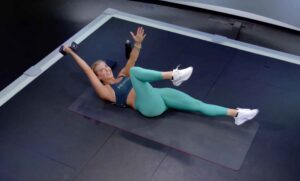
Lie on your back with arms extended straight toward the ceiling and knees bent ninety degrees with shins parallel to the floor. This starting position feels awkward initially but becomes natural with practice. Press your lower back gently into the floor, engaging your core to eliminate the arch under your spine.
Slowly extend one leg straight while lowering the opposite arm overhead, moving both limbs simultaneously. The dead bug exercise challenges you to maintain that lower back contact with the floor throughout the movement. Return to the starting position, then repeat with opposite limbs. The movement looks simple but demands intense concentration and control initially.
I couldn’t maintain proper form for even five repetitions when I started the bug exercise. My lower back kept arching off the floor despite my best efforts. Building the necessary control took weeks of persistent practice with very slow, deliberate repetitions.
2. Common Dead Bug Exercise Mistakes:
Allowing your lower back to arch off the floor defeats the entire purpose of the bug exercise. That arching indicates your core cannot control spinal position under load. Reduce range of motion or regression to easier variations until you maintain a neutral spine throughout.
Moving too quickly reduces muscle tension and bypasses the neural coordination benefits that make the dead bug exercise so effective. I see people rushing through reps like they’re racing, completely missing the point. Slower execution with perfect control builds dramatically better results.
Holding your breath during the bug exercise creates artificial stability through intra-abdominal pressure rather than teaching proper muscle engagement. Maintain steady breathing throughout each repetition to ensure your core muscles provide the stabilization rather than just air pressure.
3. Dead Bug Exercise Breathing Pattern:
Breathing coordination significantly impacts bug exercise effectiveness. Exhale as you extend limbs, inhale as you return to starting position. This pattern synchronizes breath with movement while preventing breath-holding that creates false stability.
I struggled with breathing coordination initially. My natural tendency was holding my breath during the hardest part of each repetition. Consciously practicing the proper breathing pattern took several sessions before it became automatic. Now I can’t imagine performing the dead bug exercise any other way.
4. Progressive Dead Bug Exercise Variations:
Single-leg dead bug variations reduce difficulty for beginners struggling with full movement. Keep one foot on the floor while extending only the other leg and opposite arm. This modification decreases balance challenge while maintaining the core stability requirement.
Once basic bug exercise feels manageable, add resistance bands around your feet for increased challenge. The band tension forces your core to work harder maintaining stability against the pulling force. Weight plates held in your hands similarly increase difficulty without changing basic movement patterns.
I progressed through variations methodically over months. Rushing to advanced versions before mastering basics just led to poor form and limited results. Patient progression built far better outcomes than aggressive advancement.
Essential Dead Bug Exercise Coaching Cues:
- Imagine pulling your belly button toward your spine without actually flexing abs aggressively
- Think about making your torso completely rigid like a plank while moving limbs around it
- Keep movements slow enough that you could stop anywhere mid-rep without losing balance
- Press hands and feet outward slightly against imaginary resistance for better core engagement
- Maintain eyes focused on single point above you to prevent neck strain and head movement
- Feel your ribcage staying down rather than flaring upward during arm movements
- Complete every repetition with perfect technique rather than rushing through prescribed quantities
Building Dead Bug Exercise Progression:
Progressive overload with the dead bug exercise looks different from traditional strength training. You’re not adding weight plates like with deadlifts. Instead, progression involves increasing time under tension, adding resistance gradually, and advancing to more challenging variations that demand greater coordination and stability.
I track bug exercise progress through total time maintaining perfect form rather than counting repetitions. When I started, thirty seconds of quality work was my maximum. Now I can perform the bug exercise with various progressions for several minutes while maintaining impeccable technique.
1. Regression Options for Beginners:
Complete beginners often need significant regressions before the standard dead bug exercise becomes manageable. Lying with bent knees, simply alternating tapping toes to the floor teaches basic hip control without arm involvement. This stripped-down version lets you master the fundamental hip extension pattern.
Dead bugs with bent knees throughout reduces the leverage and difficulty significantly. Keep your knee bent ninety degrees while lowering it toward the floor rather than extending your leg straight. This variation cuts resistance substantially while preserving the core stability requirement.
2. Intermediate Dead Bug Exercise Progressions:
Adding holds at end-range increases time under tension dramatically. Extend limbs fully then hold that position for five to ten seconds before returning. The dead bug exercise holds variation that challenges stability far more than continuous movement.
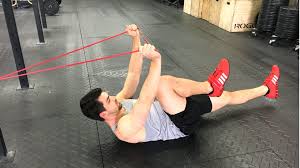
Resistance bands create variable tension throughout the bug exercise movement. As you extend further, the band pulls harder, demanding increased core control. Start with light resistance, progressing to heavier bands as strength improves.
3. Advanced Dead Bug Exercise Challenges:
Weighted dead bug variations use dumbbells or kettlebells in your hands for increased resistance. The additional weight challenges shoulder stability alongside core control. I use light weights—five to ten pounds—because even minimal loads significantly increase difficulty.
Stability ball variations place your hands on a ball rather than extending straight up. The unstable surface demands additional core activation maintaining balance. Dead bug exercise performed on a stability ball represents one of the most challenging variations I’ve encountered.
Dead Bug Exercise for Lower Back Pain Relief:
Chronic lower back pain often stems from poor core stability forcing your spine into compromised positions under load. The dead bug exercise addresses this root cause by teaching your core to protect your spine properly. I experienced persistent lower back discomfort for years before discovering how weak core stability was creating the problem.
Physical therapists frequently prescribe the bug exercise for back pain patients because it builds stability without loading the spine aggressively. Unlike exercises requiring you to hold heavy weights or support your bodyweight, the bug exercise develops core control in a safe, supported position.
After three weeks of daily bug exercise practice, my baseline back pain decreased noticeably. After two months, it disappeared entirely. The transformation came from improved movement patterns rather than just stronger muscles. My core finally learned to stabilize my spine properly during everyday movements.
Dead Bug Exercise vs. Traditional Physical Therapy:
Standard physical therapy often includes the dead bug exercise alongside other stability-focused movements. The exercise provides a controlled environment for rebuilding movement patterns damaged by injury or chronic compensation. Working with a physical therapist initially helps ensure proper execution before practicing independently.
I tried physical therapy previously for my back issues with limited success. Looking back, I realize we focused primarily on stretching and massage without addressing the stability deficit causing my problems. When I finally worked with a therapist who emphasized the dead bug exercise and similar stability work, actual improvement came quickly.
Incorporating Dead Bug Exercise Into Your Routine:
The dead bug exercise works well as both standalone core training and as part of comprehensive workout programs. I perform it during warm-ups before heavy lifting to activate my core properly. The movement primes my stabilizing muscles for the demands ahead.
Using the dead bug exercise between sets of other exercises maintains core engagement throughout workouts while providing active recovery. Three sets of dead bug exercise between bench press sets, for example, keeps your core active without interfering with upper body training.
Dedicated core sessions might include several dead bug exercise variations alongside complementary movements. I combine dead bugs with planks, bird dogs, and pallof presses for complete core development addressing different stability challenges.
Sample Dead Bug Exercise Workout:
Beginners might perform three sets of eight repetitions per side, focusing entirely on perfect technique. Rest sixty seconds between sets to ensure quality doesn’t deteriorate from fatigue. This conservative volume builds foundation without overwhelming untrained stabilizers.
Intermediate practitioners can increase volume to four sets of twelve repetitions with thirty-second rest periods. Adding one advanced variation like banded or weighted dead bugs provides progression while maintaining some standard repetitions for volume.
Advanced training might include supersets pairing different dead bug exercise variations back-to-back. Perform standard dead bugs immediately followed by weighted versions without rest, then recover before repeating. This approach maximizes time under tension and training density.
Dead Bug Exercise for Athletic Performance:
Athletes benefit tremendously from dead bug exercise variations teaching them to maintain stable torsos while generating power through their limbs. Every sport requires this ability—think of a pitcher maintaining torso position while throwing, or a sprinter keeping their core solid while legs drive powerfully.
I’ve noticed a significant transfer from consistent dead bug exercise work to my recreational sports performance. My tennis serve improved because my torso stays stable while my arm accelerates. Basketball movements became more controlled and powerful with better core stability.
Sport-Specific Dead Bug Variations:
Rotational athletes like golfers and baseball players benefit from anti-rotation dead bug variations. Add resistance bands anchored to the side pulling your arms rotationally while performing the movement. Fighting that rotational force builds the exact stability these sports demand.
Runners should emphasize single-leg dead bug variations mimicking the unilateral nature of running. Performing the movement on one leg while extending the opposite arm and leg creates balance challenges similar to single-leg support during running stride.
Troubleshooting Dead Bug Exercise Challenges:
Many people struggle with the dead bug exercise initially, experiencing various difficulties that proper troubleshooting can address. Inability to keep lower back flat usually indicates weak deep core muscles. Use a smaller range of motion, moving limbs only as far as you can while maintaining spinal position.
Neck pain during the dead bug exercise suggests you’re straining to hold your head up rather than letting it rest naturally. Make sure your head remains in contact with the floor throughout. Use a small pillow if needed for comfort.
Cramping in hip flexors indicates they’re compensating for weak core muscles. This was my biggest issue starting out. My hip flexors would cramp painfully after just a few dead bug exercise repetitions. Reducing range of motion and building gradually eliminated this problem over several weeks.
Modifications for Different Body Types:
Taller individuals with longer limbs may need to use bent-knee variations longer before progressing to straight-leg dead bug exercise. The increased leverage from longer limbs makes standard execution significantly more challenging. I’m tall and needed weeks of bent-knee work before advancing.
People with limited shoulder mobility might struggle with overhead arm positioning during the dead bug exercise. Modify by extending arms at forty-five degree angles rather than fully overhead. This adjustment maintains core challenges while respecting shoulder limitations.
Dead Bug Exercise Equipment and Setup:
The dead bug exercise requires minimal equipment, making it accessible for home workouts. A basic exercise mat provides cushioning for your spine against hard floors. I use a simple yoga mat that costs fifteen dollars and works perfectly.
Resistance bands add progression options without significant investment. A basic set with varying resistance levels costs around twenty dollars and provides years of training progression. I started with the lightest band, gradually advancing to heavier resistance as my stability improved.
Small weights like dumbbells or kettlebells enable weighted dead bug variations once you’ve mastered bodyweight execution. You don’t need heavy weights—five to fifteen pounds provides plenty of challenge. I use ten-pound dumbbells currently and they’re legitimately difficult.
Creating Dead Bug Exercise Space at Home:
You need roughly six feet by four feet of floor space for comfortable dead bug exercise execution. Any room with this much clear floor works perfectly. I practice in my bedroom using the space beside my bed.
Quiet environment helps maintain focus on subtle core engagement that effective dead bug exercise demands. I prefer working alone without distractions when practicing technique-focused movements like this. Music is fine, but TV or other significant distractions reduce movement quality.
Conclusion
The dead bug exercise builds foundational core stability that traditional ab exercises completely ignore. This simple-looking movement teaches proper spinal protection, eliminates chronic back pain, and improves movement quality throughout every physical activity. Start incorporating dead bug exercise variations into your routine today and experience the transformation in your core function and pain-free movement.
FAQs
How many dead bug exercise repetitions should beginners perform initially?
Start with just three sets of five repetitions per side, focusing entirely on perfect technique rather than achieving high volume quickly.
Can the dead bug exercise replace all other core training?
While incredibly effective, the dead bug exercise works best combined with complementary movements like planks and anti-rotation exercises for complete core development.
How long until I notice results from regular dead bug exercise?
Most people notice improved core control within one week and significant back pain reduction within two to three weeks of consistent practice.
Should I perform dead bug exercise daily or include rest days?
Daily practice works well since intensity stays relatively low, though three to four sessions weekly provides adequate stimulus for most people’s goals.
What’s the difference between dead bug exercise and bird dog?
Dead bug works from a back-lying position focusing on anti-extension, while bird dog from hands-knees emphasizes anti-rotation and balance differently.
Summary
The dead bug exercise provides accessible, effective core training that actually translates to real-world movement quality and pain reduction. Whether you’re recovering from injury, preventing future problems, or enhancing athletic performance, this fundamental movement deserves regular practice. Your back will thank you.