
Six months back, my chiropractor watched me bend over to pick something up and literally gasped at how terrible my hip hinge looked. She had me try the good morning exercise right there in her office. I couldn’t even bend halfway without my lower back rounding like crazy and my hamstrings screaming bloody murder.
The good morning exercise used to be a staple in every serious lifter’s program back in the day, but somewhere along the line it got labeled as “dangerous” and people just stopped doing it. That’s honestly a massive shame because when you perform the good morning exercise with proper technique, it builds posterior chain strength that literally nothing else touches quite the same way. Your hamstrings, glutes, and lower back all work together in this perfect synergy that translates directly to real-world movements and heavy lifting.
Think about it—how many times daily do you bend forward to pick stuff up, tie your shoes, or grab something off the floor? If you’re doing those movements wrong because you never learned proper hip hinge mechanics, you’re slowly destroying your spine one repetition at a time.
My Personal Journey from Broken to Bulletproof:
Looking back now, I can’t believe how messed up my movement patterns were before learning the good morning exercise properly. Every single time I bent over, my spine would round and flex while my hips barely moved at all. Basically the exact opposite of what should happen. My lower back carried all the stress during everyday bending movements, and after years of this garbage technique, I developed constant nagging pain that just wouldn’t go away no matter what I tried.
Physical therapy gave me some temporary relief through stretches and adjustments, but the pain always came back within days. My PT eventually admitted that we weren’t addressing the root problem—I literally didn’t know how to hinge at my hips properly. She introduced me to the good morning exercise as a teaching tool, and honestly, those first few sessions were humbling as hell. I’m talking about struggling with just the empty barbell, barely able to hinge forward without everything falling apart.
But here’s the crazy part—within three weeks of practicing the good morning exercise twice weekly, my chronic back pain started disappearing. Not just improving a little bit, but genuinely going away. My body was finally learning the movement pattern it should’ve known all along. The good morning exercise taught my nervous system to push my hips back, keep my spine neutral, and let my posterior chain muscles do the work instead of relying on my lower back to handle everything.
Now I do the good morning exercise every single week as part of my regular training, and my back feels better at 34 than it did at 25. I can deadlift heavy, pick up my kids, move furniture, do yard work—all without that familiar ache that used to plague me constantly. The good morning exercise literally fixed a decade of dysfunction in just a few months.
Understanding What Makes the Good Morning Exercise So Effective:
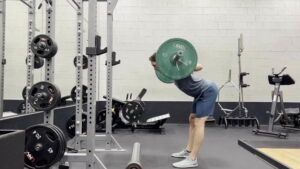
The good morning exercise works by loading your posterior chain—hamstrings, glutes, and spinal erectors—while you’re in a hinged position. You’ve got a barbell across your upper back, same position as a squat, but instead of squatting down, you push your hips backward and fold forward at the waist while keeping your back straight. The resistance from the barbell creates this intense tension through your entire posterior chain as you lower down and then drive back up.
What makes this movement so damn effective is how it demands coordination between multiple muscle groups while teaching proper spinal positioning under load. Your hamstrings and glutes have to work their asses off to control the descent and then powerfully contract to bring you back upright. Meanwhile, your spinal erectors are fighting like crazy to maintain that neutral spine position against the forward bending forces. This combination builds not just strength but also motor control and positional awareness that carries over to literally every other movement you do.
I tried tons of other exercises trying to fix my back issues—hyperextensions, Romanian deadlifts, reverse hypers, all kinds of stuff. They all helped to some degree, but none of them created the same comprehensive improvement I got from the good morning exercise. Something about the unique loading pattern and the need to maintain perfect spinal position just clicked for my body in a way nothing else had.
1. Starting with the Bodyweight Hip Hinge Pattern:
Before you even think about adding a barbell for good morning exercise, you need to master the basic hip hinge pattern with just your bodyweight. Stand with feet hip-width apart, knees slightly bent, and practice pushing your hips straight back behind you like you’re trying to close a car door with your butt. Your torso naturally tips forward as your hips go back, but your spine should stay completely neutral—no rounding forward or arching excessively backward.
I spent probably two full weeks just practicing this basic hinge pattern before my PT let me progress to any loaded version of the good morning exercise. It felt silly at first, like why am I practicing such a simple movement? But developing that motor pattern with zero weight meant I could maintain it once we added resistance. So many people skip this foundational step and jump straight to loaded variations, then wonder why their form falls apart or their back hurts.
2. Adding the Barbell to Your Good Morning Exercise:
Once your bodyweight hinge looks clean, you can start working on the actual good morning exercise with a barbell. Begin with just the 45-pound bar, positioning it across your upper back exactly like you would for a back squat. Take a big breath, brace your core hard, and then initiate the movement by pushing your hips straight back while maintaining that neutral spine position we practiced.
The first time I tried the good morning exercise with a barbell, even just the empty bar felt incredibly heavy because of the long lever arm. You’re basically creating a first-class lever with the weight positioned high on your back and your hips being the fulcrum, so the mechanical disadvantage is significant. Don’t let your ego push you to add weight before you’re ready—I made that mistake and paid for it with a strained lower back that set me back two weeks.
3. Finding Your Optimal Range of Motion:
How far you descend during the good morning exercise depends on your individual hamstring flexibility, hip mobility, and ability to maintain a neutral spine throughout the movement. Some people can fold almost parallel to the floor while keeping perfect position. Others can only get to maybe 45 degrees before their back starts rounding. Neither is right or wrong—you work within your current capabilities and gradually expand that range over time.
My range of motion sucked initially. I could barely hinge to 60 degrees before my lower back wanted to round over. Forcing it deeper would’ve just reinforced bad movement patterns and risked injury. I stayed within my pain-free, neutral-spine range and over several months of consistent good morning exercise work, my hamstrings lengthened and my control improved to where I can now hinge to just above parallel comfortably.
4. Breathing and Bracing During the Movement:
Proper breathing and core bracing makes or breaks your good morning exercise performance. Before each rep, take a deep breath into your belly, brace your abs like someone’s about to punch you in the gut, and maintain that tension throughout the entire repetition. This intra-abdominal pressure supports your spine and prevents dangerous flexion under load.
I had terrible bracing habits initially, basically just holding my breath up in my chest instead of creating real core stability. Learning to breathe into my belly and brace properly made the good morning exercise feel completely different—way more stable and controlled. My lower back stopped feeling sketchy during the movement once I got this dialed in.
Different Good Morning Exercise Variations for Different Goals:
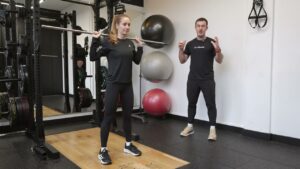
- Cambered bar good mornings shift the weight slightly forward, increasing difficulty and posterior chain demands
- Safety squat bar variations change the loading pattern and feel more comfortable for some people’s shoulders
- Seated good morning exercise takes your hamstrings somewhat out of the equation, emphasizing lower back and glutes
- Single-leg good mornings add a balance component and address strength imbalances between sides
- Deficit good mornings standing on a platform increase range of motion for advanced lifters
- Paused good morning exercise holds at the bottom position build strength in the stretched position
- Banded good mornings provide accommodating resistance that increases as you hinge forward
Fixing Common Technical Problems That Limit Your Progress:
The biggest technical issue I see people make with the good morning exercise—and the one I struggled with myself—is allowing the lower back to round at the bottom of the movement. Once your spine flexes under load, you’re basically asking for an injury. The whole point is maintaining that neutral position throughout, so if you can’t keep a flat back through the full range, you need to either reduce the depth or decrease the weight.
Knee angle matters more than most people realize during the good morning exercise. Your knees should have a slight bend—maybe 10 to 20 degrees—that stays constant throughout the movement. Some people lock their knees out completely, which limits how far they can hinge and puts excessive stress on their hamstrings. Others start bending their knees more and more as they descend, which basically turns the good morning exercise into a weird squat variation that defeats the purpose.
Bar position screws up a lot of people’s good morning exercise attempts. The bar should sit in the same spot you’d use for a high-bar back squat—resting on your traps, not down on your rear delts like a low-bar squat position. Having the bar too low shifts your center of gravity and makes maintaining balance way harder. I experimented with different bar positions early on and definitely found high-bar placement worked best.
1. The Hip Push-Back Cue That Changed Everything:
My physical therapist gave me this cue that finally made the good morning exercise click: “Push your hips back toward the wall behind you like you’re trying to move it with your butt.” That simple mental image helped me understand that the movement initiates from the hips, not from bending at the waist. Once I started genuinely pushing my hips back first and letting my torso tip as a consequence rather than the driver, everything felt smoother and more controlled.
2. Keeping Your Weight Over Mid-Foot:
Balance during the good morning exercise should keep your weight centered over the middle of your foot throughout the entire rep. I used to shift forward onto my toes as I descended, which threw off my whole movement pattern and made the exercise feel unstable and sketchy. Consciously thinking about keeping pressure through my whole foot, even driving slightly through my heels, fixed this compensation immediately.
Programming the Good Morning Exercise for Maximum Results:
How you program the good morning exercise depends entirely on your goals and what else you’re doing in your training. I use it primarily as an accessory movement after my main lifts on lower body days, typically performing 3 to 4 sets of 8 to 12 reps with moderate weight. This rep range builds strength and muscle without beating me up too badly since I’m already fatigued from squats or deadlifts.
Some powerlifters use the good morning exercise as a primary movement, going heavier with sets of 3 to 6 reps to build maximum strength. That approach can work well if you’re specifically trying to strengthen your posterior chain for bigger deadlifts, but personally I found moderate weights and higher reps built better results without the recovery demands of heavy loading.
Frequency matters too—the good morning exercise creates significant fatigue in your lower back and hamstrings, so doing it too often can interfere with recovery from your main lifts. I do the good morning exercise once weekly, occasionally twice if I’m in a phase where I’m really emphasizing posterior chain development. More than that and my deadlifts start suffering because I’m constantly dealing with hamstring and low back fatigue.
1. My Personal Good Morning Exercise Routine:
On my lower body training days, I typically squat first, then do the good morning exercise as my second movement. I start with a couple warm-up sets using just the bar and then maybe 95 pounds to groove the pattern and get blood flowing. Then I work up to my top set weight—currently around 185 pounds for sets of 10 reps.
I don’t go super heavy because that’s not my goal with this exercise. I’m chasing the movement quality and the muscle-building stimulus, not trying to set records. Keeping the weight moderate lets me maintain perfect form throughout all my working sets, which means I’m actually training the pattern I want to reinforce rather than developing compensation strategies to move heavier weight.
2. Pairing the Good Morning Exercise with Other Movements:
The good morning exercise pairs beautifully with quad-dominant exercises because they work opposing muscle groups. I often superset good mornings with leg extensions or leg presses, getting efficient work for both the front and back of my legs while one side recovers as I train the other.
You could also pair the good morning exercise with core work like planks or ab wheel rollouts. Both movement categories emphasize spinal stability, so they complement each other well from a motor learning perspective. Plus it makes efficient use of your rest periods between sets.
3. Deloading and Recovery Weeks:
Every fourth or fifth week, I’ll reduce the volume and intensity of my good morning exercise work as part of a planned deload. Maybe I’ll drop down to just 2 sets instead of my usual 4, and I’ll reduce the weight by about 20 to 30 percent. This scheduled lighter week lets my body recover fully and actually helps me come back stronger for the next training block.
I learned the hard way that just constantly pushing forward with the good morning exercise without any backing off leads to accumulated fatigue and eventually either injury or burnout. Strategic deloads keep me healthy and progressing long-term.
How the Good Morning Exercise Fixed My Deadlift Lockout:
Before I started doing the good morning exercise regularly, my deadlift always got stuck at the same spot—right around knee height. I could break the bar off the floor fine, but once I got to mid-shin, everything would slow down dramatically and I’d grind like crazy to finish the rep. Turns out my posterior chain, particularly my hamstrings and glutes, couldn’t maintain tension in that lengthened position to drive the bar through lockout.
Adding the good morning exercise twice weekly for about eight weeks completely transformed my deadlift. That exact sticking point where I used to struggle became smooth and powerful. The good morning exercise had built strength in the precise position where my deadlift was weak—when my hips are still relatively back but need to powerfully extend to finish the lift. The carryover was honestly shocking.
I’m not saying the good morning exercise is some magic fix for everyone’s deadlift issues, but if your problem is specifically posterior chain strength in the extended hip position, this movement addresses it more directly than probably anything else. My deadlift jumped 30 pounds in a couple months just from adding good mornings as an accessory, with basically no other changes to my program.
1. Building Hamstring Strength Through the Full Range:
The good morning exercise loads your hamstrings in a lengthened position, which creates a different training stimulus than exercises like leg curls where the hardest part is when the muscle is shortened. This eccentric emphasis as you lower into the good morning builds hamstring strength and resilience that protects against strains and injuries.
My hamstrings used to get really tight and feel cranky after heavy deadlift sessions. Since incorporating the good morning exercise regularly, they feel way better and recover faster. The controlled eccentric loading seems to have built both strength and tissue quality in ways my previous training wasn’t addressing.
2. Strengthening Your Spinal Erectors Functionally:
Your spinal erector muscles—those long muscles running along your spine—work isometrically during the good morning exercise to maintain neutral position against significant bending forces. This builds incredible endurance and strength in these crucial stabilizers. My lower back used to fatigue quickly during high-rep deadlift work or when I spent long days doing physical labor. Now my spinal erectors have the endurance to maintain good position for way longer before fatiguing.
Troubleshooting Pain and Discomfort Issues:
If you feel the good morning exercise primarily in your lower back rather than your hamstrings and glutes, something’s off with your technique. This usually means you’re allowing spinal flexion or extension instead of maintaining neutral. Film yourself from the side and check whether your lower back position stays consistent throughout the movement.
Sharp pain during the good morning exercise obviously means stop immediately and figure out what’s wrong. Dull muscle fatigue and burn in your hamstrings and glutes is normal and expected. Sharp, shooting, or pinching sensations in your back are not normal and indicate you’re doing something wrong or the exercise isn’t appropriate for you currently.
Some people’s anatomy just doesn’t jive well with the good morning exercise no matter how perfect their technique. If you’ve worked with a coach, your form looks solid, but it still feels wrong or causes pain, don’t force it. Plenty of other exercises can build your posterior chain without beating up your back. Romanian deadlifts, reverse hypers, or back extensions might work better for your individual structure.
1. Working Around Lower Back Tweaks:
If you’ve got a minor lower back tweak or irritation, you can often still do the good morning exercise by reducing the range of motion and weight significantly. I’ve had a couple instances where my back felt a little off, and I just did good mornings with the empty bar through a shortened range, focusing on the movement pattern rather than any strength challenge. That light movement actually seemed to help recovery rather than making things worse.
2. Adjusting for Hip Mobility Limitations:
Limited hip mobility will restrict how far you can hinge during the good morning exercise while maintaining a neutral spine. Rather than forcing deeper and compensating with spinal flexion, just work within your current range. Consistent practice of the good morning exercise itself actually improves hip mobility over time as your body adapts to the movement demands.
I do some light hip mobility work before good morning exercise sessions—leg swings, hip circles, some dynamic stretching—and it definitely helps me access a better range of motion during the actual exercise. The warm-up doesn’t need to be elaborate, just five minutes of movement prep makes a noticeable difference.
Additional Benefits I Didn’t Expect from the Good Morning Exercise:
My posture improved dramatically from regular good morning exercise training, which honestly surprised me since I was just trying to fix my back pain and build strength. The exercise reinforces proper spinal positioning so frequently that it apparently carried over to my default posture throughout the day. I used to slouch constantly at my desk; now I naturally maintain a better position without conscious effort.
Athletic performance in completely unrelated activities improved too. My golf swing got more powerful because my posterior chain could generate more force through the hip hinge motion. Sprinting felt smoother and faster. Even random stuff like chopping firewood or shoveling snow became easier because my body knew how to properly hinge and use my hips rather than relying on my back for everything.
The mental confidence from mastering the good morning exercise transferred to other challenging movements. If I can control a loaded barbell while hinging forward—which feels inherently sketchy at first—then other exercises seem less intimidating by comparison. There’s something psychologically empowering about getting really good at a movement that looks and feels difficult.
Conclusion
The good morning exercise transformed my back health, fixed my deadlift, and taught my body movement patterns it should’ve known all along. Yeah, it looks a little weird and people at commercial gyms might give you strange looks, but who cares when the results speak for themselves. Stop ignoring your posterior chain and start incorporating this old-school movement that’s stood the test of time.
FAQs
Q1. Is the good morning exercise actually dangerous like people say?
No more dangerous than any other barbell exercise when performed correctly. Poor technique creates injury risk, but proper execution is perfectly safe and beneficial.
Q2. How much weight should I use for good morning exercise?
Start with just the bar and progress slowly. Most people use 30 to 50 percent of their squat weight once they build proficiency.
Q3. Can the good morning exercise replace deadlifts in my program?
No, they serve different purposes. Good mornings are excellent assistance work but shouldn’t completely replace deadlift variations for most people’s goals and development.
Q4. How low should I go during each rep?
Descend until you feel your lower back wanting to round, then stop. Depth varies individually based on mobility and should never compromise a neutral spine.
Q5. Will good morning exercise make my back bigger and thicker?
Yes, it builds your spinal erectors significantly, adding muscle mass to your lower and mid-back over time with consistent progressive training.
Summary
The good morning exercise addresses posterior chain weakness and movement dysfunction that causes chronic back pain and limits strength development. Master this fundamental hip hinge pattern and watch your back health, deadlift performance, and overall movement quality transform. Your back will finally feel as good as it should.