Last spring, I couldn’t walk up stairs without my right hip screaming in pain. Physical therapy revealed shockingly weak gluteus medius muscles causing everything. The therapist showed me specific gluteus medius exercises, and honestly, I felt embarrassed how such simple movements completely wiped me out initially.
Most gym-goers obsess over building bigger glutes but completely ignore the gluteus medius—that smaller muscle on your hip’s outer side. This overlooked muscle controls hip stability, prevents knee injuries, fixes lower back pain, and keeps your pelvis level when you walk or run.
Weak gluteus medius muscles create a domino effect of compensations throughout your entire body, eventually leading to pain and dysfunction you’ll definitely regret ignoring.
Stop Limping Through Life with Preventable Hip Problems:
Your hips hurt because nobody ever taught you proper gluteus medius exercises. Physical therapists see this constantly—active people with strong legs but pathetically weak hip stabilizers. Let’s fix that problem starting today with movements that actually work.
The Hidden Epidemic of Gluteus Medius Weakness:

Here’s something wild—I’d been lifting weights consistently for eight years before discovering my gluteus medius was basically non-functional. All those squats and deadlifts built my bigger glute muscles fine, but they did absolutely nothing for this crucial stabilizer. The weakness caught up with me when I started running longer distances and my hip just couldn’t handle the repetitive single-leg loading.
Sitting all day at desk jobs wreaks havoc on your gluteus medius. When you sit for hours, this muscle essentially shuts off and forgets how to fire properly. Then you stand up, try doing athletic stuff, and wonder why your hips feel unstable or painful. Your body’s been compensating with other muscles that weren’t designed for that job, creating imbalances that eventually break down.
What really opened my eyes was learning how gluteus medius weakness affects everything below and above it. Weak hips cause your knees to cave inward during movements, which destroys knee cartilage over time. Your lower back compensates for unstable hips, leading to chronic tightness and pain. Even your ankles suffer because they’re trying to stabilize what your hips should be controlling. Targeted gluteus medius exercises fix all this by addressing the root cause instead of just treating symptoms.
How Gluteus Medius Exercises Changed My Running Completely:
Before strengthening my gluteus medius, every run beyond three miles ended with nagging hip discomfort that’d stick around for days. I tried everything—new shoes, different running surfaces, stretching routines—but nothing helped because I was ignoring the actual problem. My physical therapist watched me run on a treadmill and immediately spotted the issue: my hips were dropping dramatically with each step because my gluteus medius couldn’t stabilize properly.
She prescribed specific gluteus medius exercises three times weekly. I’m talking about really simple stuff that looked almost silly—standing on one leg, doing tiny movements against resistance bands, holding awkward positions. But man, these “easy” exercises absolutely torched muscles I didn’t even know existed. My hips would be shaking within thirty seconds, and I’d wake up the next day with soreness in completely new places.
The results honestly shocked me. After just four weeks of consistent gluteus medius exercises, my running form improved noticeably. That hip drop disappeared, my stride felt more efficient, and the nagging pain vanished completely. I could run six, seven, even eight miles without any discomfort. The difference came from finally having the hip stability my body desperately needed but had been missing for years.
1. Single-Leg Balance Work That Builds Real Stability:
Standing on one leg sounds ridiculously simple until you actually try holding it for sixty seconds while maintaining perfect alignment. This basic gluteus medius exercise revealed how unstable my hips really were. My standing leg would wobble all over the place, my hip would drop, and I’d lose balance within ten seconds initially.
Now I can stand on one leg for several minutes without wavering. The progression happened gradually—first just balancing, then adding arm movements, then closing my eyes, then standing on unstable surfaces. Each variation challenged my gluteus medius in slightly different ways, building comprehensive stability that transferred directly to running and daily activities.
2. Side-Lying Hip Abduction for Targeted Strengthening:
Lying on your side and lifting your top leg straight up isolates the gluteus medius beautifully. This became my go-to exercise because I could really feel the target muscle working without other muscles taking over. The key is keeping your leg perfectly aligned—not letting it rotate or drift forward, which would shift work away from the gluteus medius.
I started with bodyweight only, performing three sets of fifteen reps per side. Even without resistance, my gluteus medius would fatigue quickly. After a few weeks, I added ankle weights, then resistance bands for progressive overload. The constant tension from bands creates a different stimulus than weights, and honestly, I found bands more effective for this particular movement.
3. Clamshells for Hip External Rotation Strength:
Clamshells look absolutely ridiculous, but they’re genuinely effective gluteus medius exercises. You lie on your side with knees bent, feet together, then open your top knee while keeping your feet touching—like a clamshell opening. The movement’s tiny, maybe six to eight inches of motion, but it creates intense burning in your gluteus medius within repetitions.
What I love about clamshells is how they’re accessible anywhere. Hotel room, living room floor, outside in the park—doesn’t matter. I keep a light resistance band in my bag and can knock out a quick set of clamshells whenever I’ve got a few minutes. These became part of my pre-run warm-up routine, activating my gluteus medius before asking it to stabilize during miles of running.
4. Single-Leg Deadlifts for Functional Strength:
Single-leg deadlifts combine gluteus medius work with hamstring and glute strengthening in one functional movement. You stand on one leg, hinge forward at the hip while extending the other leg behind you for balance, then return to standing. Your gluteus medius works overtime stabilizing your pelvis and preventing your hip from dropping during the entire movement.
These absolutely humbled me initially. I thought I was pretty strong from regular deadlifts, but single-leg versions exposed serious stability deficits. I’d wobble all over, my hip would hike up, and I couldn’t maintain balance beyond a few shaky reps. Starting with just bodyweight and progressing very gradually built the stability and strength needed for proper execution.
Essential Equipment for Gluteus Medius Exercises at Home:

- Resistance bands in various strengths provide progressive difficulty without expensive equipment
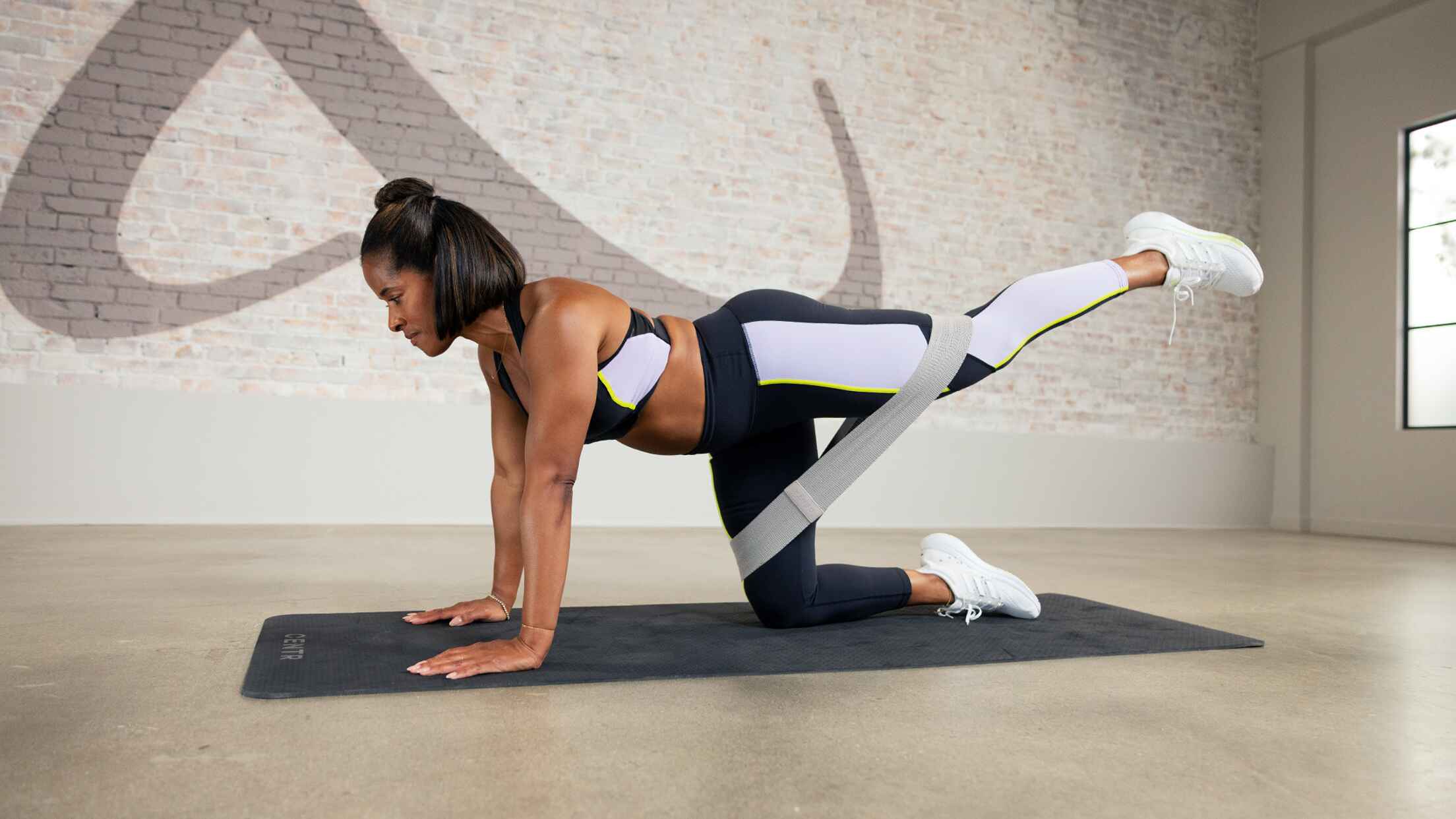
- Small loop bands work perfectly for clamshells and lateral band walks
- Ankle weights add resistance to side-lying exercises when bands aren’t enough
- Yoga mat cushions your hip and knee during floor-based movements
- Balance pad or foam cushion increases difficulty for single-leg exercises
- Full-length mirror helps check form and alignment during standing movements
- Sturdy chair or wall provides balance support when learning new exercises
Building Your Gluteus Medius Exercise Routine That Actually Works:
Progressive programming matters tremendously with gluteus medius exercises, maybe even more than with bigger muscle groups. These smaller stabilizer muscles fatigue quickly but also recover relatively fast, allowing more frequent training than you’d do for something like squats. I train my gluteus medius four to five times weekly now without any overtraining issues.
Starting conservatively prevents the discouragement that comes from doing too much too soon. In my first week of gluteus medius exercises, I could barely complete two sets of ten reps for each movement. My hips would shake violently, muscles would burn intensely, and I’d feel completely worked despite the “easy” exercises. Accepting that starting point and progressing patiently built much better results than trying to match some advanced program immediately.
I structure my gluteus medius exercises in two different ways depending on the day. Sometimes I dedicate ten to fifteen minutes solely to targeted hip work, performing multiple exercises back-to-back. Other days, I incorporate gluteus medius exercises into my warm-up before running or lifting, priming those muscles to fire properly during the upcoming activity. Both approaches work well and serve different purposes in my overall training.
1. Creating a Beginner-Friendly Starting Point:
Brand new to gluteus medius exercises? Start with just three movements: side-lying hip abduction, clamshells, and single-leg balance holds. Perform two sets of ten to twelve reps for the first two exercises, and hold single-leg balance for twenty to thirty seconds per side. Do this routine three times weekly, resting at least one day between sessions.
- Focus completely on feeling the correct muscle working rather than chasing high reps
- Stop each set when your form starts breaking down, even if you haven’t hit your rep target
- Film yourself occasionally to check alignment and catch compensation patterns you can’t feel
- Expect significant muscle soreness initially in places you’ve probably never felt before
- Increase reps by two to three per week once current volume feels manageable
- Add new exercises only after mastering the basics with perfect form
2. Intermediate Progression Strategies That Keep You Improving:
Once bodyweight gluteus medius exercises become comfortable, several progression methods accelerate your development. Adding resistance through bands or weights provides the most obvious progression path. I moved from bodyweight to light bands, then medium bands, then added ankle weights on top of band resistance for side-lying work.
Tempo variations increase difficulty without adding external resistance. Slowing down the lifting phase, pausing at the top, or emphasizing the lowering phase all create greater muscle tension and fatigue. I’ll sometimes perform clamshells with a five-second hold at maximum opening, which absolutely torches my gluteus medius compared to continuous reps.
3. Advanced Variations for Serious Hip Strength:
Single-leg squats demand tremendous gluteus medius strength maintaining pelvic stability throughout the movement. Your standing leg’s gluteus medius prevents your opposite hip from dropping while you lower into the squat. These remain challenging for me even after months of consistent training—truly advanced gluteus medius exercises requiring significant strength and control.
Lateral band walks with heavy resistance create brutal gluteus medius fatigue quickly. Walk sideways against strong band resistance for twenty to thirty steps, maintaining slight knee bend and upright posture. My gluteus medius will be screaming after just two or three trips across the room. The continuous tension from lateral movement patterns provides stimulus you can’t replicate with other exercises.
Common Mistakes Sabotaging Your Gluteus Medius Exercises:
Compensating with other muscles represents the biggest mistake I see people make with gluteus medius exercises. During side-lying hip abduction, people let their leg drift forward or rotate their hip, which shifts work from the gluteus medius to other muscles. You think you’re doing the exercise, but the target muscle barely works because you’re cheating without realizing it.
Moving too fast reduces muscle tension and bypasses the motor control benefits these exercises provide. I watch people at the gym banging out rapid-fire clamshells or leg lifts, bouncing through the range of motion instead of controlling it deliberately. Slow, controlled gluteus medius exercises with pauses and focused muscle contraction build exponentially better results than rushing through high reps.
Inadequate activation before compound exercises wastes opportunities to train your gluteus medius functionally. If you’re doing squats or deadlifts without first activating your gluteus medius through specific exercises, those stabilizer muscles probably won’t engage properly during your lifts. I now always do two to three gluteus medius exercises before lower body training, and my hip stability during heavy lifts improved dramatically.
Alignment Issues That Reduce Effectiveness:
Hip rotation during side-lying exercises shifts work away from your gluteus medius toward your hip flexors. Keep your top hip stacked directly above your bottom hip, preventing any forward or backward rotation. I put my free hand on my hip to feel whether I’m maintaining proper position throughout each rep.
Trendelenburg gait—where your hip drops excessively on one side when standing on the opposite leg—indicates your gluteus medius isn’t stabilizing properly. If you notice this happening during single-leg exercises, reduce the difficulty until you can maintain level hips throughout the movement.
How Gluteus Medius Exercises Eliminated My Knee Pain:

My right knee had bothered me on and off for probably two years before I connected it to hip weakness. I tried knee sleeves, different shoes, ice, rest—typical stuff people do for knee pain. Nothing provided lasting relief because I was treating symptoms while ignoring the cause upstream at my hip.
Turns out weak gluteus medius was letting my knee cave inward during single-leg activities like running and stairs. That valgus collapse, as my PT called it, put excessive stress on my knee’s inner structures. Over time, that repetitive poor alignment created the pain I’d been experiencing. The solution wasn’t fixing my knee—it was strengthening my hip to control my knee’s position.
After six weeks of dedicated gluteus medius exercises, my knee pain disappeared completely and hasn’t returned in over a year. The exercises taught my hip to stabilize properly, which automatically corrected my knee alignment during movements. My knee was never the problem—it was just the victim of poor control happening further up the chain.
1. Understanding the Hip-Knee-Ankle Connection:
Your body works as an interconnected system where weakness or dysfunction in one area creates problems elsewhere. Weak gluteus medius at your hip causes your femur to rotate inward, which forces your knee into poor alignment, which affects your ankle position and foot mechanics. This kinetic chain reaction explains why so many knee and ankle issues actually stem from hip weakness.
I see this constantly now that I know what to look for. Watch people walking or running, and you’ll notice many have excessive hip drops on one side or knees that dive inward with each step. Those movement faults scream gluteus medius weakness, and those people are probably heading toward injury eventually unless they address it.
2. Preventing Future Injuries Through Hip Stability:
Building strong, functional gluteus medius through targeted exercises acts like injury insurance for your entire lower body. The stability these muscles provide protects your knees, ankles, and lower back from the excessive stress that eventually causes pain and dysfunction. I think of gluteus medius exercises as preventive maintenance—way easier than dealing with injuries after they develop.
Now that my hips are stable and strong, I can run, hike, play sports, and lift weights without worrying about pain popping up. That confidence and freedom of movement is honestly priceless. The twenty minutes weekly I spend on gluteus medius exercises seems like the best investment I make in my physical health.
Gluteus Medius Exercises for Different Activities and Sports
Runners absolutely need strong gluteus medius for injury prevention and performance. Every single step you take while running requires your stance leg’s gluteus medius to stabilize your pelvis against the impact forces trying to tilt it. Weak stabilization means inefficient running form, wasted energy, and eventually injury.
Cyclists benefit from gluteus medius exercises even though cycling seems like pure leg pushing. Your gluteus medius stabilizes your pelvis on the saddle, especially during hard efforts or climbing out of the saddle. Better stability translates to more power transfer to the pedals instead of wasteful rocking and shifting.
Team sport athletes who do lots of lateral movement, cutting, and single-leg landings desperately need bulletproof gluteus medius strength. Basketball, soccer, tennis—these activities create huge demands on hip stability. I played recreational basketball for years with weak hips and constantly dealt with various aches and pains. Now my hips feel rock solid during games.
1. Runners’ Essential Hip Stability Work:
Runners should perform gluteus medius exercises at least three times weekly, preferably before runs as activation work. I do a quick ten-minute routine of band walks, single-leg balance, and clamshells right before heading out. My hips fire properly from step one instead of taking a mile to wake up.
Incorporating single-leg strength exercises like step-ups, single-leg deadlifts, and split squats into your training builds functional gluteus medius strength that directly transfers to running. These movements require your gluteus medius to stabilize under load, mimicking the demands of running but with greater resistance.
2. Athletes Needing Explosive Hip Stability:
Sports involving jumping, landing, and rapid direction changes require your gluteus medius to stabilize against very high forces very quickly. Plyometric progressions that include single-leg hops, lateral bounds, and single-leg landings train this explosive stabilization capacity.
I added single-leg box jumps and lateral hops to my routine once I built baseline gluteus medius strength. These power-focused exercises feel completely different from slow, controlled movements but challenge hip stability in ways that directly improve athletic performance.
Rehabilitation and Recovery Considerations:
Coming back from hip or lower body injuries requires rebuilding gluteus medius strength that likely deteriorated during your time off. I’ve had a couple minor setbacks over the years, and my gluteus medius always weakens quickly during periods of reduced activity. Getting it back to full strength becomes priority number one during recovery.
Start with extremely basic gluteus medius exercises even if they feel embarrassingly easy. After my hip flexor strain last year, I had to go back to beginner-level movements despite having built solid strength previously. Accepting that temporary regression and rebuilding patiently prevented re-injury that would’ve happened if I’d pushed too hard too soon.
Physical therapists use gluteus medius exercises as foundational treatment for tons of lower body issues—IT band syndrome, patellofemoral pain, plantar fasciitis, lower back pain. Strengthening this crucial stabilizer helps resolve so many seemingly unrelated problems because it addresses biomechanical dysfunction at a root level.
Working Around Pain and Limitations:
If certain gluteus medius exercises cause pain, modify them or choose different variations rather than pushing through discomfort. I couldn’t do side-lying hip abduction initially without hip pinching, so I focused on clamshells and single-leg balance until the pinching resolved. Different exercises work the same muscle from different angles, so alternatives always exist.
Some people have structural hip variations affecting which gluteus medius exercises feel natural versus uncomfortable. Listen to your body and emphasize movements that allow you to feel the target muscle working without joint pain or pinching sensations.
Tracking Your Gluteus Medius Exercise Progress Effectively:
Measuring improvement with gluteus medius exercises involves both objective performance metrics and subjective functional changes. I track reps, resistance levels, and hold times for each exercise, watching those numbers gradually increase over weeks and months. Seeing concrete progression keeps me motivated and confirms my training’s working.
Functional improvements often matter more than pure exercise performance though. Can you now walk or run without hip pain? Do stairs feel easier? Has your single-leg balance improved during daily activities? These real-world changes indicate your gluteus medius exercises are successfully transferring to actual life.
Video analysis reveals form improvements and compensations you can’t see or feel. I film myself periodically performing single-leg exercises, checking for hip drop, knee alignment, and overall stability. Comparing current videos to earlier ones shows obvious improvements in movement quality as my gluteus medius strengthens.
Setting Meaningful Goals Beyond Just Reps:
Instead of only tracking exercise repetitions, set functional goals related to activities you care about. Maybe it’s running a certain distance pain-free, hiking without hip fatigue, or playing a full basketball game without discomfort. These meaningful targets provide better motivation than arbitrary exercise numbers.
I set a goal of running a half marathon pain-free after my hip issues had limited me to three-mile runs maximum. Achieving that goal after three months of dedicated gluteus medius exercises felt way more rewarding than hitting some rep target on an isolation exercise.
Integrating Gluteus Medius Work with Your Current Training:
You don’t need to completely overhaul your existing routine to incorporate effective gluteus medius exercises. I add them into my warm-up before lower body workouts, getting double benefit—activation for better performance during my main lifts plus dedicated strengthening of these crucial stabilizers.
Active rest periods between sets of other exercises provide perfect opportunities for gluteus medius work. While resting between squat sets, I’ll do a quick set of clamshells or lateral band walks. This approach maximizes training efficiency without extending workout duration.
Standalone hip stability sessions twice weekly complement your regular training beautifully. I dedicate fifteen to twenty minutes on my rest days to focused gluteus medius exercises, ensuring they get adequate attention without competing for energy with bigger lifts.
1. Pre-Workout Activation Sequences:
Five to ten minutes of gluteus medius activation before runs or lower body workouts dramatically improves how those muscles fire during your training. I do three exercises—band walks, clamshells, and single-leg deadlifts—for two sets of twelve to fifteen reps each. My hips feel completely different during my workout when I’ve activated properly versus skipping this prep.
2. Post-Workout Strengthening Sessions:
Some people prefer doing gluteus medius exercises after their main workout when these muscles are already warm and fatigued. The additional fatigue creates a different training stimulus. I occasionally structure my training this way, performing higher-rep gluteus medius exercises to complete failure after finishing my primary lifts.
Nutrition and Recovery Supporting Hip Strength:
Building stronger gluteus medius requires the same nutritional support as any muscle development—adequate protein, sufficient calories, and proper hydration. I make sure I’m eating enough protein daily to support muscle repair and growth from my training stimulus.
Sleep quality dramatically affects recovery and strength gains from gluteus medius exercises. During periods of poor sleep, I notice my progress stalls and workouts feel harder. Prioritizing seven to eight hours of quality sleep nightly makes a noticeable difference in how quickly my strength improves.
Active recovery techniques like foam rolling, stretching, and light movement between training sessions help manage muscle soreness and maintain tissue quality. I foam roll my hips, glutes, and IT band regularly, which seems to reduce soreness and keep everything moving well.
Addressing Muscle Soreness Properly:
Gluteus medius soreness feels different from larger muscle soreness—more of a deep, localized ache in your hip’s outer region. This indicates you’ve actually worked the target muscle effectively. Light activity and gentle stretching help manage this soreness better than complete rest.
I’ve learned to distinguish between productive muscle soreness and problematic joint pain. Muscle soreness improves with movement and warm-up, while joint issues often worsen with activity. Understanding this difference prevents training through actual problems that need rest or professional evaluation.
Conclusion
Gluteus medius exercises transformed my hip health from chronically painful and unstable to strong and bulletproof in just a few months. These unglamorous movements don’t look impressive, but they deliver life-changing results by fixing fundamental stability deficits most people don’t even know they have. Start incorporating targeted gluteus medius work today and experience pain-free movement you probably haven’t felt in years.
FAQs
How quickly can I expect results from consistent gluteus medius exercises?
Most people notice improved stability and reduced pain within two to three weeks of consistent training, with significant strength gains evident after six weeks.
Do I need special equipment for effective gluteus medius exercises at home?
No, many effective exercises use just bodyweight, though resistance bands costing around ten dollars greatly expand your progression options and exercise variety.
Can gluteus medius exercises fix my chronic lower back pain?
Often yes, if your back pain stems from hip instability and poor pelvic control. Strengthening these stabilizers addresses common biomechanical causes of back discomfort.
How often should I perform gluteus medius exercises weekly for best results?
Three to five sessions weekly provides optimal stimulus for strength and stability development without overtraining these smaller muscles that recover relatively quickly.
Will squats and deadlifts alone strengthen my gluteus medius adequately?
No, these compound exercises primarily work larger glute muscles while often neglecting the gluteus medius, which requires specific isolation and stability exercises.
Summary
Gluteus medius exercises address the hidden weakness causing your hip pain, knee problems, and poor movement quality. Consistent training with proper technique builds the stability your body desperately needs for pain-free activity and injury prevention. Dedicate just fifteen minutes three times weekly and watch your movement transform completely.