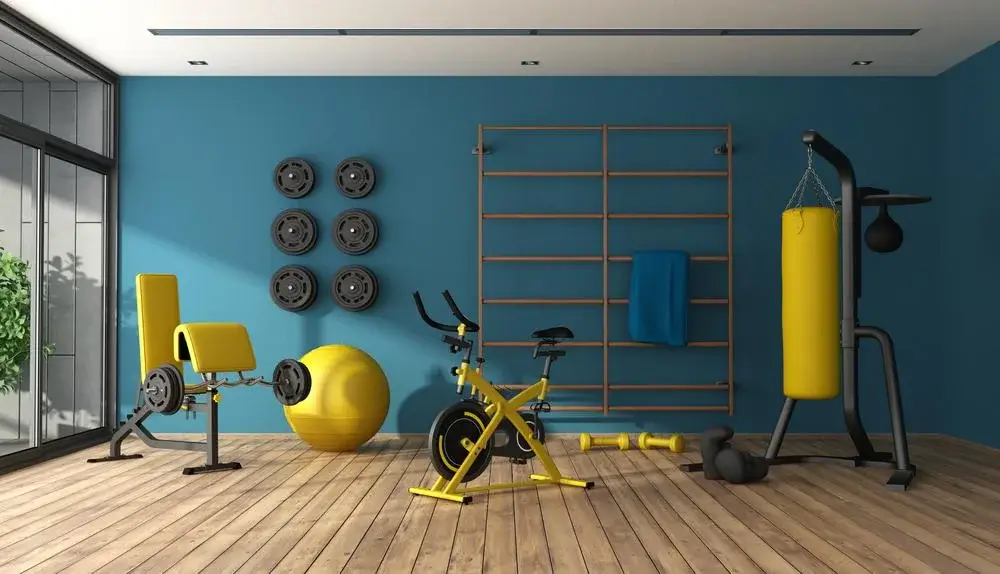
I built my first home gym in a spare bedroom with about three hundred dollars worth of equipment after realizing I was spending more time commuting to the commercial gym and back than I was actually spending training inside it on most weekday mornings during my home gym equipment workout.
The first month felt like I was making compromises and settling for second best compared to the fully equipped facility I had been using for years with every machine imaginable available whenever I wanted it. Six months later I was training more consistently than I ever had at any commercial gym because every friction point that had quietly been eroding my attendance had disappeared completely when the gym was twenty steps from my kitchen.
A home gym equipment workout gives you something that commercial gym training almost never can which is complete elimination of every barrier between deciding to train and actually starting your first set without the commute, the parking, the wait for equipment, and the social dynamics of shared training spaces that quietly accumulate into reasons not to go on the days when motivation is not already high enough to overcome them.
Building an effective home gym does not require spending thousands of dollars on commercial-grade equipment or dedicating an entire room to training from the very beginning of the process. Understanding which pieces of equipment deliver the most training value per dollar spent and how to use what you have intelligently produces better long-term training outcomes than owning expensive equipment used inconsistently and without direction.
Transform your body with this amazing home gym equipment workout that builds real strength and delivers serious results every day.
Home Gym Equipment Workout and Starting With the Right Foundation:
Building a home gym that supports genuinely effective training requires thinking about equipment selection differently from how most people approach it, which is by buying whatever looks most impressive or whatever they remember using at a commercial gym rather than by asking which tools deliver the broadest training coverage for the lowest cost and space footprint.
The foundation of any home gym equipment workout worth taking seriously is resistance that challenges every major muscle group progressively over time and the tools that deliver this most efficiently in home environments look different from the machines that dominate commercial gym floors because home training prioritizes versatility, space efficiency, and cost-effectiveness over the single-purpose specialization that commercial gyms can afford because they are serving hundreds of members simultaneously rather than one household.
Home Gym Equipment Workout and the Best Starting Equipment:
Most people overthink home gym equipment purchasing because the fitness industry markets an overwhelming array of products each claiming to be essential for specific training goals and cutting through that noise requires understanding that a handful of versatile tools cover the vast majority of training needs more effectively than dozens of specialized pieces that each serve one narrow purpose.
A pair of adjustable dumbbells, a pull-up bar, a resistance band set, and a quality exercise mat represent the core home gym equipment workout foundation that covers pushing, pulling, lower body, and core training for most people at most fitness levels without requiring significant floor space or financial investment that makes the whole project feel prohibitive before it even begins.
Adjustable Dumbbells:
Adjustable dumbbells are the single most valuable piece of home gym equipment for most people because they replace an entire rack of fixed weight dumbbells in the footprint of two compact units that adjust quickly between weights as you move from exercise to exercise throughout your home gym equipment workout session. The upfront cost of quality adjustable dumbbells feels significant compared to a single pair of fixed weights but the cost per weight increment across the complete range they cover makes them dramatically cheaper than purchasing individual fixed weight dumbbells across the same range separately at standard retail pricing.
Pull-Up Bar:
A doorframe pull-up bar costs less than a single session with a personal trainer and delivers one of the most effective upper body and core exercises available in any training environment regardless of how well-equipped the surrounding space might be. The home gym equipment workout value of a pull-up bar extends well beyond pull-ups themselves to include Australian rows, hanging core exercises, and the grip strength development that supports every other pulling exercise in your complete training program across months of progressive use.
Resistance Bands:
Resistance bands provide accommodating resistance that changes throughout the range of motion in ways that complement rather than replicate dumbbell training making them genuinely additive to a home gym equipment workout program rather than simply a cheaper alternative to weights that delivers inferior training stimulus. Heavy resistance bands allow hip hinge patterns, pulling exercises, and lower body training at levels of challenge that require no additional equipment beyond the band itself and a stable anchor point available in virtually every home training environment.
Home Gym Equipment Workout Equipment Investment Table:
| Equipment | Cost Range | Space Required | Exercises Possible | Training Value | Priority Level |
| Adjustable dumbbells | 200 to 400 dollars | Minimal shelf space | 50 plus exercises | Extremely high | First purchase |
| Pull-up bar | 25 to 50 dollars | Doorframe only | 15 plus exercises | Very high | First purchase |
| Resistance bands | 30 to 80 dollars | Drawer storage | 40 plus exercises | High | First purchase |
| Exercise mat | 30 to 60 dollars | Rolled up corner | All floor work | Essential | First purchase |
| Kettlebell | 40 to 120 dollars | Minimal floor space | 30 plus exercises | Very high | Second purchase |
| Barbell and plates | 300 to 600 dollars | Dedicated floor space | 20 plus exercises | Extremely high | Third purchase |
Home Gym Equipment Workout Practical Daily Strategies:
These five strategies make your home gym equipment workout genuinely productive over months of consistent training rather than generating initial enthusiasm that fades when novelty wears off and the daily discipline required becomes the primary challenge
- Set your training space up permanently rather than assembling and disassembling equipment before and after every session because the friction of setup creates a genuine psychological barrier that compounds across hundreds of training decisions over months and makes skipping sessions feel easier than starting them on days when motivation is already lower than usual
- Schedule your home gym equipment workout at the same time every day and treat that time as genuinely non-negotiable because the proximity of the home gym to your living space cuts both ways creating both maximum convenience for training and maximum temptation to substitute training time with domestic tasks that always feel immediately urgent
- Follow a written program rather than deciding what to do when you arrive at your equipment because training improvisation in home environments consistently produces lower volume, less progressive overload, and more exercise selection bias toward comfortable familiar movements rather than the exercises that create the most meaningful training stimulus
- Invest in a small bluetooth speaker for your training space because music during training is one of the most consistently supported psychological performance enhancers available without cost, health risk, or complicated implementation that research on exercise psychology has documented across multiple well-designed studies over recent years
- Track every home gym equipment workout in a simple training journal or phone note because the progressive overload that drives physical adaptation requires knowing what you did last session so you can beat it this session in some measurable way rather than simply repeating similar efforts without deliberate progression over time
Home Gym Equipment Workout and Programming Intelligently:
Having equipment available at home means nothing for long-term results without a program that organizes that equipment into training sessions designed around sound principles of progressive overload, adequate recovery, and comprehensive muscular development that address all major movement patterns across each training week. A well-structured home gym equipment workout should create balance between pushing, pulling, hinging, squatting, core stability, and conditioning work so no major muscle group or movement pattern is neglected over time.
Most people who fail to get results from home training do so because they treat the home environment as an invitation to improvise rather than as a genuinely capable training facility that deserves the same systematic approach that produces results in commercial gym settings. Random workouts may feel productive in the moment, but consistent progress depends on clearly defined structure, measurable progression, and intentional session design.
A successful home gym equipment workout program should specify exercises, sets, repetitions, rest periods, and progression criteria for every session rather than leaving those decisions to daily motivation or convenience. Tracking performance, increasing resistance gradually, and scheduling recovery days ensure that training stress leads to adaptation instead of fatigue accumulation. Planning weekly training blocks, rotating exercise variations, and evaluating progress regularly transforms a home gym from a collection of equipment into a powerful long-term fitness system capable of delivering strength, muscle development, and sustainable performance improvements comparable to any commercial training environment.
Home Gym Equipment Workout and Progressive Overload at Home:
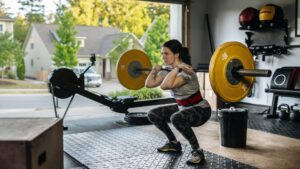
Progressive overload is the training principle that drives physical adaptation in every training environment and the home gym equipment workout context makes it both simpler and more challenging than commercial gym training in different ways that are worth understanding before designing your long-term training approach.
Training at home is simpler because you control every variable without waiting for equipment, navigating crowded spaces, or adjusting your workout based on what machines are available when you arrive. However, it can also be more challenging because the range of resistance in most home gyms is narrower than in fully equipped commercial facilities. Progression often requires creativity through tempo adjustments, extended ranges of motion, exercise variations, and added instability rather than simply increasing weight on a barbell, encouraging smarter training methods that still promote strength and muscle development.
Home Gym Equipment Workout and Full Body Training Approach:
Full body training sessions performed three times weekly suit the home gym equipment workout context particularly well because the equipment available in most home gyms covers all major movement patterns adequately within a single session without requiring the specialized equipment that body part split training often demands for certain muscle groups on dedicated training days.
Squatting patterns, hinging patterns, pushing patterns, pulling patterns, and core work covered across three weekly sessions with adequate load and progressive challenge produces comprehensive physical development that matches what most people achieve through much more elaborate training programs in commercial gym environments with access to significantly more equipment options than the average home training space contains.
Home Gym Equipment Workout and Space Optimization:
Training effectively in limited space requires approaching the home gym equipment workout environment as a design challenge rather than a compromise and the solutions that emerge from thoughtful space optimization often reveal that genuine training capability requires considerably less square footage than most people assume before attempting to build a home training setup.
A six by eight foot clear floor space accommodates virtually every dumbbell exercise, all floor-based core work, resistance band training, and bodyweight movements that form the foundation of most effective home gym equipment workout programs without requiring any permanent structural modifications to the living space that would create complications in rented properties or require significant construction investment in owned ones.
Conclusion
A home gym equipment workout built around the right foundational equipment, organized into a systematic progressive program, practiced in a permanently set up dedicated space, and tracked consistently over months of disciplined effort delivers physical results that compete with what the best commercial gym memberships produce for people who use them with equivalent consistency and intelligence.
The convenience advantage of home training compounds over time as every session happens without the friction that quietly erodes commercial gym attendance across weeks and months of real life that does not consistently cooperate with ambitious training schedules. Start with adjustable dumbbells, a pull-up bar, resistance bands, and a mat, follow a written program, track your progress honestly, and give the process enough time to show you what consistent home training actually produces in a body given adequate time and progressive challenge to respond and adapt.
FAQ’s
1. How much should I spend to build a genuinely effective home gym?
Three hundred to five hundred dollars spent on adjustable dumbbells, a pull-up bar, resistance bands, and a quality exercise mat creates a home gym equipment workout foundation capable of producing genuine physical results for most people at most fitness levels without requiring additional investment until those foundational tools have been fully explored through consistent progressive training over months.
2. How much space does a home gym equipment workout actually require?
A clear floor space of approximately six by eight feet accommodates the vast majority of home gym equipment workout exercises including all dumbbell movements, floor-based core training, resistance band exercises, and bodyweight work. A doorframe pull-up bar adds vertical training capability without consuming any floor space making home training genuinely viable in most apartments and spare rooms of standard dimensions.
3. Can a home gym equipment workout build as much muscle as commercial gym training?
Yes when the home training program applies progressive overload consistently over adequate timeframes with sufficient load and training volume to drive muscular adaptation. The equipment available in most home gyms covers all major movement patterns and muscle groups adequately for significant hypertrophy development particularly through the beginner and intermediate training stages where most people spend the majority of their fitness journey.
4. What should I buy first when building a home gym on a tight budget?
Adjustable dumbbells represent the single highest value purchase for most home gym builders because they cover the widest range of exercises across all major muscle groups with the most progressive loading options in the smallest storage footprint of any comparable home gym equipment workout investment available at similar price points in the current fitness equipment market.
5. How do I stay motivated training alone in a home gym without the gym atmosphere?
Building consistent habits that remove motivation from the daily training equation matters more than finding ways to manufacture motivation in a home training environment where the social energy of commercial gyms is genuinely absent. Scheduling training at a fixed daily time, following a written program that removes in-session decisions, tracking progress in a journal that creates visible evidence of improvement, and using music to create an energizing training atmosphere all contribute more to long term consistency than motivational approaches that depend on feeling inspired before starting.
Summary
A home gym equipment workout built around versatile foundational equipment used intelligently within a systematic progressive program delivers physical results that match commercial gym training for people who commit to consistency over the months and years that genuine physical development genuinely requires regardless of training environment. Adjustable dumbbells, a pull-up bar, resistance bands, and an exercise mat cover the complete range of training needs for most people without significant space or financial investment that makes the whole project feel overwhelming before it begins.
Treating the home training space as a serious training environment rather than a convenience compromise, following written programs rather than improvising, tracking progress consistently, and giving the process adequate time to produce the cumulative adaptation that consistent progressive training creates in every body that receives it regularly and intelligently.