I started building muscle with protein shakes during my second year of training after realizing my post workout nutrition was essentially nothing because I was driving home from the gym, showering, and then eating whatever happened to be convenient rather than deliberately consuming the protein my muscles needed during the recovery window that training had opened. The change was not dramatic overnight but across three months of consistently hitting my protein targets through a combination of food and strategic shake use my training partner started commenting on visible changes that had not been apparent.
Building muscle with protein shakes is a topic surrounded by equal amounts of genuine usefulness and misleading marketing because the products work for real physiological reasons that have nothing to do with most of what supplement companies say about them and understanding the actual mechanism removes both the magical thinking that makes people overspend and the dismissive skepticism that makes others miss a genuinely valuable tool. Protein shakes contribute to muscle building by making adequate daily protein intake practically achievable for people whose schedules, appetites, and food access make whole food alone insufficient to consistently reach protein targets.
Building muscle with protein shakes is one of the smartest and most effective ways to fuel real serious body gains.
Building Muscle With Protein Shakes and Basic Physiology:

Muscles grow when resistance training creates mechanical tension that signals the body to repair and reinforce damaged muscle fibers using amino acids from dietary protein as the literal construction material for the new and stronger tissue that replaces and adds to what existed before training damaged it.
Building muscle with protein shakes contributes amino acids to this reconstruction process during periods when whole food protein consumption is practically limited by time, appetite, or food access rather than by any nutritional principle that makes liquid protein superior to solid food sources for the muscle protein synthesis that training stimulus initiates. The shake delivers amino acids and the body uses those amino acids for muscle repair in exactly the same way it uses amino acids from chicken, eggs, or fish without any additional benefit from their liquid delivery format beyond the convenience that makes consistent daily protein targeting realistic.
Building Muscle With Protein Shakes and Daily Protein Targets:
Understanding how protein shakes fit within your complete daily protein target rather than thinking of them as separate from total intake is the conceptual shift that transforms protein shake use from an expensive habit into a genuinely strategic nutritional tool.
Building muscle with protein shakes requires first knowing your daily protein target which research supports at 1.6 to 2.2 grams per kilogram of body weight for maximizing muscle development in people training consistently with progressive resistance. A person weighing 80 kilograms needs 128 to 176 grams of daily protein from all sources combined and protein shakes contribute most effectively when they cover the gap between what whole food realistically provides on any given day and the daily target that muscle building requires regardless of which specific foods or drinks deliver the amino acids.
Building Muscle With Protein Shakes and Product Selection:

The protein shake market contains genuinely effective products and genuinely overpriced ones that deliver similar protein content at dramatically different prices through marketing investments that add to retail cost without adding to the muscle building effectiveness that protein quality and amino acid profile actually determine.
Building muscle with protein shakes most effectively requires selecting products based on protein source quality, leucine content, protein amount per serving, calorie density relative to protein content, and ingredient list transparency rather than on packaging sophistication, flavor variety, or brand recognition that influences purchasing decisions without influencing what happens physiologically when the shake is consumed and digested.
Whey Protein Shakes for Muscle Building:
Whey protein is the most extensively researched protein source for muscle building and earns its dominant market position through genuine physiological advantages including rapid absorption speed, complete amino acid profile, and exceptionally high leucine content that creates a stronger muscle protein synthesis stimulus per gram consumed than most alternative protein sources available in shake form. Building muscle with protein shakes using whey isolate specifically delivers 25 to 30 grams of high quality protein at around 100 to 130 calories with minimal fat and carbohydrate making it the most efficient protein delivery vehicle for post-workout consumption when rapid amino acid availability matters most for recovery from training.
Casein Protein Shakes for Muscle Building:
Casein protein digests slowly over several hours making it uniquely suited as a pre-sleep protein shake that supports muscle protein synthesis throughout the overnight fasting period when the body is actively recovering from training without incoming amino acids from conventional food consumption. Building muscle with protein shakes using casein before sleeping has genuine research support showing that this timing strategy increases overnight muscle protein synthesis compared to not consuming protein before sleep in ways that make pre-sleep casein one of the most evidence-backed protein timing strategies available to serious trainees.
Plant-Based Protein Shakes for Muscle Building:
Well-formulated plant protein shakes combining pea protein with rice protein and sometimes additional sources can deliver amino acid profiles competitive with whey for muscle building when consumed in adequate amounts that account for the somewhat lower leucine content of individual plant proteins compared to animal-derived alternatives. Building muscle with protein shakes using plant-based products suits people with dairy intolerances, ethical dietary preferences, or digestive sensitivity to whey without requiring meaningful compromise in muscle building outcomes when product selection prioritizes the protein blend quality that adequate leucine delivery requires.
Building Muscle With Protein Shakes Comparison Table:
| Shake Type | Protein Per Serving | Leucine Content | Absorption Rate | Best Timing | Muscle Building Value |
| Whey isolate | 25 to 30g | Very high | Very fast | Post workout morning | Excellent |
| Whey concentrate | 22 to 26g | High | Fast | Any time post workout | Very good |
| Casein protein | 24 to 28g | Moderate | Very slow | Pre sleep evening | Very good |
| Pea and rice blend | 20 to 25g | Moderate | Moderate | Any time of day | Good |
| Egg white protein | 24 to 27g | High | Moderate | Any time of day | Good |
| Mass gainer shake | 40 to 60g | High variable | Varies by formula | Post workout hard gainers | Good for hard gainers |
Building Muscle With Protein Shakes Practical Strategies:
These five strategies make building muscle with protein shakes genuinely productive rather than an expensive daily habit that adds cost without meaningfully contributing to the muscle development that training and complete nutrition strategy actually determine
- Calculate your daily protein target before purchasing any shake because knowing exactly how much supplemental protein you need to reach your muscle building target from all sources combined tells you whether you need one shake daily or two and prevents both under-supplementation that leaves gaps unfilled and over-supplementation that adds unnecessary calories above what muscle building requires
- Consume your post-workout shake within one to two hours of finishing training rather than waiting several hours before eating because muscle protein synthesis sensitivity is elevated during this post-training window and amino acid availability during this period most directly influences the rate of repair and adaptation that training has initiated in muscle tissue
- Mix protein shakes with milk rather than water when additional calories support your muscle building goals because milk adds eight grams of complete protein alongside carbohydrates and micronutrients that improve the nutritional completeness of the shake beyond what water-mixed protein alone provides in terms of total muscle building support
- Use a shaker bottle with a mixing ball rather than stirring because properly mixed protein shakes have considerably better texture and palatability than poorly mixed ones and making the daily shake experience genuinely pleasant supports the consistent daily habit that muscle building protein targets require rather than the intermittent use that inconsistent palatability produces
- Track total daily protein from all sources including shakes on at least two weekdays and one weekend day monthly to verify that building muscle with protein shakes is actually contributing to target achievement rather than simply adding a daily habit that feels productive without being verified as nutritionally effective for your specific situation
Building Muscle With Protein Shakes and Homemade Options:

Marketable protein shakes are not the only approach to structure muscle with protein shakes and manual performances using whole food constituents alongside protein greasepaint offer nutritive absoluteness that marketable ready to drink products can not match while maintaining the convenience advantage over conventional whole food reflections that makes shakes worth using in the first place while allowing inflexibility in component selection, portion control, flavor preference, and overall salutary thickness that supports long term adherence to nutrition habits aligned with muscle structure pretensions and sustainable diurnal routines.
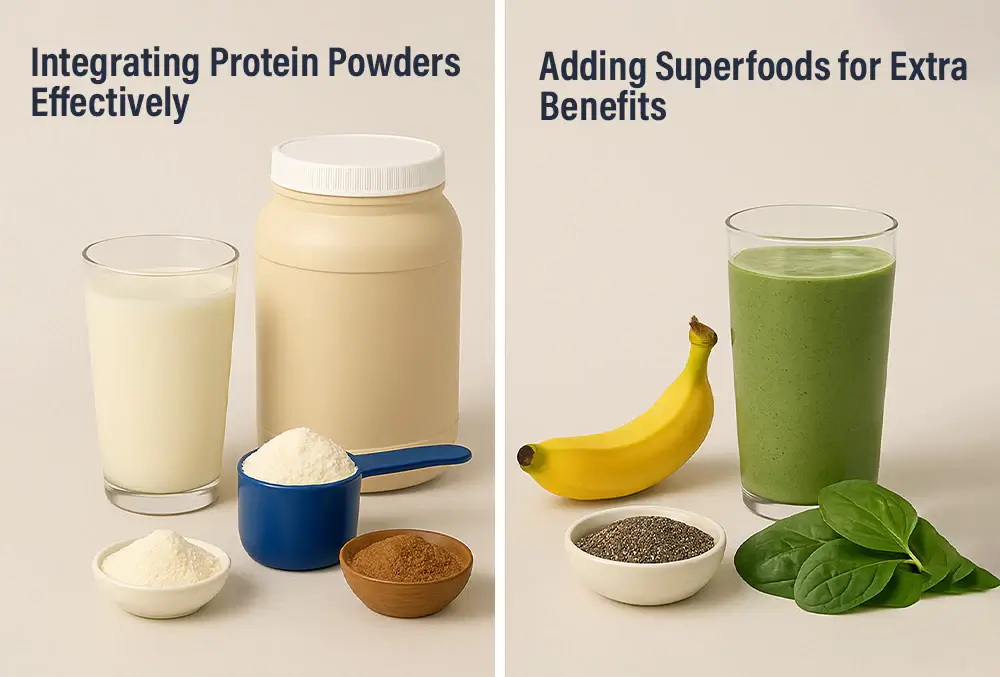
Blending whey protein with banana, oats, milk, and peanut butter creates a homemade muscle building shake delivering protein, complex carbohydrates, healthy fats, and micronutrients in a single convenient preparation that takes three minutes to make and provides genuinely superior nutritional value to most commercial ready-to-drink products at a fraction of the cost per serving that commercially prepared convenience products consistently charge for their manufacturing and packaging convenience premium.
Building Muscle With Protein Shakes and Common Mistakes:
Building muscle with protein shakes helps you avoid the patterns that make this genuinely useful tool expensive without being effective for the specific physiological purpose it is being purchased and consumed to serve because many people rely on protein shakes inconsistently or misunderstand how they fit within overall nutrition and training habits that determine results. Recognizing timing, total protein intake, calorie balance, and consistency as the factors that influence outcomes allows protein shakes to support training rather than simply exist as an isolated habit disconnected from broader muscle building behaviors.
Using protein shakes as meal replacements rather than as protein supplements to complete meals is the most common mistake that reduces building muscle with protein shakes from a strategic advantage into a nutritional compromise that leaves people less well-nourished than the whole food meals the shakes are replacing despite hitting protein targets that the replacement strategy technically achieves without the complete nutritional value that whole food meals deliver alongside their amino acid content.
Building Muscle With Protein Shakes and Realistic Expectations:
Protein shakes accelerate muscle structure by making acceptable protein input constantly attainable and they do n’t accelerate it through any medium beyond this practical nutritive donation that better salutary protein acceptability provides to people who were preliminarily falling short of their muscle structure protein conditions through whole food eating alone. When protein input becomes harmonious, recovery improves, training performance stabilizes, and muscle protein conflation receives the repeated nutritive support needed to restate resistance training encouragement into measurable muscular adaptation across weeks and months of sustained trouble.
Building muscle with protein shakes will not produce dramatic results beyond what the same total daily protein from whole food sources would produce because the physiological mechanism is protein delivery rather than any special muscle building property unique to liquid protein that solid food lacks. The advantage is convenience and consistency rather than superiority and understanding this distinction prevents the disappointment that follows expecting something more from protein shakes than the genuine but modest contribution they actually make to a complete muscle building approach.
Conclusion
Building muscle with protein shakes works genuinely and practically for people whose training and daily schedules create a real gap between the protein their muscles need and the protein their whole food eating realistically provides across busy weeks of work, training, and everything else competing for time and attention.
Choosing products with high quality protein sources, adequate leucine content, and transparent ingredient labeling, using them strategically to fill genuine daily protein gaps rather than replace complete meals, timing consumption around training sessions when muscle protein synthesis is most responsive, and maintaining realistic expectations about their role as supporting tools within a complete training and nutrition strategy creates the most honest and most effective approach to protein shake use for muscle building available in a supplement market that consistently promises considerably more than the physiology of protein supplementation can actually deliver.
FAQ’s
1. How many protein shakes daily help with building muscle effectively?
One to two protein shakes daily suits most people’s muscle building strategies without creating excessive reliance on liquid protein that lacks the complete nutritional value of whole food meals. The right number depends entirely on the gap between your daily protein target of 1.6 to 2.2 grams per kilogram of body weight and what whole food eating provides on most typical days of your weekly schedule and lifestyle.
2. Does the brand of protein shake matter for building muscle
Brand matters less than protein source quality, leucine content, protein amount per serving, and ingredient list transparency when evaluating protein shakes for building muscle. A budget product containing quality whey isolate with third party testing certification can outperform an expensive brand-name product containing inferior protein sources at equivalent or lower protein content per serving because muscle building responds to amino acid quality rather than marketing sophistication or brand recognition.
3. Can building muscle with protein shakes work without a gym
Yes when home training applies progressive resistance that creates the mechanical tension signaling muscle adaptation because protein shakes contribute amino acids to the muscle protein synthesis process that any adequate training stimulus initiates regardless of where training occurs. Building muscle with protein shakes at home requires the same progressive overload principle applied through bodyweight progressions, resistance bands, or home weights alongside the protein adequacy that shakes help maintain.
4. When should I start building muscle with protein shakes?
From the beginning of serious training when protein targets become relevant rather than waiting until a training plateau suggests nutritional inadequacy because the muscle building benefits of adequate protein apply from the first training session rather than only after some threshold of training experience has been accumulated. Building muscle with protein shakes from the start of consistent training establishes the protein adequacy that allows every training session to produce the full adaptation it is capable of stimulating from day one.
5. Are protein shakes safe for building muscle over the long term
Yes for healthy adults consuming appropriate amounts within their daily calorie budget because protein shakes are food products rather than pharmaceutical interventions with accumulated safety data supporting their long-term consumption as part of a balanced diet that includes adequate whole food nutrition alongside strategic supplementation. People with kidney disease or other conditions affecting protein metabolism should consult a healthcare professional before significantly increasing protein intake through any source including protein shakes for building muscle.
Summary
Building muscle with protein shakes delivers genuine practical value for people whose training creates protein requirements that whole food eating alone makes difficult to consistently meet across the realistic demands of busy daily life that does not always cooperate with ambitious nutritional planning. Whey isolate suits post-workout consumption through rapid absorption and high leucine content, casein serves pre-sleep recovery through sustained overnight amino acid release, and plant-based blends accommodate dietary restrictions without sacrificing muscle building effectiveness when formulation quality ensures adequate leucine delivery within a complete training and nutrition strategy that includes progressive resistance training and quality sleep.