

Many athletes and active adults choose Oikos Triple Zero because its high protein content may help improve satiety between meals.Many people find high-protein Greek yogurt more filling than regular flavored yogurt because protein may help increase satiety between meals.
The nutritional value of Oikos Triple Zero has quietly become one of the most scrutinized topics in functional food circles and everyday health-focused consumers are demanding more from their snacks, and this product consistently delivers a strong nutritional value compared with many flavored yogurts.
Oikos Triple Zero contains no added sugar, no artificial sweeteners, and 0% milk fat while delivering 15 grams of protein per serving.
Oikos Triple Zero Nutrition Facts:
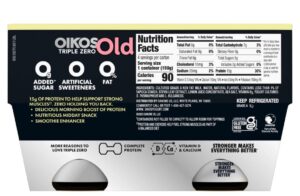
A single 5.3-ounce cup of Oikos Triple Zero contains about 120 calories, 15 grams of protein, 15 grams of carbohydrates, and 0 grams of fat. Carbs land at 15 grams, matching the protein number almost exactly. Notice how the fat line shows 0 grams? Yes, really. Some versions show 0.5g due to measurement quirks, but still count as zero. This isn’t just low-fat – it clears the bar completely.
One reason behind the name “Triple Zero” lies. These aren’t vague slogans; each zero stands for something measurable in nutrition terms. What makes Oikos Triple Zero stand out isn’t only what goes inside but also what stays out – on supermarket shelves.
Protein, Carbs, and Fat in Oikos Triple Zero:
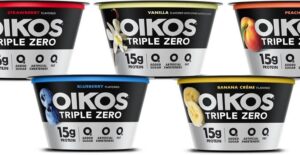
Protein takes center stage in Oikos Triple Zero, is formulated to deliver strength support without extra calories. Each 5.3-ounces cup provides in minimal fat, keeping things light. Sugar stays tightly managed, not left to drift free. This balance doesn’t happen by accident – it follows a clear blueprint.
- Starting off with fifteen grams of protein – this one comes through ultra-filtered Grade A skim milk teamed up with concentrated whey. Every single essential amino acid? All nine show up here, no exceptions, each in amounts worth noting.Complete doesn’t mean vague. It means the protein provides all nine essential amino acids in meaningful amounts.
- Carbs total up to 15 grams here. Lactose brings in 6 of those grams, found the way nature intended. Fiber chips in with 4 grams, thanks to chicory root inulin doing its part.
Stevia contributes essentially 0 grams of carbohydrate. Those carbohydrates come from ingredients such as milk sugars (lactose), dietary fiber (inulin), and other ingredients—not stevia.
Protein Quality in Oikos Triple Zero:
What makes Oikos Triple Zero stand out isn’t just on the label. To really get it, you need to dig into numbers like DIAAS – how well your body uses each amino acid. This score tells more than total protein alone ever could. Then there’s leucine, an amino acid that acts like a trigger for building muscle. Most food labels skip these details completely. Yet they matter deeply if gaining or maintaining muscle is the goal. Without enough digestible essential amino acids, results slow down. Leucine especially plays a starring role in flipping the switch for growth.
DIAAS and Biological Value of Dairy Protein
Most of the protein in Greek yogurt comes from casein and some from whey, though Triple Zero versions include extra whey protein concentrate. Dairy proteins generally have high DIAAS values, meaning they provide all essential amino acids in highly digestible forms.On the other hand, plant-based options usually land between 0.75 and 0.85 unless boosted with added nutrients.
1: Leucine Amounts Affect Muscle Building
Most times, muscle building kicks off only when enough leucine shows up. From dairy sources, so each portion of Oikos Triple Zero brings around 1.5 grams into play. Studies tracked in the Journal of Nutrition suggest hitting 2 to 3 grams per eating window helps turn on growth pathways fully. A single cup moves the needle partway there. Double that amount, or mix it with something like eggs or chicken, and the target becomes easily reachable.
2: Casein’s Slow-Release Advantage
Most of the protein in Greek yogurt? That would be micellar casein- digests slowly. Keeps feeding amino acids into your system across five to seven hours.Because casein digests slowly, it may help support overnight muscle recovery while promoting fullness between meals. This slow release is what makes it happen. Just how milk proteins behave when eaten.
The Sweetener System: Stevia, Chicory Root, and the Meaning of Zero Added Sugar:
What makes the Oikos yogurt stand out isn’t just its label, but how it swaps intense sugars for alternatives that behave differently inside the body. Because of this shift, those watching their glucose levels or digestion might notice effects worth paying attention to.
Oikos Triple Zero contains no added sugar, including ingredients such as corn syrup or sucrose. Sweetness sticks around somehow, though the method skips sugar entirely. Most big brands would dump in extra sweeteners right here. Not this one.
Micronutrient Profile: Calcium, Potassium, and Other Essential Nutrients
What most overlook about the product is hidden behind its protein label – tiny nutrients working quietly. Not just fuel for muscles, it feeds deeper systems like bones and heart rhythms. Buyers focused on macros often skip past these quieter benefits. Support for steady metabolism, stronger skeletal frames, better blood flow. The real gain shows up where attention doesn’t always go.
Most of the spotlight goes to calcium along with potassium, yet phosphorus still plays its part while vitamin D steps quietly into view. Oikos Triple Zero brings more than protein shaped like yogurt – it moves smaller nutrients forward in ways that matter.
1: Calcium and Bone Health
One serving, just 5.3 ounces, holds about 150 to 200 milligrams of calcium – that’s close to 15 or 20 percent of what you need each day, based on which version you pick. From milk comes calcium your body grabs more easily, around 30 to 35 out of every 100 parts making it into blood flow; plants often fall short since substances like oxalates and phytates. Women stepping near menopause, plus those pushing hard in training with heavy impact routines, might find this yogurt’s steady supply useful – solid intake without extra calories tagging along.
2: Potassium and Heart Health
Potassium shows up around 240 to 270 milligrams per portion – roughly 6 percent of what you need each day. While many people in the U.S. fall short, getting less than half of the advised 4,700 milligrams, even small steady intakes play a role. What Oikos Triple Zero offers helps maintain potassium levels, yet skips the heavier calories found in options such as avocado or baked sweet potato.
3: Phosphorus and Vitamin B12
Around 200 milligrams of phosphorus in each portion helps fuel cells while also strengthening bones. About one fifth of your needed vitamin B12 appears in every cup, backing nerve health along with blood cell creation. Not listed boldly on packaging, yet present in meaningful amounts – this mix lifts Oikos Triple Zero beyond just protein powder pretending to be food.
Oikos Triple Zero Compared With Other Top Brands:
This Greek yogurt sits right in a sea of yogurts shouting about health perks. Most promise the same things – zero sugar, high protein, low calories. Now look at what it actually delivers. Numbers tell a clearer story than slogans ever could.
- Chobani Plain Nonfat Greek offers 17 grams of protein yet carries 6 grams of sugar – lacking fiber entirely, plus zero support for gut microbes. When it comes to balance, Oikos Triple Zero pulls ahead thanks to better fiber content, a lighter sweetener blend, and easier daily fit.
- Though made only from milk and cultures, FAGE Total 0% brings in 18 grams of protein yet misses any natural sweetness. Without added fiber or sweeteners, its plain taste often pushes users toward extras – each addition tacking on calories. Oikos Triple Zero sidesteps this need entirely by balancing flavor without extra sugar. While simpler at first glance, FAGE shifts hidden costs into customization. What looks minimal ends up more complex once served.
| Product | Calories | Protein (g) | Total Sugar (g) | Added Sugar (g) | Fat (g) | Fiber (g) | Sweetener Type |
| Oikos Triple Zero | 120 | 15 | 6 | 0 | 0 | 4 | Stevia/Chicory |
| Chobani Nonfat Plain | 90 | 17 | 6 | 0 | 0 | 0 | Unsweetened |
| FAGE Total 0% | 100 | 18 | 7 | 0 | 0 | 0 | Unsweetened |
| Two Good Greek | 80 | 12 | 2 | 0 | 2.5 | 0 | Stevia |
| Siggi’s 0% Plain | 100 | 17 | 4 | 0 | 0 | 0 | Unsweetened |
| Ratio Protein Yogurt | 150 | 25 | 2 | 0 | 2.5 | 0 | Cellulose/Stevia |
| Yoplait Light | 90 | 5 | 10 | 8 | 0 | 0 | Aspartame |
| Dannon Light & Fit | 80 | 12 | 7 | 6 | 0 | 0 | Sucrose |
Hypoglycemic Index, Blood Sugar Response, and Insulin Dynamics:
The Oikos yogurt carries a may fit into many diabetes-friendly meal plans when consumed as part of a balanced diet. — estimated between 11 and 14 for the standard flavored varieties — making it a meaningful tool for blood sugar management. For context, white bread registers around 73, and regular sweetened yogurt typically falls in the 35–50 range depending on added sugar content.
The combination of factors driving the hypoglycemic response in the product creates a compounding blood-sugar benefit that goes beyond simply removing added sugar from the formula.
1: Stevia’s Effect on Insulin
Steviol glycosides, the natural sweet compounds found in stevia, have little or no significant effect on blood glucose or insulin levels in most healthy adults according to current research. This is physiologically distinct from sucrose, fructose corn syrup, and even some sugar alcohols like maltose, which produce modest but real insulin responses. For people with insulin resistance, predicates, or type 2 diabetes, this Greek yogurt’s Stevie-based sweetening represents a meaningful dietary upgrade over conventional flavored yogurts.
2: Protein and the Insulin Response
Here’s a nuance most hypoglycemic index discussions miss: Protein can stimulate insulin release, but it generally does so without causing the rapid rise in blood glucose associated with high-sugar foods. The protein in Oikos Triple Zero stimulates muscle protein synthesis while avoiding the large blood sugar spikes associated with high-sugar foods..
3: Chicory Root Fiber and Postprandial Glucose
Inulin-type fructans from chicory root slow gastric emptying and reduce the absorption rate of any co-ingested carbohydrates. Four grams per serving is a clinically relevant dose —studies using 5–8 grams of inulin show significant reductions in postprandial blood glucose in healthy adults. The Oikos yogurt integrates this benefit structurally, not as an afterthought.
Who Benefits Most from Oikos Triple Zero Nutritionally:
Not every food is optimal for every person. The nutritional value of Oikos Triple Zero serves specific populations exceptionally well. Understanding the fit determines whether this product belongs in your daily protocol or on your occasional rotation.
- Competitive athletes in cutting phases: Zero fat, controlled carbs, high protein, and prebiotic fiber make the nutritional value of Oikos Triple Zero nearly ideal for athletes reducing body fat while preserving lean mass.
- People managing type 2 diabetes or prediabetes: May fit into many diabetes-friendly meal plans when consumed as part of a balanced diet zero added sugar, and no artificial sweeteners that trigger cephalic insulin responses represent a rare combination in flavored convenience foods.
- Older adults are at greater risk of sarcopenia after age 60. Because Oikos Triple Zero provides high-quality dairy protein with relatively few calories, it may help older adults meet their daily protein needs as part of a balanced diet.
- Postpartum and breastfeeding women: Calcium, B12, protein, and potassium are all elevated in requirement during lactation; the nutritional value of Oikos Triple Zero contributes meaningfully to multiple elevated targets simultaneously.
- Busy professionals eating in caloric deficits: 120 calories with 15g protein and genuine sweetness — the nutritional value of Oikos Triple Zero solves the problem of staying satiated between meetings without the blood sugar crash that follows a 200-calorie granola bar.
Gut Health and Macrobiotic Activity: The Live Culture Story:
The nutritional value of Oikos Triple Zero includes live and active cultures — specifically Lactobacillus bulgaricus and Streptococcus thermophilus, with some variants including Bifidobacterium lactis. This isn’t just label decoration.
Live cultures in Greek yogurt survive transit through the stomach in quantities sufficient to influence gut microbiome composition, though the effect varies significantly with product handling, shelf age, and individual gut baseline. The probiotic component of the nutritional value of Oikos Triple Zero interacts directly with the prebiotic chicory root fiber — creating a synbiotic combination that’s rarely found in this product category.
1: Synbiotic Effect: probiotics + prebiotics Together
A synbiotic is a combination of probiotics and prebiotics that exerts complementary benefits — the prebiotics feeding the probiotic organisms to enhance their survival and activity. The 4g of chicory root inulin in the nutritional value of Oikos Triple Zero selectively feeds Bifidobacterium species, which are among the organisms present in the culture blend. Human feeding trials with inulin at 4–8g daily consistently show increases in Bifidobacterium populations within two to four weeks of consistent intake.
2: Lactose and Digestive Tolerance
Greek yogurt is significantly lower in lactose than regular yogurt due to the straining process that removes most of the whey — and with it, a substantial portion of lactose. The live cultures in the nutritional value of Oikos Triple Zero also produce lactase enzyme during fermentation, further reducing the effective lactose load. Many individuals who experience discomfort with milk or regular yogurt tolerate Greek yogurt well for this reason.
Caloric Efficiency: How to Use This Product Strategically:
The nutritional value of Oikos Triple Zero achieves a caloric efficiency ratio that requires active exploitation to benefit from fully. Simply eating it as a snack is fine. Using it as a strategic nutritional tool is better.
Protein at 15g per 120 calories equates to 8 calories per gram of protein — competitive with canned tuna (7 cal/g protein) and significantly better than most protein bars (12–18 cal/g protein after accounting for carbohydrate and fat contributions). When budget, convenience, and caloric efficiency are all on the table, the nutritional value of Oikos Triple Zero represents one of the strongest nutritional values among refrigerated high-protein yogurts.
Replace a 200-calorie afternoon snack of a granola bar (typically 4–5g protein, 28g carbs, 6g fat) with the nutritional value of Oikos Triple Zero and you’re consuming 80 fewer calories, three times the protein, a third of the carbohydrates, and zero fat — while adding 4g of prebiotic fiber. Over a year, that single substitution represents a significant cumulative dietary upgrade.
Flavor Variants and How Formulation Changes Affect the Numbers:
The nutritional value of Oikos Triple Zero varies modestly but meaningfully across the flavor lineup. Understanding which variants optimize for specific goals matters for precision nutrition planning.
The Toasted Coconut flavor introduced added textural elements — granola topping — which changes the nutritional value of Oikos Triple Zero substantially for that variant: calories climb to roughly 200+ and fat jumps to 4–6g. This is still a nutritionally reasonable choice, but it’s a different product nutritionally than the base cup and shouldn’t be compared as equivalent when tracking macros.
Protein consistency across flavors is high — 15g holds across virtually all standard variants, which makes the nutritional value of Oikos Triple Zero reliable as a planning tool. Fitness apps and meal prep protocols benefit from that consistency because it removes the need to re-verify label data when rotating flavors for repeatability.
Practical Integration: Building Meals Around Oikos Triple Zero:
The nutritional value of Oikos Triple Zero works best when it anchors a meal or snack rather than standing alone. Here’s how strategic pairing elevates its utility.
Pair with 1 oz of mixed nuts and you’re building a 270-calorie snack with 20g protein, 10g healthy fat, and 4g fiber — a genuinely satiating combination that may help promote steadier blood sugar levels. The fat from nuts enhances absorption of any fat-soluble vitamins present and slows gastric emptying beyond what the yogurt achieves alone.
Use the nutritional value of Oikos Triple Zero as a base for overnight oats: mix half a cup of rolled oats, one cup of the yogurt in place of milk, and refrigerate overnight. The result is a 400-calorie meal with 25–27g protein, 7g fiber, and complex carbohydrates that supports sustained morning energy. The casein protein continues releasing amino acids through the first half of the workday.
Post-workout, the nutritional value of Oikos Triple Zero pairs exceptionally well with 1 medium banana: you get fast-acting carbohydrates from the banana alongside slow-release casein from the yogurt — a combination that handles both immediate glycogen replenishment and sustained protein delivery. This two-food pairing covers recovery needs at under 240 calories total.
Conclusion
The nutritional value of Oikos Triple Zero delivers a genuinely rare combination: zero added sugar, zero fat, 15 grams of complete dairy protein, and 4 grams of prebiotic fiber in 120 calories. Use it strategically — pair with healthy fats for satiety, integrate post-workout, and rotate flavors for adherence. The data supports it as one of the most functionally complete convenience protein sources available today.
FAQ’s
Q1: Is the nutritional value of Oikos Triple Zero suitable for diabetics?
Yes — zero added sugar and Stevia sweetening make it appropriate for most diabetic meal plans.
Q2: How much protein does the nutritional value of Oikos Triple Zero provide per day if eaten twice?
Two servings deliver 30 grams of complete dairy protein across the day.
Q3: Does the nutritional value of Oikos Triple Zero support weight loss?
Its high protein, zero fat, and prebiotic fiber combination may help improve satiety.and caloric deficit adherence.
Q4: Is the nutritional value of Oikos Triple Zero affected by its Stevia sweetener?
No — Stevia does not raise blood glucose or meaningfully alter the caloric or protein profile.
Q5: Can children benefit from the nutritional value of Oikos Triple Zero?
Yes, though the chicory root fiber may cause mild digestive adjustment in children under age six initially.
Summary
If you need a quick protein boost, the nutritional value of oikos triple zero makes it a standout choice. Each cup delivers 15 grams of high-quality muscle-building protein with zero added sugar, zero artificial sweeteners, and zero fat. It is a creamy, macro-friendly snack that keeps you full and energized without any unnecessary extra calories.