
I spent two weeks ordering my usual Burger King combo and logging every number off the official burger king nutrition information page. What surprised me wasn’t the calories. It was how much a single sauce packet changed the sodium total. Fast food doesn’t have to be a guessing game. Burger king nutrition is public, it’s detailed, and once you know where to look, it’s actually pretty useful. Most people just scan the calorie number and move on — I used to do the same thing, honestly, until a client asked me to actually track it for a few weeks.
This guide goes further than the calorie count: how to read burger king nutrition information, compare it, and use it to order smarter without giving up the food you actually want.
Curious what’s really in your Whopper? This guide breaks down Burger King nutrition information with real numbers, smart swaps, and menu secrets you’ll actually use.
1: Burger King Nutrition Information Basics Explained?
Before you start comparing menu items, it helps to know how burger king nutrition information is put together, and why the “same” sandwich can carry wildly different numbers depending on how it’s built.
Every item comes with a full breakdown — calories, fat, sodium, carbs, protein. All of it straight from Burger King’s own disclosures, updated whenever a recipe changes. Here’s the thing though: reading burger king nutrition information well means you can’t just look at calories. Sodium and saturated fat tell a bigger part of the story than most people give them credit for, and skipping past them is probably the single most common mistake I see.
How the Menu Is Organized
Burger King sorts its nutrition data by category — burgers, chicken, sides, breakfast, drinks. Each page lists every size and customization separately. That’s what makes it easy to line up a Whopper next to a Bacon King instead of guessing from memory or relying on what you remember from a menu board photo.
Within each category, items are usually broken down further by protein type and preparation method — grilled versus crispy, single versus double patty, and so on. Once you get used to scanning it this way, comparing two similar-sounding sandwiches takes seconds instead of minutes, because you already know which column to check first.
Where to Find Official Numbers
Go straight to Burger King’s own website. Third-party calorie apps lag behind menu changes more often than people realize, and limited-time items rotate on and off throughout the year without much notice — one month a seasonal sandwich exists, the next it’s gone and so is its listing.
Once this clicks, burger king nutrition information stops feeling like a wall of numbers. It starts working like an actual planning tool — especially if fast food is a regular thing for you, not just an occasional stop. Even checking it once or twice builds a rough mental map that carries over to future orders without needing to look everything up again.
2: Burger King Nutrition Information Calorie and Macro Breakdown
Calories get checked first, always. But the macro breakdown behind that number tells you more about how a meal will actually sit with you an hour later — whether you’ll be hungry again by 2 pm or actually satisfied.
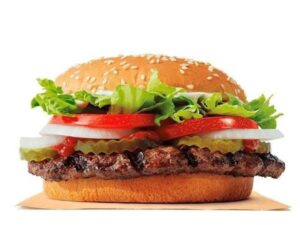
A plain Whopper runs close to 660 calories — about 40 grams of fat, 980 milligrams of sodium. Add cheese and bacon and both numbers climb fast, sometimes 15 to 20 percent depending on the build. This is where burger king nutrition information earns its keep: line up the base sandwich against the loaded version and the jump is obvious, right there on the page.
Fat and Sodium Patterns
Fried items and specialty sauces push sodium the fastest. Fries plus a dipping sauce alone can hit 1,500 milligrams before you’ve even picked a drink — worth knowing if you’re watching daily intake and trying to keep a running total across the day.
Saturated fat tends to track closely with cheese and bacon add-ons rather than the patty itself. A double-patty sandwich without cheese can actually carry less saturated fat than a single-patty version loaded with extra toppings, which surprises a lot of people the first time they see it laid out in burger king nutrition information side by side.
Protein and Carb Trends
Grilled chicken beats fried on a protein-to-calorie ratio pretty consistently. It’s one of the easiest wins on the whole menu if you’re trying to keep the sandwich format but improve the numbers without much extra thought.
Once you’ve seen enough of these macro patterns, burger king nutrition information stops requiring a lookup every single time. You start being able to guess how a new seasonal item will measure up before you even check the actual listing.
Read also: https://en.wikipedia.org/wiki/BK_Chicken_Fries
3: Burger King Nutrition Information for Popular Menu Items
Whopper, Bacon King, Chicken Sandwich — the three most searched, and their numbers spread out more than most people expect. The Bacon King roughly doubles a standard Whopper’s calorie count, mostly from the double patty and extra bacon. Pull up burger king nutrition information for both and the gap is right there in black and white, no math required.
Sides matter almost as much as the main item does. Medium fries: about 380 calories, 500 milligrams of sodium. A side salad with light dressing: under 150 calories, total. That one swap alone can reshape a whole meal’s profile without touching the sandwich at all.
Burger Comparisons Worth Knowing
The Whopper Jr. is honestly the most balanced pick on the menu — solid protein, moderate calories. Good starting point if you want the classic flavor without the full-size numbers attached, especially if you’re new to comparing items this way.
Sides and Add-On Impact
Onion rings and mozzarella sticks both carry more fat than regular fries, thanks to the breading and cheese. Downsizing the side often beats cutting it entirely — portion size matters more than the item itself in most cases, so a small order of either can still fit into a reasonable total.
Put these comparisons together and burger king nutrition information makes one thing obvious: the biggest swings come from toppings and sides, not the core sandwich. Genuinely good news, because it means small tweaks go a long way — you don’t have to give up the sandwich you actually like to see a real difference.
4: Calorie and Sodium Snapshot by burger king nutrition information
| Menu Category | Avg. Calories | Avg. Sodium | Avg. Protein |
| Flame-Grilled Burgers | 550–1,150 | 980–1,750 mg | 25–45 g |
| Chicken Sandwiches | 470–670 | 1,000–1,300 mg | 25–35 g |
| Sides (Fries, Onion Rings) | 250–410 | 380–560 mg | 3–6 g |
| Breakfast Sandwiches | 300–560 | 700–1,200 mg | 12–22 g |
| Beverages (Regular) | 0–290 | 10–120 mg | 0–8 g |
Laid out this way, it’s easier to see where a meal’s biggest numbers actually come from — before you’ve built the whole combo. Chicken sandwiches and burgers sit closer together than most people assume, while sides and drinks are usually where the real savings live once you start comparing burger king nutrition information across categories like this.
5: Burger King Nutrition Information and Sodium Awareness
Sodium doesn’t get nearly enough attention in fast food conversations. Once you start reading burger king nutrition information closely, that gap becomes impossible to ignore — it was the biggest surprise from my own tracking, honestly.
The American Heart Association’s daily cap sits around 2,300 milligrams, and one large combo can eat up nearly half of that in a single sitting. Sauces, pickles, cheese — they all sneak in sodium quietly, often more than the bun or patty do. Two sandwiches with near-identical calorie counts can end up with very different sodium totals, just based on toppings alone.
Reading Sodium Numbers Correctly
Sodium totals count everything in the build — bun, condiments, all of it. Pull one sauce packet and the number drops noticeably, especially on items where that sauce is doing most of the flavor work rather than the protein or toppings underneath it.
It also helps to look at sodium per calorie rather than sodium alone, since a smaller item with a disproportionately high sodium count can be easy to miss if you’re only scanning the calorie column. A side item under 200 calories that still carries 500 milligrams of sodium is a good example of a number worth double-checking before you assume it’s the “light” choice.
Simple Ways to Reduce Sodium
No salt on the fries, skip the bacon, go a size down. Three small moves, real impact, no real sacrifice to the eating experience or the flavor you actually came for.
Ordering water instead of a fountain drink is another quiet win, since some regular sodas and specialty beverages carry more sodium than people assume, on top of the added sugar. Pairing that with a grilled protein instead of a fried one usually brings a combo’s total sodium down by a noticeable margin without changing much else about the order.
Read also: https://en.wikipedia.org/wiki/Big_King
6: Burger King Nutrition Information Across Dietary Needs

Different eating styles need different things, and burger king nutrition information can flex to match most of them with a little planning ahead — you just have to know which numbers to prioritize.
For lower-carb eating, skip the bun and go lettuce-wrapped — carbs drop a lot, protein stays put. A lot of locations will do this on request even though it’s not always advertised on the board. Vegetarian choices are thinner on the ground, though the Impossible Whopper gets you a plant-based patty with numbers reasonably close to the beef version.
Low-Carb and Keto Adjustments
Lettuce-wrapped burgers, bunless grilled chicken, a side salad instead of fries — three easy keto swaps, none of them requiring a special order or extra wait, and staff handle these requests without much fuss.
For anyone tracking net carbs specifically, it’s worth remembering that most of the carb count in a standard order comes from the bun and any starchy sides. Cutting both at once — bun and fries — tends to bring a combo down into a genuinely keto-friendly range without needing to rebuild the whole order from scratch.
Vegetarian and Plant-Based Choices
The Impossible Whopper is still the most complete plant-based pick, with protein numbers close to the standard Whopper, though the fat profile is different enough to check first if that’s a priority for you.
Beyond the Impossible Whopper, side options like a side salad, hash browns, or a plain bun with lettuce and tomato can round out a plant-based order, though protein stays fairly low unless the Impossible patty is part of the meal. Checking burger king nutrition information for these combinations ahead of time avoids ending up with a meal that’s heavy on carbs but light on everything else.
7: Burger King Nutrition Information for Smarter Ordering
Knowing the numbers only matters if it changes what you actually order at the counter or through the app. That’s where burger king nutrition gets genuinely practical — it stops being trivia and starts being a tool.
Customizing is easier than most people think. No mayo, a smaller bun, sauce on the side — small requests, real savings on calories and sodium. The app’s build-your-own calculator shows these changes as real numbers before you even confirm the order, which takes most of the guesswork out of the whole process.
Combos push people toward bigger sizes than they meant to order. Going a la carte instead gives you more control, since drinks and sides are usually where the hidden calories hide — not the sandwich itself, which most people assume is the main culprit. A little planning before you get to the counter goes further than you’d expect, and it doesn’t take much extra time once burger king nutrition information becomes part of your normal routine.
Using the Nutrition Calculator Tool
The app’s calculator updates live as you add or remove items — an easy way to test a few combinations before locking in an order, especially if you’re deciding between two sandwiches.
It’s also useful for planning ahead of a visit rather than standing at the counter trying to decide. Building a combo in the app first, checking the numbers, and adjusting before you even leave the house takes the pressure off making a quick decision in line, and it usually results in a more balanced order overall.
Building a Balanced Combo
burger king nutrition information, side salad, water instead of fries and soda. One of the most effective single changes on the entire menu, and it costs nothing extra at most locations — sometimes it’s even a little cheaper.
A balanced combo doesn’t have to mean a boring one. Keeping the main sandwich you actually want, then adjusting the side and drink around it, is usually enough to bring calories and sodium into a more reasonable range without feeling like you’re missing out on the meal you came for.
8: Expert Tips for Using Burger King Nutrition Information Successfully
Small habits move the needle more than people expect. These five cover the changes that make the biggest difference once you start checking burger king nutrition information regularly instead of just once in a while.
- Swap soda for water or unsweetened tea
- Choose grilled chicken over fried
- Ask for sauce on the side instead of mixed in
- Downsize the combo from large to medium
- Check the app’s calculator before ordering
Swap soda for water or unsweetened tea. Removes a surprising amount of hidden sugar. Common mistake: assuming diet soda is automatically the “healthy” choice — water still wins on sodium and additives almost every time you compare the two.
Grilled chicken over fried is another easy win. The calorie and fat gap is bigger than people expect. Most assume all chicken sandwiches land in the same range, but the frying oil changes that math fast — check burger king nutrition side by side and the difference is obvious within seconds.
Ask for sauce on the side instead of mixed in. Keep sodium and added sugar in your control instead of the kitchen’s default portion, which is usually more generous than it needs to be for most tastes.
A sixth habit worth building in: revisit the numbers every few months. Menu items change, recipes get adjusted, and a sandwich you checked last year might carry a different sodium or calorie count today. Treating burger king nutrition information as a living reference rather than something you check once keeps your mental map accurate over time.
Conclusion
Burger king nutrition information isn’t some hidden secret — it’s published, detailed, and genuinely worth thirty seconds of your time before you order. Small swaps like grilled over fried, water over soda, sauce on the side: they add up fast across a week of regular orders, more than most people assume until they actually track it. Check the numbers before you order. Every visit gets a little smarter than the last one, and after a few weeks it stops feeling like extra effort at all.
FAQ’s
1: Is burger king nutrition information accurate and up to date?
Yes — it comes straight from Burger King and gets updated as menu items and recipes change throughout the year.
2: What’s the lowest-calorie burger at Burger King?
The Whopper Jr. usually strikes the best balance between flavor and lower calories among the classic burgers.
3: Does burger king nutrition information offer low-sodium menu options?
Grilled chicken and side salads generally run lower in sodium than fried or heavily sauced items on the menu.
4: Can I customize my order to reduce calories?
Yes. Dropping sauces, cheese, or bacon lowers the total noticeably without changing the core sandwich you started with.
5: Where can I check burger king nutrition information before ordering?
Burger King’s official website and app both list complete nutrition details for the full menu, updated regularly.
Summary
Burger king nutrition information offers real transparency, if you actually check it before ordering instead of guessing. Calories, sodium, and fat swing widely across the menu, but small swaps — grilled over fried, a smaller size, sauce on the side — make a real difference over time. A little planning turns any visit into a smarter, more balanced choice without giving up the food you actually enjoy.
Read also: https://en.wikipedia.org/wiki/Quarter_Pounder