I tracked every bottle of Gatorade I drank for a month, just to see the real numbers. The sugar didn’t surprise me. What surprised me was how fast electrolytes stacked up once I compared flavors side by side — turns out the classic 20-ounce bottle was the honest baseline all along.
A bottle of Gatorade looks simple. Bright color, familiar taste, a promise of hydration on the label. But gatorade nutrition facts tell a bigger story once you actually read the bottle — and some of the numbers land differently than you’d guess. This guide walks through what’s actually inside a bottle, how it compares to water and other sports drinks, and what’s worth knowing before your next workout or hot afternoon.
Curious what’s really in that bottle? This guide breaks down gatorade nutrition facts with real numbers, smart swaps, and details most labels skip over.
1: What Do Gatorade Nutrition Facts Actually Show?

Before comparing flavors or sizes, it helps to know what sits on a standard gatorade nutrition facts label in the first place — the basics stay fairly close across the whole lineup.
A 20-ounce bottle of regular Gatorade has 140 calories. Almost all of it from sugar — 34 grams, to be exact. No fat. No protein. No fiber. Just water, sugar, electrolytes, and a bit of flavoring and coloring. Almost every calorie traces back to one ingredient, which is common for a sports drink built around quick energy. Most recovery shakes spread calories across protein, carbs, and fat. Gatorade doesn’t.
Sodium runs noticeably higher than soda — around 270 milligrams per bottle, usually. Potassium sits near 75 milligrams too. A lot of people assume a sports drink is mostly sugar water with nothing else going on. It isn’t quite that simple. That’s one of the more common misconceptions floating around about gatorade nutrition facts in general.
It’s also worth pointing out what’s missing from the label entirely. No vitamins worth mentioning, no fiber, nothing that would count as a nutritional benefit beyond hydration and electrolyte replacement. That gap is part of why gatorade nutrition facts read so short compared to a protein bar label with a dozen line items — there’s simply less going on inside the bottle beyond salt, sugar, and water.
How the Bottle Label Is Laid Out
The label follows the standard FDA format: calories first, then fat, sodium, potassium, carbs, sugar, protein. Added sugar gets its own line, and with Gatorade that line and the total sugar line are close to identical, since almost none of it comes from anywhere natural.
Where the Calories Actually Come From
Sugar, mostly. No fat or protein to slow digestion, so the 140 calories move through the body fast — closer to a quick top-off than a slow-burning meal. Compare that to a granola bar with a similar calorie count, and the difference in how each one gets used is night and day.
Once these core numbers click, gatorade nutrition facts stop feeling complicated. They’re actually pretty simple once broken down this way.
Read Also: https://en.wikipedia.org/wiki/Sports_nutrition
2: Gatorade Nutrition Facts and Sugar Levels Explained
Sugar is where gatorade nutrition pull most of the attention. Fair enough — it’s the single biggest number on the bottle by a wide margin.
Comparing flavors doesn’t help much either. Fruit Punch, Lemon-Lime, and Orange all land close together, somewhere between 32 and 36 grams per 20 ounces. Switching flavors rarely fixes the sugar problem. Portion and frequency do the real work — not which color happens to be in the bottle.
Added Sugar vs What’s Naturally There
Every gram of sugar in Gatorade counts as added sugar — none of it comes from real fruit or juice. No gray area here, unlike some sports drinks that blend in a splash of actual juice and blur that line a little.
Where That Sugar Fits Into a Daily Limit
One bottle eats up roughly 68 percent of a woman’s daily added sugar limit. For men, it’s closer to 47 percent. Two bottles during a long workout, and most adults are already over the line before dinner starts. That’s an easy way to blow a daily budget without meaning to.
Once the math is laid out plainly, gatorade facts stop feeling like an abstract number on a bottle. They start looking like something worth a second glance before that next bottle gets cracked open.
It also helps to think in weekly terms rather than just per-bottle. A near-daily Gatorade habit during an active season adds up to well over 200 grams of sugar a week from that source alone, before anything else on the plate gets counted. Seeing it stacked across seven days tends to land differently than looking at one bottle in isolation.
3: Calorie and Electrolyte Snapshot by Gatorade Nutrition Facts
Numbers are easier to trust side by side instead of scattered across five different bottle photos. Here’s how the main gatorade nutrition facts stack up across the lineup.
| Gatorade Product | Serving Size | Calories | Sugar | Sodium |
| Gatorade Thirst Quencher | 20 oz bottle | 140 | 34 g | 270 mg |
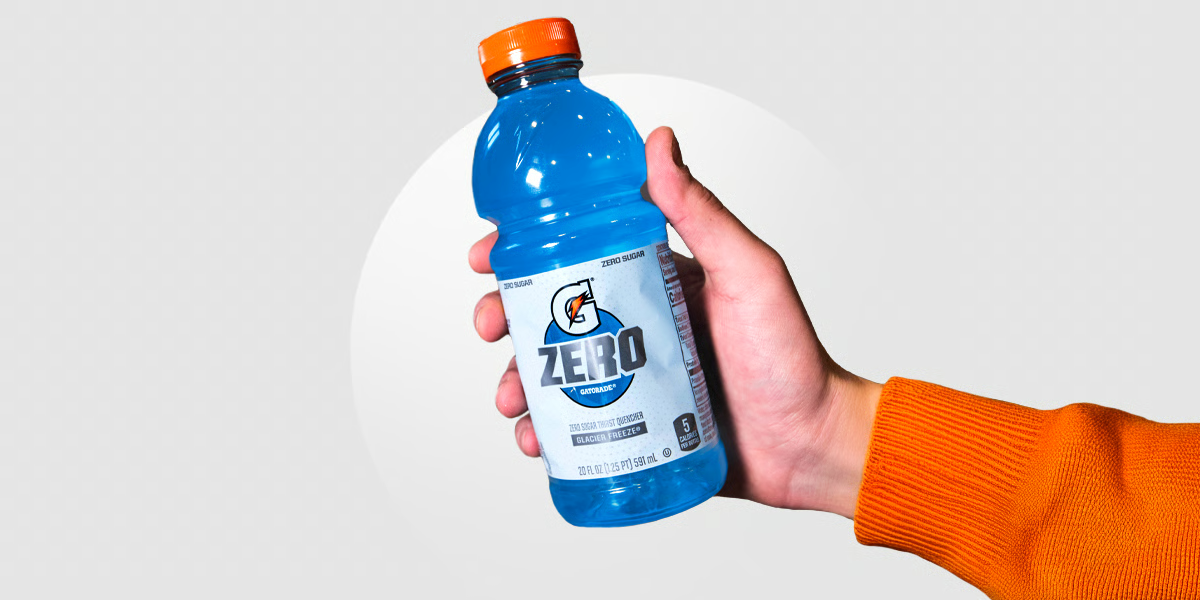
| Gatorade Zero | 20 oz bottle | 0 | 0 g | 300 mg |
| Gatorade Fit | 12 oz bottle | 60 | 5 g | 200 mg |
| Propel Water | 16.9 oz bottle | 10 | 0 g | 105 mg |
| Plain Water | 20 oz bottle | 0 | 0 g | 5 mg |
The gap between regular Gatorade and the zero-sugar version is bigger than most people expect on sodium alone. Once gatorade nutrition facts get laid out side by side like this, Gatorade Zero starts looking like the more practical everyday pick — especially the Gatorade Fit row, which sits in an odd middle ground most people never think to check.
Gatorade Fit is worth a second look precisely because it doesn’t fit neatly into either category. It’s sweetened with a stevia blend, which cuts sugar and calories by more than half compared to the classic version, but it still isn’t calorie-free like Gatorade Zero above it. For anyone treating gatorade nutrition facts as a spectrum rather than a binary choice, that middle row is the most useful data point on the whole table.
4: Gatorade Nutrition Facts Across Different Bottle Sizes and Lines
Bottle size moves the numbers more than most people realize. Gatorade nutrition facts shift a fair amount once you go past the standard 20-ounce bottle, and that’s exactly where people lose track.
A 32-ounce wide-mouth bottle — gym vending machine, gas station cooler — carries around 220 calories and 56 grams of sugar. Well past the smaller size. Team coolers pour even bigger cups, and multiple refills during a long practice mean the real total can climb past anything printed on a single label. Check gatorade nutrition facts for the actual size you’re drinking, not just the size you assume you grabbed.
Single-serve 12-ounce bottles are an easy overlook. Roughly 80 calories, 21 grams of sugar — about 60 percent of a full 20-ounce bottle. Good option if you want the taste and electrolytes without the full serving, and they’re showing up more often in convenience store coolers where gatorade nutrition facts get printed right on the cap too.
Standard Bottle vs Team Cooler Comparison
A single bottle and a cooler cup aren’t just “bigger” versions of the same drink. A cooler pour can carry close to 50 percent more sugar and calories than a bottled serving. That difference adds up fast during a season with practice most days of the week.
Team Coolers and Portion Creep
Sideline cups often get refilled without much thought during a long game. Add two or three refills and you can blow past 100 grams of sugar in one afternoon without noticing, because each refill resets the mental count back to zero. Nobody’s tracking it while chasing a ball around a field.
A short paragraph is worth adding here since portion creep is easy to underestimate: a sideline cup filled from a team cooler usually holds more liquid than a single bottle serving, so the cup size and the labeled serving size aren’t quite the same thing. Add a second fill and the gap between what a player thinks they drank and what they actually drank grows even wider.
Compare gatorade nutrition facts across all these formats and one thing becomes clear — the single bottle on the shelf is usually the most controlled version you’ll find anywhere. Everything poured from a cooler beyond that starts adding numbers nobody planned on.
Read Also: https://en.wikipedia.org/wiki/Powerade
5: Gatorade Nutrition Facts for Zero Sugar and Low-Calorie Lines

Sugar-free versions change the whole conversation. Gatorade nutrition for Gatorade Zero and Gatorade Fit barely resemble the original once lined up side by side.
Gatorade Zero carries zero calories, zero sugar, running on sucralose and acesulfame potassium instead, while still matching the electrolyte profile of the original. The taste isn’t identical though — Gatorade Zero was built to taste close to the classic line, while Gatorade Fit leans on a stevia-based sweetness that reads a bit different on the tongue. Neither spikes blood sugar the way the original does. That makes both common picks for people managing diabetes or just cutting back on sugar generally, without giving up the sports-drink habit entirely.
Sodium barely changes across versions — 200 to 300 milligrams depending on which one. So switching to zero sugar doesn’t mean losing the electrolyte replacement. That part stays roughly the same, which surprises people expecting a bigger trade-off.
Sweeteners Used Across the Lineup
Gatorade Zero leans on sucralose and acesulfame potassium together. Gatorade Fit blends in stevia for a more natural-leaning sweetness — a small formula difference that actually shows up in the aftertaste.
Comparing Gatorade Zero and Gatorade Fit
Gatorade Zero tastes closer to the classic bottle, punchier and more familiar. Gatorade Fit goes lighter, a bit more subdued. Calories and sugar aren’t identical between the two either — it really comes down to taste preference and workout intensity more than anything else, so trying both is the only real way to decide which gatorade nutrition facts profile fits your routine better.
Going sugar-free doesn’t mean giving up electrolytes or that sports-drink taste. Gatorade nutrition confirms you’re mostly losing the calories and sugar — the sodium and potassium mostly stay intact, which is why so many longtime regular-Gatorade drinkers switch without much of an adjustment period.
6: Gatorade Nutrition Facts and Sodium and Potassium Levels
Electrolytes don’t get nearly the attention sugar does in most gatorade nutrition facts discussions. Worth a closer look, especially if you’re an athlete sweating heavily or drinking more than one bottle a day on a regular basis — the numbers here matter more than most people expect, even if they’re smaller on the label than sugar is.
Casual drinkers and anyone with high blood pressure are the exception. Even a moderate amount of extra sodium can add up fast in someone who isn’t sweating it back out through real exercise. General health guidance recommends being mindful of sodium-heavy drinks for people managing blood pressure — one more reason to actually check the bottle before grabbing one purely out of habit rather than after a workout.
Sodium Comparison to Sports Drinks and Water
A bottle of Gatorade carries around 270 milligrams of sodium. Far more than plain water, which barely registers any. A sports drink’s sodium content is bigger than most people assume once they actually run the comparison side by side.
Managing Daily Sodium From All Sources
Add up meals, snacks, and sports drinks together and the real sodium picture gets clearer fast. It’s easy to underestimate how quickly sodium from a few different sources piles up over a day, especially if a salty lunch and a post-workout Gatorade both go unaccounted for.
7: Gatorade Nutrition Facts for Smarter Hydration Choices
Knowing the numbers only matters if it changes what actually gets poured. This is where gatorade nutrition facts stop being trivia and start being useful, workout after workout rather than just once.
Smaller bottle. Occasional Gatorade Zero. Saving Gatorade for actual intense exercise rather than everyday sipping. All realistic, none of them require quitting cold turkey. Pairing a bottle with water on lighter activity days slows the sugar intake somewhat too — alternating fluids moderates the total a bit. Small, steady changes tend to stick better than one dramatic switch that burns out after two weeks of good intentions and a sudden craving on a hot Saturday.
Reading the label before grabbing a bottle beats reading it after. Most people grab whatever’s cold in the cooler without checking gatorade nutrition facts first — and that’s usually where the biggest unplanned sugar intake happens, especially at a gym vending machine where the biggest bottle is priced to look like the better deal.
Building Better Sports Drink Habits
A personal rule — say, Gatorade only after workouts longer than an hour — tends to hold up better long-term than drinking it as a daily habit regardless of activity. All-or-nothing rarely survives a hot week or a cooler full of bottles sitting on the sideline.
Smart Swaps Without Giving Up the Benefits
Water with a pinch of electrolyte powder. Alternating regular Gatorade with Gatorade Zero depending on workout intensity. Both keep the hydration habit alive while trimming the weekly sugar total, no big sacrifice required and no need to give up the post-workout ritual entirely.
None of this means memorizing every number on the bottle. Once the basic gatorade nutrition facts are familiar, these swaps start happening on autopilot.
8: Expert Tips for Using Gatorade Nutrition Facts Successfully
Small habits move the needle more than people expect. These five matter most once gatorade nutrition facts actually get checked before drinking, not after the bottle’s already empty and the sugar’s already gone.
- Check the bottle size before you grab one from the cooler
- Reach for Gatorade Zero on lighter activity days
- Save regular Gatorade for workouts over an hour long
- Alternate with plain water between bottles during long games
- Track sodium from every source, not just sports drinks
Check the bottle size first. Common mistake: assuming every bottle or cooler cup carries the same sugar per serving. A 32-ounce bottle holds well over 50 percent more than a standard 20-ounce, and that gap catches even careful drinkers off guard.
Reach for Gatorade Zero on lighter activity days. People skip this option mostly because it’s less visible in team coolers, tucked behind the classic flavors that get grabbed first without much thought.
Save regular Gatorade for longer workouts. Cut weekly sugar by a real amount. The common mistake is assuming a light walk or short practice needs the same electrolyte replacement as an hour-long intense session — most casual activity is fine with water alone.
A sixth habit worth folding in over time: revisit gatorade nutrition facts every so often rather than assuming the numbers memorized years ago still hold. Formulas and bottle sizes shift occasionally, and a quick recheck costs nothing.
Conclusion
Gatorade nutrition facts aren’t complicated once you read them — 140 calories, 34 grams of sugar, real sodium and potassium per bottle. Small moves like smaller sizes, the occasional zero-sugar swap, and saving Gatorade for real workouts add up more than you’d expect over a few weeks. Check the label before you pour, and let the actual gatorade nutrition facts guide the decision instead of habit alone. Every bottle gets a little smarter than the last one.
FAQ’s
1: How many calories are in a bottle of Gatorade?
A standard 20-ounce bottle of regular Gatorade has 140 calories, almost all from sugar.
2: How much sugar is in gatorade nutrition facts for a single bottle?
34 grams per 20-ounce bottle, all of it added sugar with no natural source.
3: Does Gatorade Zero have any calories or sugar?
No — Gatorade Zero is zero calories and zero sugar while keeping the same electrolyte profile.
4: How much sodium does Gatorade contain?
About 270 milligrams per 20-ounce bottle, noticeably more than most sodas or plain water.
5: Is Gatorade Zero healthier than regular Gatorade?
No sugar or calories, but it still contains artificial sweeteners alongside the same electrolytes as the original.
Summary
Gatorade nutrition facts show 140 calories and 34 grams of sugar per bottle, plus real sodium and potassium and zero fat or protein. Gatorade Zero and Gatorade Fit cut out most or all of the sugar and calories while keeping the electrolyte profile close to intact. Smaller sizes, occasional swaps, and a bit of mindfulness make regular Gatorade easy to enjoy without overdoing it across a normal week.
Read Also: https://en.wikipedia.org/wiki/Gatorade