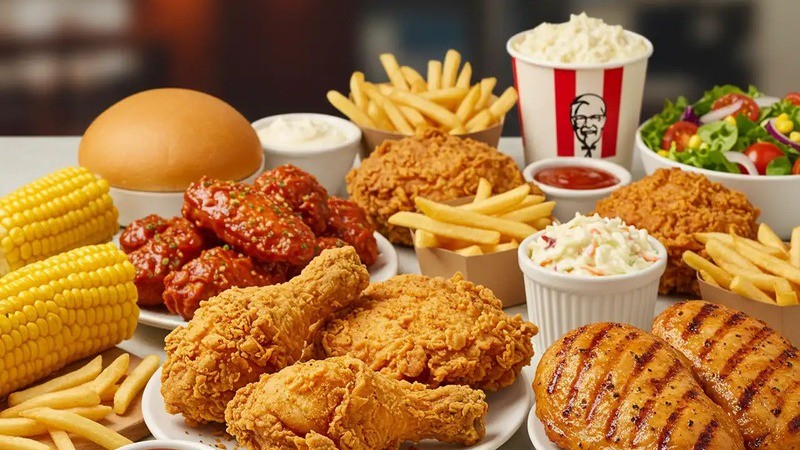
A three-piece meal at KFC can land anywhere between 500 and 1,200 calories depending on which pieces you pick and what sides come with them. That gap is the whole story of KFC nutrition in one sentence — this isn’t a menu with one answer, it’s a menu of very different choices sitting in the same bucket.
Anyone who has spent time cross-referencing restaurant nutrition data knows the frustrating part isn’t finding numbers, it’s finding numbers you can trust. Menu items get renamed, portion sizes shift by region, and half the “nutrition guides” online are copying each other’s mistakes. This piece pulls from verified figures and flags anywhere the data genuinely varies, rather than pretending every number is exact down to the calorie.
This guide breaks down what actually shows up in your order: where the calories concentrate, why sodium is the real concern rather than fat, which items are genuinely lighter, and how to build a meal you don’t regret an hour later. No guesswork, no generic “eat in moderation” advice — just the numbers and what to do with them.
1: What Does KFC Nutrition Actually Look Like Across the Menu?

KFC’s menu splits into a few distinct categories that behave completely differently once you look past the marketing: fried chicken pieces, sandwiches and wraps, bowls, sides, and desserts. Each category has its own calorie and sodium profile, and lumping them together is where most “is KFC healthy” arguments go wrong. A drumstick and a Famous Bowl came from the same restaurant, but they don’t belong in the same conversation about calorie counting.
Breading style is the first major fork in the road. Original Recipe uses a thinner, pressure-fried coating; Extra Crispy uses a thicker, hand-battered crust cooked in an open fryer that holds more oil. That single choice can shift a meal by 100 calories or more before you’ve picked a side. Sodium tells a similar story — it’s driven less by any one ingredient and more by how many salted components stack up on your tray at once.
Anyone comparing KFC nutrition figures across different menu categories quickly notices the range isn’t small. A grilled drumstick and a loaded sandwich can differ by 400 calories or more, which is exactly why treating the whole menu as one uniform thing leads to bad assumptions either way — too cautious for some orders, not cautious enough for others.
Chicken Pieces and Breading Style
A single Original Recipe chicken breast runs close to 390 calories with roughly 39 grams of protein, making it one of the more efficient protein sources on the menu for its calorie cost. The same cut in Extra Crispy form typically adds another 60 to 100 calories and several extra grams of fat from the thicker batter. Smaller pieces scale down fast: a drumstick sits around 120 to 150 calories, and a wing is lighter still, which makes portion selection one of the simplest levers for managing intake without changing what you’re eating. Thighs sit in between, carrying more fat than a breast relative to their size but still less than a Famous Bowl serving on its own.
Sides, Sandwiches, and Bowls
Sides swing the total more than people expect, and this is where KFC nutrition data often gets misread. Green beans land around 25 calories with almost no fat or sodium, while mashed potatoes and gravy add both calories and a meaningful sodium bump. Bowls and sandwiches compress several ingredients into one item, which is convenient but makes it harder to swap out the parts you’d rather skip — a Famous Bowl bundles chicken, potatoes, cheese, and gravy into a single number that’s easy to underestimate.
2: Where Does the Sodium in KFC Nutrition Really Come From
Sodium is the number that surprises people most once they actually look at it, more than calories or fat. This is the single most misunderstood part of KFC nutrition for casual customers. A single piece of Original Recipe chicken can carry over 1,000 milligrams of sodium on its own — roughly half the American Heart Association’s recommended daily limit of 2,300 milligrams, with an ideal target closer to 1,500 milligrams for most adults. That’s before a side, a biscuit, or a drink enters the picture.
The seasoned coating is a big part of the sodium load by design — it’s a significant part of what makes the chicken taste the way it does. Combo meals compound the issue because each component adds its own sodium on top of the chicken rather than replacing it. A two-piece combo with a biscuit and a starchy side can clear 2,000 milligrams before you’ve had anything to drink, which matters most for anyone managing blood pressure specifically.
How Combo Meals Multiply Sodium in KFC Nutrition Totals
Ordering a single piece of chicken and a vegetable side keeps sodium in a reasonable range. Add a biscuit, swap the side for mashed potatoes and gravy, and upgrade to a sugary drink, and the same base meal can nearly double its sodium content. None of these additions look dramatic individually — that’s exactly why they add up without anyone noticing until the total is calculated.
Who Should Pay Closest Attention
People managing blood pressure or on a sodium-restricted diet get the most value from tracking this closely, since a single KFC meal can represent a large share of a daily sodium budget. For everyone else, occasional visits rarely undo a week of otherwise balanced eating — the real risk is a habit of ordering the same high-sodium combo several times a week without noticing the pattern.
3: The Lower-Calorie Picks in KFC Nutrition That Actually Hold Up
Every fast food chain markets a “healthy choice” that doesn’t really earn the label once you look closely, but KFC’s version is mostly fair. A handful of items genuinely stand apart from the rest of the menu on calories, sodium, or both, and knowing which ones are worth reaching for saves a lot of second-guessing at the counter. These are the picks that consistently show up as legitimate wins in KFC nutrition data rather than marketing spin.
Grilled chicken, when it’s on the menu, is the clearest standout — a grilled breast can come in at nearly half the calories of an Extra Crispy one while keeping protein roughly comparable. The catch is availability, since grilled options have been pulled from national menus more than once over the years and aren’t guaranteed at every location.
Best Sides for a Lighter KFC Nutrition Profile
Green beans and corn on the cob are the two sides worth defaulting to if calories or sodium are a concern. Green beans run about 25 calories with almost nothing in the way of fat or sodium, and corn adds fiber for around 70 calories. Both beat mashed potatoes and coleslaw by a wide margin on nearly every metric that matters.
Protein-Forward Options Worth Ordering
Chicken nuggets land around 420 calories for a 12-piece order with over 30 grams of protein, a solid ratio for a fast food item even accounting for sodium. Individual pieces, particularly drumsticks and wings, also deliver strong protein per calorie compared to sandwiches and bowls that dilute the chicken with bread, cheese, or sauce.
| Item | Calories | Protein | Sodium |
| Original Recipe breast | ~390 | ~39g | ~1,100mg |
| Extra Crispy breast | ~470 | ~35g | ~1,200mg |
| Drumstick | ~120–150 | ~11–17g | ~370mg |
| 12-piece nuggets | ~420 | ~36g | ~1,680mg |
| Green beans | ~25 | ~1g | ~500mg |
| Corn on the cob | ~70 | ~2g | ~10mg |
| Famous Bowl | 600–710 | ~25–31g | ~2,000mg+ |
These figures are approximate and drawn from cross-checked sources rather than a single one, since exact values shift slightly by portion and region. Treat the table as a planning reference, and check KFC’s official nutrition page directly if you need precision down to the gram.
4: What to Skip When You’re Watching KFC Nutrition Numbers
A short list of items consistently outweighs the rest of the menu in KFC nutrition terms, and knowing them ahead of time saves you from finding out the hard way after the meal is ordered. Two items in particular deserve a second look before they end up on your tray by default.
The Famous Bowl layers mashed potatoes, corn, popcorn chicken, cheese, and gravy into one container, pushing well past 600 calories with sodium levels that rival or exceed a full combo meal — a textbook example of how KFC nutrition numbers can hide inside a single, comfort-food-shaped item. It’s built to taste like comfort food, and it does, but it’s not a light option by any reasonable measure. The Double Down — fried chicken fillets standing in for bread, stuffed with bacon, cheese, and sauce — is the other item worth naming directly for its combined calorie, fat, and sodium load.
Items That Add Up Quietly
Biscuits are a smaller problem individually but a real one inside a combo meal, adding calories and sodium for relatively little protein or fiber in return. Desserts follow a similar pattern, contributing sugar and calories that are easy to overlook because they’re ordered as an afterthought rather than a deliberate choice.
Smarter Substitutions for High-Calorie KFC Nutrition Traps
Swapping mashed potatoes for green beans, skipping the biscuit, and choosing a smaller cut of chicken can turn a 1,000-calorie combo into something closer to 600 without changing the core of the meal. These substitutions work because they target the components doing the most damage rather than asking you to give up fried chicken altogether.
5: Building a Lighter KFC Nutrition Order Without Giving Up Flavor

You don’t have to abandon fried chicken to eat a more balanced meal at KFC — a few consistent adjustments do most of the work. Understanding the basic shape of KFC nutrition across the menu makes these swaps intuitive rather than something you have to look up every time.
- Choose smaller pieces. A drumstick or wing costs far fewer calories than a breast while keeping the same flavor and texture.
- Swap the side. Green beans or corn instead of mashed potatoes and gravy cuts both calories and sodium in one move.
- Skip the biscuit. It adds calories and sodium without much nutritional return.
- Watch the combo upgrade. Supersizing a drink or adding a dessert usually adds more sugar and calories than the base meal itself.
- Order grilled where it’s available. It’s the single biggest calorie reduction you can make while keeping the meal structurally the same.
Ordering Strategies for Regular KFC Nutrition-Conscious Customers
Anyone eating at KFC more than occasionally benefits from picking two or three go-to combinations rather than deciding fresh every visit — a grilled breast with green beans, or drumsticks with corn, removes the guesswork and keeps sodium and calories in a predictable range without feeling restrictive.
Mistakes People Make When Trying to Eat Healthier Here
The most common mistake is focusing entirely on the chicken while ignoring the side and drink, which often account for as much of the sodium and calorie total as the protein itself. The second is assuming “grilled” or “smaller” always means healthier without checking — a bowl marketed as a lighter option can still outweigh two pieces of fried chicken once sauce and cheese are added.
6: Protein, Carbs, and Fat: The Numbers Behind KFC Nutrition

Chicken is inherently a strong protein source, and that carries through most of the core menu. A single Original Recipe breast delivers around 39 grams of protein, a meaningful contribution toward the roughly 50 grams most adults need daily depending on body weight and activity level. That advantage erodes in bowls and loaded sandwiches, where a large share of the calorie count comes from starch, cheese, and sauce rather than the chicken itself, which is a pattern that shows up again and again across KFC nutrition data.
Carbohydrates come almost entirely from breading and sides rather than the meat — a plain piece of chicken carries only a few grams of carbs despite its thick coating. Fat is where breading style matters most: saturated fat is the figure worth tracking closely, since the Dietary Guidelines for Americans recommend keeping it under 20 grams a day for someone eating roughly 2,000 calories, and a single piece of fried chicken can represent a meaningful share of that limit.
Reading Protein-to-Calorie Ratios in KFC Nutrition Data
Pieces and nuggets generally outperform bowls and sandwiches on protein per calorie, which makes them the better default if protein efficiency is the priority. This ratio is a more useful lens than calories alone for anyone building a meal around fitness goals.
Understanding Saturated Fat in Fried Chicken
Extra Crispy consistently carries more saturated fat than Original Recipe because of its thicker, oil-absorbing batter. KFC fries in a canola and soybean oil blend with zero grams of trans fat per serving, a genuine improvement over the partially hydrogenated oils common across the industry two decades ago, though it doesn’t change the saturated fat or calorie totals of the food itself.
7: Allergen and Dietary Considerations Within KFC Nutrition
Shared fryers are the detail most people miss when checking allergen information. Chicken, fish, and potato products can come into contact with each other during preparation in many locations, which matters directly if you have a fish or shellfish allergy and shouldn’t be assumed away based on the item you’re ordering.
KFC has stated that peanuts and tree nuts aren’t used in its standard recipes, though a couple of dessert items may carry trace exposure worth confirming at the counter. For gluten sensitivity, the standard breading on both Original Recipe and Extra Crispy chicken contains wheat, ruling out most of the core menu — grilled chicken, where available, is typically the safer option, though cross-contact in shared equipment remains a real consideration.
Common Allergens to Watch For in KFC Nutrition Listings
Wheat, milk, soy, and egg appear across various menu items beyond the obvious breaded chicken, often in sauces, biscuits, and desserts where they’re easy to overlook.
Tips for Dietary Restrictions and KFC Nutrition Verification
Asking staff directly about preparation methods for your specific allergy concern is more reliable than relying on general menu descriptions, since regional formulations and shared equipment can vary by location.
8: How KFC Nutrition Compares to Cooking Chicken at Home
Home-cooked chicken breast, grilled or baked without heavy breading, generally comes in significantly lower in sodium and fat for comparable protein, mainly because commercial fryer preparation is harder to replicate at lower sodium levels in a home kitchen. That gap applies to fried chicken as a category, not just KFC nutrition specifically — restaurant fried chicken from any chain tends to run higher in sodium and fat than a home-cooked equivalent.
That doesn’t make KFC inherently worse than other fried chicken options; it just means home preparation offers more control over salt and oil. For someone eating at KFC occasionally rather than replacing home-cooked meals with it, this comparison matters less than how the rest of the week’s meals balance out.
Calorie Differences Between Restaurant and Homemade KFC Nutrition Numbers
A home-baked chicken breast with light seasoning can come in 100 to 150 calories lower than the same cut from KFC, primarily due to oil absorption during frying rather than any difference in the chicken itself.
When Restaurant Convenience Is Worth the KFC Nutrition Trade-Off
Occasional convenience rarely outweighs a week of balanced home cooking, and the two aren’t in direct competition for most people — the question is really about frequency and what the rest of your plate looks like on a given day.
Conclusion
The healthiest KFC meal isn’t about finding one perfect menu item. It’s about understanding which choices quietly add hundreds of calories and thousands of milligrams of sodium. Small swaps make a bigger difference than most people expect
FAQ’s
1: Is KFC ever a reasonable choice for weight loss?
It can fit into a calorie-controlled plan with smaller pieces, a vegetable side, and no biscuit or sugary drink.
2: Why does grilled chicken keep disappearing from KFC’s menu?
It’s added and removed based on regional sales performance, so local availability varies and isn’t guaranteed.
3: Is the Original Recipe less healthy than Extra Crispy?
No — Original Recipe is typically the lighter option; Extra Crispy’s thicker batter adds more calories and fat.
4: Does KFC publish official nutrition information?
Yes, KFC maintains an official nutrition guide for its standard U.S. menu, though values can shift slightly by location.
5: What’s the easiest change for better KFC nutrition on a typical order?
Swapping mashed potatoes for green beans and skipping the biscuit cuts meaningful calories and sodium at once.
Summary
KFC’s menu ranges from 25-calorie green beans to 700-calorie bowls, with sodium as the biggest overall concern. The original recipe generally beats Extra Crispy on calories and fat. Smaller cuts, lighter sides, and skipping biscuits are the simplest ways to eat lighter without giving up KFC’s fried chicken entirely.