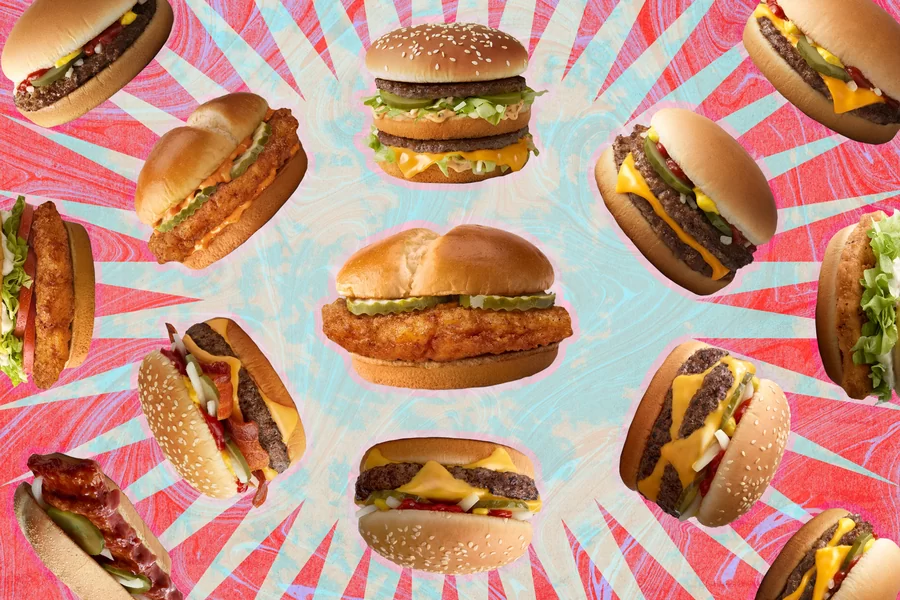
McDouble is one of McDonald’s most popular value burgers, making it a frequent choice for people looking for an inexpensive meal. Understanding its nutrition facts can help you compare it with other menu items and decide how it fits into your overall diet.
The nutritional value McDouble is one of the most searched fast food nutrition topics in America — and the data behind this $3 burger is far more interesting than its price tag implies.
Understanding the nutrition facts before ordering can help you compare menu items and make choices that fit your dietary goals.
McDouble nutrition in menu context:

One cheese slice instead of two – that change shaped the McDouble when it landed on McDonald’s dollar menu back in 2008. Born after the Double Cheeseburger got pulled from budget pricing, this burger took its place quietly. Less cheese means fewer calories, about fifty less than its predecessor. Sodium also takes a dip, dropping close to 330 milligrams. While ads stayed silent on these details, people watching their intake might find them useful anyway. These changes reduced both calories and sodium compared with the Double Cheeseburger.
One feature that distinguishes the McDouble is its protein-to-calorie ratio. With 22 g of protein, fewer than 400 calories, and a price of about $3 (prices vary), Among McDonald’s value menu items, the McDouble offers a relatively high amount of protein for its calorie content. Looking at the numbers alongside other menu items provides useful context.
McDouble Nutrition Facts:
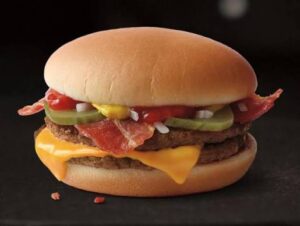
One look at McDonald’s site, their phone app, or those screens inside shows the nutrition details for a McDouble – thanks to federal rules. You’ll find it listed just like this: two 100% beef patties topped with one slice of American cheese, tangy ketchup, sharp mustard, chopped onion bits, plus twin pickle slices, all hugged by a basic bun. Nothing extra tossed in. Exactly how it comes off the line, every time.
A McDouble contains 400 calories, which represents about 20% of a 2,000-calorie daily diet used on Nutrition Facts labels.
- Twenty grams of total fat make up twenty six percent of the seventy eight gram daily amount suggested by the FDA. Eight grams are saturated, nearly half of a separate twenty gram recommendation meant for that type only
- Carbs sit at 34 grams, which is about 12 percent of what you might need each day. Fiber makes up 2 grams of that count, while sugars add up to 7 grams altogether
- Each serving packs 22 grams of protein. Beef supplies it fully, offering every one of the nine essentials your body can’t make on its own
- A single sandwich packs 920 milligrams of sodium. That hits 40 percent of what the FDA suggests people eat in a whole day. The daily target sits at 2,300 milligrams
Sodium Sources: McDouble nutrition:
That 920 mg of sodium in a McDouble? It’s the detail that catches almost everyone off guard – especially when they learn it’s nearly two fifths of what you should eat all day, packed into something priced around three bucks. Yet to really get why, you need to look at how each piece fits together, not just the whole thing on its own.
Starting off, the beef patties inside a McDouble get salt both while being ground and once more when they hit the grill. Each of those two 1.6-ounce patties brings around 125 to 140 mg, so together they land in the 250–280 mg sodium range. Sliding in next, one piece of American cheese tosses in about 230 mg. Then there’s the standard bun – baked with enough seasoning to pack close to 200 mg. Drizzled on top, ketchup plus mustard along with pickles bring an extra 150 to 190 mg, give or take based on how heavy the hand was.
1: Pickle Contribution to Total Sodium
One thing worth noting. Pickles inside a regular McDouble pack around 70 to 90 milligrams of salt apiece. Most of that comes from sitting in brine, while vinegar plays backup during preservation. Together, both slices add up to roughly 140 through 180 milligrams of sodium from pickles alone.
Most of the salt punch in that sandwich comes from an unexpected place – the pickles, even though they add almost no energy value. When cutting down on sodium matters, skipping them slashes about 140 to 180 milligrams, which wipes out roughly one sixth to one fifth of the overall salt load, just from ditching those tangy slices.
2: American Cheese Sodium vs. No Cheese Modification
One change when you order a McDouble – skip the cheese – and it’s done without issue. The move pulls out just one piece of American cheese, which cuts salt levels sharply. Sodium drops from 920 milligrams down to about 690. Calories shift too, sliding from 400 to 350. That drop of 230 milligrams? It stands alone. No other tweak on this burger delivers more in lowering sodium.
Protein-wise, skipping the cheese on a McDouble shifts things. Instead of 1 gram every 18 calories, it becomes about 1 gram per 14.6. That tweak works out just a bit sharper. The reason? Cheese brings extra energy but zero added muscle fuel. So cutting it changes the math in silence.
3: Bun Sodium and the Structural Floor
Most of that bread at McDonald’s soaks up around 200 mg of salt just by how it’s made and how yeast reacts while cooking, then extra salt sticks on top when baked. That amount stays fixed no matter what changes you make unless the whole burger idea gets scrapped.
Starting with skipping the bread, some McDonald’s spots let folks swap it for lettuce instead. That move wipes out 200 milligrams of salt right there. Alongside, nearly thirty grams of carbs go away too. Removing the bun changes the burger’s nutrition profile by reducing both carbohydrates and calories.
Protein Quality and the 22 Grams in a McDouble:
That 22 grams of protein in a McDouble? It comes fully formed, thanks to two small but dense beef patties each weighing 1.6 ounces. Each bite pulls in amino acids shaped by nature into something close to ideal.Beef is considered a high-quality protein because it provides all essential amino acids and is highly digestible – few foods beat that. Two layers of meat push it ahead where others lag behind by using only one:
- Based on the USDA amino acid profile for cooked ground beef, a McDouble is estimated to provide approximately 1.7–1.9 grams of leucine, though McDonald’s does not publish amino acid values for individual menu items.
- Lysine sits around 1.8 grams – it backs up collagen building while also helping the body take in calcium along with aiding in making carnitine
- Methionine sits around 0.6 g – a building block with sulfur that fuels while steering key cleanup steps in the liver
- Using typical creatine concentrations reported for cooked beef, a McDouble is estimated to contain about 0.7–0.9 grams of naturally occurring creatine. McDonald’s does not publish creatine values for its burgers.
- Built into every McDouble, zinc slips in through the beef – around 3.5 milligrams. That chunk covers roughly a third of what most grown men need each day. Found in muscle tissue, it shows up cleanly on the plate without fanfare. One sandwich, one solid boost
Fat Composition of a McDouble: Saturated vs. Unsaturated Reality:
A McDouble contains 20 g of total fat, including 8 g of saturated fat. The remaining fat is primarily monounsaturated and polyunsaturated fat from the beef, giving a broader picture than saturated fat alone
1: Ground Beef Fat Specifications in McDonald’s Patties
McDonald’s uses a proprietary ground beef blend for its burgers, reported to be 100% pure beef with no fillers, additives, or flavor enhancers beyond salt and pepper applied during cooking. The standard fat specification for McDonald’s regular beef patties runs approximately 20–22% fat by raw weight — meaning the two 1.6-ounce raw patties in the McDouble contributes roughly 9–10g of beef fat to the final assembled sandwich, with the remaining fat coming from the cheese slice.
This fat specification is relevant because the burger’s fat content reflects both cooking-rendered fat loss (fat drips during griddle cooking) and retained fat from the cheese and bun components. The beef contributes the majority of fat, but not all of it — an architectural detail that matters for anyone attempting to reduce the nutritional value of fat content through customization.
2: Trans Fat Status in McDouble nutrition
McDonald’s eliminated artificial trans fats from its US cooking oils and food products following FDA regulatory action. McDonald’s nutrition information lists 1 g of trans fat on its nutrition panel — a figure that reflects naturally occurring conjugated Linoleic acid (CLA) and vaccenic acid from the beef, not artificial partially hydrogenated oils.
Beef naturally contains conjugated linoleic acid (CLA). Based on USDA nutrient data for cooked ground beef, a McDouble is estimated to provide a small amount of CLA, although McDonald’s does not report this nutrient separately.
3: Cholesterol in the McDouble nutrition
A McDouble contains approximately 80 mg of dietary cholesterol — 27% of the FDA’s 300 mg daily reference value (a target the most recent Dietary Guidelines for Americans no longer specifies a numeric limit for, instead recommending “as little as possible”). Dietary cholesterol from beef has a modest and highly individualized effect on serum LDL cholesterol, heavily modified by genetic expression of APOE alleles and baseline saturated fat intake.
For most healthy adults, the 80 mg cholesterol in the value McDouble represents a non-significant cardiovascular input within the context of a diet otherwise moderate in saturated fat — particularly relevant given that the unsaturated fat content of the McDouble outweighs the saturated fraction.
Can a McDouble Fit Into a Weight Management Plan?
McDouble’s 400-calorie total places it in a specific position relative to weight management goals that is more favorable than its fast food categorization implies. For a moderately active adult on a 1,800-calorie daily target, a McDouble represents 22% of total daily caloric intake while delivering 22 g of protein — a macronutrient ratio that supports satiety and reduces the likelihood of over consumption at subsequent meals.
- Protein-to-calorie ratio: 22 g protein per 400 calories = 1 g protein per 18.2 calories
- Protein requires more energy to digest than carbohydrates or fat, a phenomenon known as the thermic effect of food. Estimates suggest that roughly 20%–30% of protein calories are used during digestion and metabolism.
- Adding a side salad instead of medium fries: saves 320 calories while adding fiber and micronutrients
- Ordering water instead of medium soda: saves 200 calories and 55 g of added sugar per meal
| McDonald’s Item | Calories | Protein (g) | Total Fat (g) | Sat Fat (g) | Sodium (mg) | Carbs (g) | Approx. Price |
| McDouble | 400 | 22 | 20 | 8 | 920 | 34 | $2.89 |
| Double Cheeseburger | 450 | 25 | 24 | 11 | 1,050 | 34 | $3.39 |
| Quarter Pounder w/ Cheese | 520 | 30 | 26 | 13 | 1,090 | 41 | $5.79 |
| Big Mac | 550 | 25 | 30 | 11 | 1,010 | 45 | $5.99 |
| Cheeseburger | 300 | 15 | 13 | 6 | 720 | 32 | $1.99 |
| Hamburger | 250 | 12 | 9 | 3.5 | 490 | 30 | $1.69 |
| Chicken | 400 | 14 | 21 | 3.5 | 590 | 40 | $2.69 |
| Filet-O-Fish | 390 | 16 | 19 | 4 | 580 | 39 | $5.29 |
| McDouble (no cheese) | 350 | 21 | 16 | 6 | 690 | 33 | $2.89 |
| McDouble (no bun) | 170 | 18 | 10 | 5 | 720 | 5 | $2.89 |
| Bacon McDouble | 460 | 26 | 24 | 10 | 1,100 | 34 | $3.69 |
| Double Quarter Pounder | 740 | 48 | 42 | 20 | 1,360 | 42 | $7.29 |
Nutrition note: Unless otherwise stated, McDouble nutrition values are taken from McDonald’s official nutrition information. Nutrient estimates for amino acids, creatine, CLA, and certain micronutrients are derived from USDA FoodData Central and published nutrition research because McDonald’s does not report these components separately.
Based on USDA FoodData Central values for cooked ground beef, a McDouble is estimated to provide meaningful amounts of leucine, lysine, methionine, zinc, iron, vitamin B12, and other nutrients. McDonald’s does not publish amino acid values for individual menu items.
McDouble as a Budget Protein Source:
A McDouble delivers 22g of complete protein at approximately $2.89 — producing a cost-per-gram-of-protein figure of roughly $0.13. That number sits competitively against grocery staples: canned tuna averages $0.08–$0.12 per gram of protein, boneless chicken breast $0.10–$0.18 per gram, and Greek yogurt $0.15–$0.20 per gram depending on brand and store. Based on cost per gram of protein, the McDouble compares favorably with many common protein foods.
According to the USDA, many Americans experience food insecurity. Affordable foods that provide meaningful amounts of protein may be one practical option for some households, although overall dietary quality remains important.
1: Protein-Per-Dollar Comparison Across Fast Food Value Menus
Beef protein is generally considered a high-quality complete protein because it provides all nine essential amino acids and has high digestibility. Plant proteins such as beans can also contribute valuable protein, although their amino acid profiles differ. At approximately $2.89, a McDouble provides about 22 g of protein, or roughly $0.13 per gram of protein (prices vary by location).
2: Caloric Density vs. Protein Yield: The Efficiency Calculation
A McDouble delivers 22g protein per 400 calories — a 5.5% protein-by-calorie ratio. For a 150-pound individual targeting 120 g daily protein on an 1,800-calorie budget, three McDoubles provide 66 g of that protein at 1,200 calories, leaving 600 calories for vegetables, fruit, and fiber sources to round out the day’s micronutrient profile.
This is not a recommended dietary pattern for daily use. But as a real-world protein sourcing analysis, it demonstrates that the nutritional value functions as a practical source of protein within calorie-constrained budgets in ways that more expensive restaurant options cannot replicate at equivalent price.
McDouble vs. a Home-Cooked Burger:
The fairest benchmark for a McDouble isn’t other fast food items — it’s the home-cooked equivalent: two 1.6-ounce ground beef patties, one slice of American cheese, a standard hamburger bun, ketchup, mustard, pickles, and diced onion assembled at home. That home-cooked version, made with 80/20 ground beef, produces remarkably similar numbers to a McDouble — approximately 380–420 calories, 20–24 g protein, 18–22 g fat, and 700–800 mg sodium before added condiments.
- Home version sodium advantage: approximately 120–220 mg lower than a McDouble due to no grill-added salt
- Home version fat control: using 90/10 ground beef drops fat by 5–7g per burger versus McDouble’s 80/20 blend
- Home version cost: approximately $1.50–$2.00 per assembled burger at current grocery prices
- Micronutrient equivalence: virtually identical zinc, iron, B12, and selenium profiles from equivalent beef quantities
- Time cost: 15–20 minutes prep and cook versus immediate McDonald’s availability — the real trade-off
Values vary depending on ingredients and preparation.
Micronutrients in a McDouble: Beyond Macros:
Beyond calories and protein, a McDouble also provides iron, zinc, selenium, and vitamin B12 from the beef.
Two beef patties at 1.6 ounces each deliver a micronutrient payload that discussions about McDouble nutrition almost never include. The combined beef contributes approximately 2.4mg iron (13% DC), 3.5 mg zinc (32% DC for men), 1.4 mg vitamin B12 (58% DC), and 14 mg selenium (25% DC) — all from the beef patty component alone, before cheese and bun contributions are factored in.
1: Iron Bioavailability From McDouble Beef
McDonald’s states that its regular burger patties are made from 100% beef. Most of the sandwich’s fat comes from the beef, with the remainder coming from the cheese. Pairing the meal with a vitamin C-rich food can improve non-heme iron absorption from other foods in the meal — creating a synergistic nutritional interaction available within the McDonald’s ordering system.
2: Vitamin B12 Content and Neurological Relevance
Vitamin B12 supports nerve function and red blood cell production. A McDouble provides about 58% of the Daily Value, making it a meaningful source for people who eat little red meat. The burger’s B12 contribution from two small beef patties is one of the most underappreciated clinical benefits of this sandwich — and one that elevates its nutritional standing materially beyond what calorie-and-sodium-focused analysis captures.
3: Calcium from American Cheese
The single slice of American cheese in a McDouble contributes approximately 200 mg of calcium — 15% of the 1,300 mg daily target for teenagers and approximately 20% of the 1,000 mg target for adults aged 19–50. This is the primary calcium contribution in the entire McDouble — the beef and bun contribute negligible amounts by comparison.
Removing the cheese to reduce sodium, as discussed earlier, simultaneously eliminates this calcium contribution — a trade-off worth weighing for anyone who regularly includes a McDouble in their diet and who has limited dairy intake from other sources.
McDouble for Active Adults and Fitness Goals:
The McDouble can function as a legitimate post-exercise protein source for recreational athletes when contextualized correctly against workout demands and daily macronutrient targets. The leucine content — approximately 1.7–1.9 g per McDouble — meets the minimum threshold identified in research for stimulating muscle protein synthesis in adults, making it a functional recovery food in acute post-exercise contexts.
The 34 g of carbohydrates from the bun contribute to glycogen replenishment, though at a modest level — insufficient alone for high-volume endurance athletes requiring 1–1.2 g carbohydrates per kg body weight in the post-exercise window, but adequate as a component of a larger recovery meal.
1: How Customization Changes McDouble Nutrition
Understanding the customization levers available at McDonald’s is where practical understanding McDouble nutrition produces real dietary outcomes. McDonald’s allows modification of virtually every component of the McDouble through the app, kiosk, or counter ordering without additional charge.
Removing cheese: -50 calories, -230 mg sodium, -4g saturated fat. Adding lettuce and tomato: negligible caloric impact, adds potassium and vitamin K from lettuce. Substituting mustard-only for ketchup and mustard: eliminates 7g of added sugar and approximately 90 mg sodium from ketchup. Requesting extra onion: adds quercetin and sulfur compounds from raw onion at zero caloric cost. No salt on patties: reduces sodium by approximately 100–130 mg through eliminating grill-applied salt — available on request at most locations.
2: A Repeatable Decision Framework Built Around a McDouble
Every McDonald’s visit can be structured around a consistent decision process based on the burger’s nutrition facts. Step one: decide your customization level based on the day’s sodium and saturated fat budget — standard, no cheese, or no bun. Step two: replace medium fries with a side salad to save 320 calories and 14 g of fat. Step three: order water or unsweetened iced tea rather than a soda, eliminating 200 empty calories. Step four: log the specific version you ordered using McDonald’s official app nutrition data rather than a generic food database entry
Following these four steps regularly can help reduce calories and sodium while keeping the meal within a range of about 350–400 calories, 21–22 g of protein, and 690–920 mg of sodium.
Conclusion
A McDouble delivers 22g complete protein, meaningful B12, zinc, and iron at 400 calories and approximately $2.89 (prices vary). Remove the cheese to cut sodium 25%. Skip fries for a side salad. Order water. Following these choices regularly can help reduce calories and sodium. McDouble nutrition can support muscle protein synthesis when consumed as part of an overall balanced diet.
FAQ’s
Q1: How many calories are in a McDouble?
The standard McDouble contains exactly 400 calories per McDonald’s official published nutrition data.
Q2: What is the protein content in the McDouble nutrition?
A standard McDouble delivers 22 grams of complete protein from two ground beef patties.
Q3: How much sodium does the McDouble nutrition contain?
The McDouble contains 920 mg of sodium — 40% of the FDA’s 2,300 mg recommended daily limit.
Q4: Does removing cheese significantly change the nutritional value of McDouble?
Yes — no cheese drops calories by 50, sodium by 230 mg, and saturated fat by roughly 4 grams.
Q5: Is McDouble nutrition suitable for a high-protein diet?
Yes — at 22g protein per 400 calories, it delivers competitive protein efficiency for a value fast food item.
Summary
The nutritional value McDouble stands out as McDonald’s most calorie-efficient protein value item — delivering 22 g of complete beef protein, 58% of daily B12, and meaningful zinc at just 400 calories and approximately $2.89 (prices vary). Understanding McDouble nutrition in full — macros, micronutrients, sodium sources, and customization levers — provides additional context that can help consumers compare it with other menu choices.
References:
- McDonald’s USA Official Nutrition Facts
- USDA FoodData Central
- FDA Daily Values on Nutrition Facts Labels
- Dietary Guidelines for Americans 2020–2025
- NIH Office of Dietary Supplements (vitamin B12, Zinc, Iron)
- USDA Household Food Security in the United States (if discussing food insecurity)