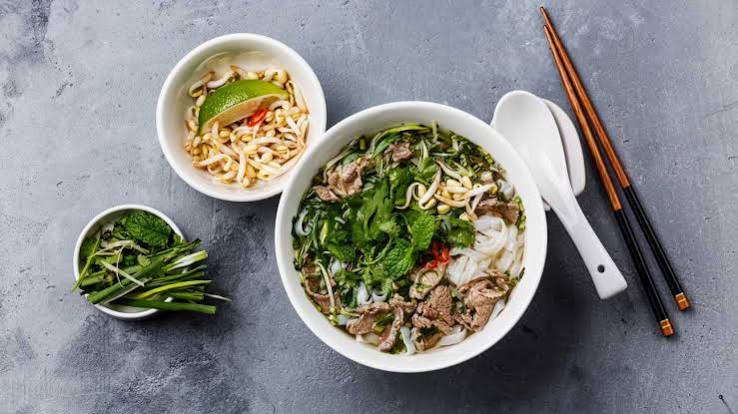
I’ve spent a good chunk of the last few years going through restaurant nutrition data for meal-planning clients, and pho is genuinely one of the more inconsistent dishes on that list — bowl size alone can swing the total by 200 calories before a single topping shows up. What I flag for almost every client is simpler than a spreadsheet: “soup” doesn’t automatically mean light. Sometimes it does. Sometimes it really, really doesn’t. The pho noodle soup nutrition figures below tell a messier story than that assumption suggests.
Bowls shift by region and kitchen, too, and most regulars never catch it. A broth simmers a little longer at one spot, a topping gets swapped at another, and the nutrition picture quietly moves underneath a dish that looks identical from table to table. Even two locations of the same chain can post noticeably different sodium numbers depending on how that week’s broth got made.
One steaming bowl of broth and rice noodles, and a sodium range wide enough to make chicken the smarter order.
Table of Content:
- What Do the Pho Noodle Soup Nutrition Numbers Show Across a Full Bowl?
- Pho Noodle Soup Nutrition Across Beef, Chicken, and Protein Add-Ins
- Pho Noodle Soup Nutrition Sodium and Fat Breakdown
- Pho Noodle Soup Nutrition for Noodles, Portions, and Condiments
- Pho Noodle Soup Nutrition for Sides and Ordering Smarter
1. What Do the Pho Noodle Soup Nutrition Numbers Actually Show Across a Full Bowl?
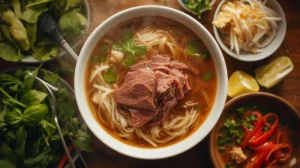
Four building blocks, officially: broth, noodles, protein, and toppings, each pulling its own weight toward the final total. Every figure below comes from standard recipes, restaurant averages, and the kind of pho noodle soup nutrition testing that produces packaged labels where one actually exists. Customize anything, extra noodles, a bigger protein portion, and your real total drifts away from what’s typically quoted.
Pho Noodle Soup Nutrition for Broth Bases
Beef bone broth is the heaviest of the bunch. Most collagen, most sodium, often 1,300 to 1,500 milligrams in a single bowl. Chicken broth runs lighter across the board — fewer calories, less fat, usually under 1,000 milligrams of sodium when it’s made fresh rather than from concentrate. Vegetable broth sits at the bottom of that sodium range on paper, though restaurant kitchens tend to push it back up past 800 milligrams once seasoning gets added in.
Pho Noodle Soup Nutrition for Protein Choices
A standard beef pho with sliced brisket or eye of round lands around 400 calories with 25 to 30 grams of protein. Chicken pho trims that down a bit, usually 320 to 400 calories and 20 to 25 grams of protein. Tofu pho is the real outlier here — anywhere from 300 to 350 calories, and protein that swings wildly, 10 to 16 grams, depending entirely on how generous the kitchen was with the tofu that day.
Read also: https://en.wikipedia.org/wiki/Chicken_soup
2. Pho Noodle Soup Nutrition for Beef vs Chicken Broth
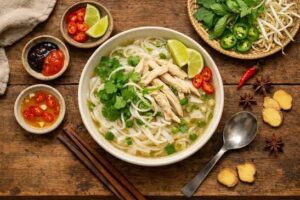
Two bowls can sit next to each other on the same table and still land in completely different places once broth, cut of meat, and portion size get factored in. Easy to assume “pho” means one general calorie range no matter the protein. It doesn’t. The gap between a lean chicken bowl and a rich beef bowl is real, and the pho noodle soup nutrition numbers show it’s wider than most people expect scanning a menu board.
Pho Noodle Soup Nutrition Beef Pho vs Chicken Pho
A regular bowl of beef pho runs 350 to 450 calories with roughly 1,300 to 1,500 milligrams of sodium. Solid protein, but sodium-heavy by design — that’s just how the bone broth works. Chicken pho comes in leaner, often 280 to 400 calories with sodium closer to 640 to 950 milligrams depending on the broth base. A meaningful drop, if sodium specifically is what you’re watching rather than just calories.
Fat tells a similar story. Beef pho typically carries 9 to 12 grams per bowl thanks to the bone broth and fattier cuts; chicken pho usually stays under 8. Neither is a bad choice on its own. The difference just depends on what you’re actually optimizing for that particular day.
Pho Noodle Soup Nutrition for Bone Broth vs Quick-Simmered Broth
Traditional bone broth, simmered for hours, pulls more minerals and collagen out of the bones. It also concentrates more sodium along the way, which is the trade nobody mentions on the menu. A quick-simmered broth, common at faster casual spots, runs lighter on both fronts — fewer minerals, sure, but also a gentler sodium hit, sometimes 300 to 500 milligrams lower per bowl.
Some chains split the difference with a shortcut broth that lands closer to 900 milligrams while still tasting reasonably rich. Worth asking about, honestly, if a restaurant happens to offer more than one broth style.
3. Pho Noodle Soup Nutrition for Protein Add-Ins
People treat “extra meat” like a simple upgrade, something you add without thinking twice. Brisket, meatballs, and tripe turn out to be nearly three different add-ins once the actual pho noodle soup nutrition numbers come out. Same bowl, same broth, wildly different fat and sodium math sitting underneath all of it.
Pho Noodle Nutrition Brisket and Well-Done Beef vs Meatballs
A standard portion of well-done, lean beef adds roughly 130 to 160 calories and 20 grams of protein, with relatively little fat tagging along. Fatty brisket runs heavier — closer to 200 to 240 calories for the same portion, with noticeably more saturated fat riding shotgun. Beef meatballs land somewhere in between, usually 150 to 190 calories per serving, though sodium climbs faster here since the meatballs walk in pre-seasoned.
Order a combination bowl, two or three protein types at once, and the calorie count can climb past 550 to 600 without the portion looking dramatically bigger sitting in the bowl. Sodium climbs right alongside it, for the same reason: each protein type usually arrives pre-seasoned before it ever touches the broth.
Pho Soup Nutrition for Tofu and Vegetarian Bowls
Tofu pho swaps in plant protein for a genuinely different macro profile — around 300 to 350 calories, 10 to 16 grams of protein, less saturated fat than either beef or chicken. Vegetable pho without tofu drops further still, often 200 to 300 calories with just 5 to 8 grams of protein, most of that coming from the noodles and broth vegetables rather than anything substantial.
Neither version is automatically “lighter” across the board, though. Vegetable broth pho can still carry 700 to 900 milligrams of sodium at a restaurant, even with zero meat anywhere in the bowl.
4. Pho Noodle Soup Nutrition Sodium and Fat Breakdown
Sodium is where the biggest surprise on this dish lives, honestly. A bowl that looks light on paper, clear broth, lean protein, fresh herbs, can still out-sodium a fast-food combo meal without much trouble. Broth concentration, not the toppings, is almost always what decides the final pho noodle soup sodium number.
Pho Noodle Soup Nutrition Sodium Across Bowl Types
Here’s how the main bowl types stack up side by side:
| Pho Bowl Type | Calories | Protein (g) | Sodium (mg) | Fat (g) |
| Beef Pho, Regular Bowl | 420 | 28 | 1,400 | 10 |
| Chicken Pho, Regular Bowl | 340 | 23 | 900 | 7 |
| Tofu Pho, Regular Bowl | 330 | 14 | 750 | 9 |
| Vegetable Pho, No Protein | 260 | 6 | 700 | 4 |
| Combination Bowl (Beef + Meatballs) | 580 | 34 | 1,750 | 16 |
Restaurant versions almost always run saltier than the homemade equivalents in that table, sometimes by several hundred milligrams. Bottled broth concentrate and pre-seasoned toppings both add sodium a home cook could otherwise control.
Pho Noodle Soup Nutrition Saturated Fat Across the Lineup
Beef pho carries the most saturated fat of the group, mostly from the bone broth and fattier cuts like brisket — often 4 to 6 grams per bowl. Chicken pho stays lower, typically under 3 grams, especially once the skin gets skimmed off before serving. Tofu and vegetable versions sit at the bottom almost every time, rarely crossing 2 grams.
Fried garlic and crispy shallots, easy to overlook entirely, quietly push saturated fat higher across any of these bowls if you go heavy on them.
5. Pho Noodle Soup Nutrition for Noodles and Portion Sizes
Nobody thinks of the noodles as the risky part of a pho order. The broth usually takes that blame instead. Only half true, as it turns out. Rice noodles are the single biggest carbohydrate source in the bowl, and portion size here moves the pho noodle nutrition total more than almost anything else on the table.
Pho Noodle Soup Nutrition Regular Bowl vs Large Bowl
A regular bowl typically uses about one cup of rice noodles, contributing roughly 190 calories and 42 grams of carbohydrate on its own. Order the large size, common enough at sit-down pho restaurants, and the noodle portion alone can climb toward 300 calories — pushing total sodium and calories up even when the protein and broth stay exactly the same.
A small or “to-go” bowl trims that down closer to half a cup. A reasonable swap if you’re trying to keep carbs in check without giving up the broth and protein entirely.
Pho Noodle Soup Nutrition Noodle-to-Broth Carb Load
Rice noodles run about 190 calories per cup, versus roughly 220 calories for the egg noodles used in some fusion versions. Fewer calories, sure, but also less protein — about 3 grams per cup against 7 for egg noodles. Fiber stays low either way, typically under 2 grams a serving, which is exactly why bean sprouts and vegetables end up mattering more here than the noodles themselves.
Shirataki or glass noodles, occasionally offered as a substitute, cut both calories and carbs dramatically. They also cut most of the texture people order pho for in the first place, so it’s a trade-off worth thinking through rather than a free win.
Read also: https://en.wikipedia.org/wiki/List_of_soups?wprov=srpw1_4
6. Pho Noodle Soup Nutrition for Condiments and Garnishes
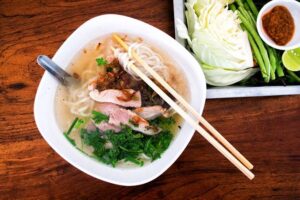
Condiments almost never come up in pho noodle soup conversations. They should. A squeeze of hoisin, a drizzle of sriracha — feels like a two-second habit, too small to matter on its own. Stack a few of those onto a bowl that’s already sodium-heavy, though, and they start behaving like their own side dish. Sodium, again, not calories, is where the real damage happens.
Pho Noodle Soup Nutrition Hoisin and Sriracha
A single tablespoon of hoisin sauce runs about 35 calories and roughly 250 to 300 milligrams of sodium. One squeeze, and a bowl that started around 1,400 milligrams is suddenly closer to 1,700. Sriracha is gentler by comparison — 5 to 10 calories per teaspoon, closer to 100 milligrams of sodium — though most people pour well past a single teaspoon once the bottle lands on the table.
Fish sauce, sometimes added straight into the broth, carries even more sodium per tablespoon than either hoisin or sriracha. A heavy hand there can undo an otherwise sensible bowl choice faster than anyone realizes.
Pho Noodle Soup Fresh Herbs and Lime
Thai basil, cilantro, lime wedges, bean sprouts — add close to nothing calorie-wise, usually under 15 calories for a generous handful, while bringing fiber and vitamin A and C that the broth and noodles simply don’t offer. This is the one corner of the bowl where loading up costs almost nothing and pays off nutritionally.
Jalapeño slices behave the same way. A few extra calories, tops, so there’s little reason to hold back on the herb plate if sodium and calories are the actual worry.
7. Pho Noodle Soup Nutrition for Sides and Drinks
Nobody thinks of the appetizer plate as the risky part of a pho order, but it often carries more sodium than the soup itself once fried options land on the table. Sides rarely make it into pho noodle soup nutrition conversations, even though a couple of them genuinely rival the entrée in calories.
Pho Noodle Soup Nutrition Spring Rolls and Egg Rolls
Fresh Vietnamese spring rolls, rice paper, herbs, vermicelli, shrimp or tofu, run light: 50 to 80 calories per roll, two rolls landing around 110 to 150 total. Fried egg rolls tell a completely different story — typically 200 to 250 calories each, 380 to 520 milligrams of sodium per roll, meaning a two-roll order alone can add nearly 1,000 milligrams before the soup even arrives.
Dipping sauce piles its own total on top of either choice, so a peanut-hoisin sauce paired with fried egg rolls stacks two separate sodium sources onto one small plate.
Pho Noodle Soup Nutrition Vietnamese Iced Coffee and Tea
A traditional Vietnamese iced coffee with sweetened condensed milk runs 170 to 240 calories per serving, almost entirely from the condensed milk rather than the coffee itself. Black Vietnamese coffee, no milk or sugar, drops all the way down to about 5 calories — essentially free, calorie-wise, next to the sweetened version.
Unsweetened iced tea sits close to that black coffee number, staying under 10 calories. Probably one of the easiest swaps on this entire menu if sugar, not sodium, is the concern.
8. Pho Noodle Soup Nutrition: Ordering Smarter at the Table
All these numbers only matter once they turn into habits you’ll actually use ordering off a menu. Nobody memorizes a nutrition chart mid-order. A handful of default choices, though, chicken over beef, herbs over fried toppings, shift a bowl’s totals more than people expect, without changing what the meal actually feels like sitting in front of you.
Pho Noodle Soup Nutrition Highest-Protein Choices
Beef pho with a double-meat add-on, chicken pho with extra breast meat, and tofu pho loaded up on tofu are the three strongest protein-per-calorie picks on this list, each capable of 30-plus grams of protein without crossing 500 calories. Pair any of them with the herb plate instead of fried sides and the whole meal stays protein-forward.
Across the pho noodle soup nutrition lineup, chicken broth consistently beats beef broth on sodium per bowl — even though nothing on a restaurant menu ever flags that difference. Arguably the single most useful pattern in this whole guide if sodium is what you’re watching most closely.
Pho Noodle Soup Lowest-Sodium Choices
Chicken pho, light on hoisin, paired with the herb plate and a squeeze of lime, forms one of the lowest-sodium combinations on this entire menu, without giving up much protein along the way. Skip the second squeeze of hoisin while you’re at it. Small habit. Adds up over a month of regular visits, though.
Five habits worth building if pho is a regular stop for you:
- Ask for the noodle portion on the side so you control exactly how much rice noodle ends up in the bowl
- Treat hoisin and fish sauce as their own sodium line item rather than an afterthought
- Choose chicken or vegetable broth over beef broth when sodium, not protein, is the main concern
- Order fresh spring rolls instead of fried egg rolls to cut appetizer sodium by several hundred milligrams
- Load up on bean sprouts, basil, and lime, since the herb plate adds almost nothing calorie-wise
Conclusion
The pho noodle soup nutrition picture rewards a little attention. Chicken broth beats beef on sodium almost every time, condiments add up faster than expected, and the noodle portion moves the total more than most people assume. Use these numbers to build a bowl around what you’re actually after.
FAQ’s
1. How many calories are in a typical bowl of pho noodle soup nutrition-wise?
A regular bowl runs 350 to 450 calories for beef, and 280 to 400 calories for chicken.
2. What’s the lowest-sodium version of pho?
Vegetable pho without added sauces, often around 700 milligrams of sodium per bowl.
3. How much protein is in a bowl of beef pho?
Roughly 25 to 30 grams, depending on the cut and portion of meat used.
4. Is pho always lighter than other noodle soups like ramen?
Usually, yes — pho tends to run lower in calories and fat than ramen, though sodium can still be high in both.
5. What are the pho noodle soup nutrition facts for the rice noodles alone?
About 190 calories and 42 grams of carbohydrate per cup, with very little protein or fat.
Summary
Pho spans beef, chicken, tofu, and vegetable broths, and each version carries its own calorie, sodium, and protein pattern. Chicken broth usually beats beef on sodium while holding onto solid protein. Noodle portion and condiments move the total more than most people expect. Checking the real pho noodle soup nutrition numbers first makes ordering something that actually fits your goals a lot easier.
Read also: https://en.wikipedia.org/wiki/B%C3%BAn_b%C3%B2_Hu%E1%BA%BF