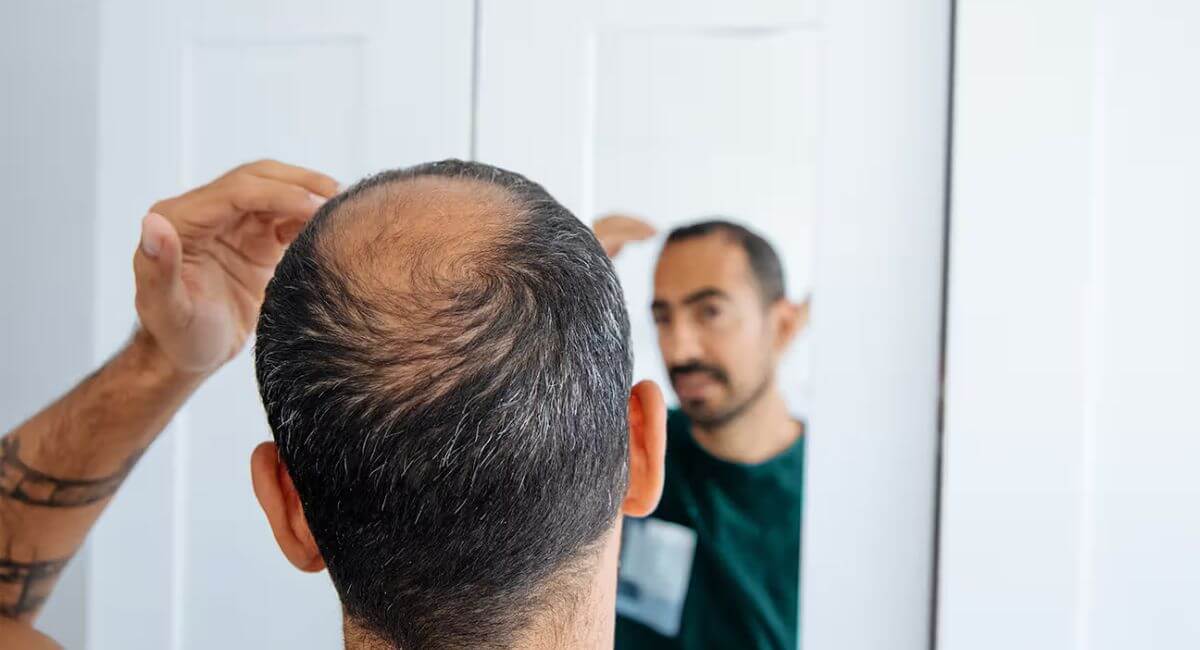
It was a February morning. Not a significant one no appointment, no event, nothing that would make that particular Tuesday memorable in any normal sense. I showered, got out, reached into the drain to clear it the way I always did, and pulled out a clump of hair that was genuinely alarming in its size. I stood there on the bath mat holding it and doing a kind of internal arithmetic that did not add up no matter how I ran the numbers.
My doctor had not said it. The calorie-counting app had not said it. The subreddit I lurked on religiously had not said it. I found out alone on a Tuesday in February holding drain evidence and feeling something between frightened and furious that this information had been available somewhere and had simply not reached me in time to do anything useful with it. This whole article is that information. Everything I wish had been handed to me before that morning.
Discover the real connection between weight loss and hair loss and what you can do to stop it effectively today.
Why Weight Loss and Hair Loss Show Up Together and Why Nobody Talks About It:

Here is the thing that genuinely bothered me once I started researching this properly. The connection between weight loss and hair loss is not obscure. It is not cutting-edge research that has not made it into mainstream awareness yet. It is documented, it is well-understood mechanically, and it affects a significant percentage of people who diet aggressively. And yet somehow the diet industry — the apps and the books and the programs and the influencers — manages to discuss weight loss at extraordinary length without mentioning that your hair might start coming out in the shower two to four months after you start.
I have a theory about why. It is not a charitable theory. I think the diet industry knows that weight loss and hair loss as a paired reality would make the product considerably less appealing, and so the information gets quietly omitted in favor of before and after photographs that show everything improving simultaneously rather than some things improving while other things quietly fall apart.
The mechanism is not complicated once someone explains it. Hair grows in cycles. Some follicles are actively growing at any given moment and some are resting before they shed. When your body experiences significant stress — and aggressive caloric restriction is significant physiological stress regardless of how controlled and intentional it feels from your side of the experience — it makes a survival decision.
It redirects resources toward essential functions and deprioritizes things that are metabolically expensive but not survival-critical. Hair growth is metabolically expensive. Hair growth is not survival-critical. The follicles get pushed into resting phase and the shedding happens months later, which is why weight loss and hair loss do not always appear at the same time even when they are absolutely caused by the same thing.
The Nutrient Gaps That Make Weight Loss and Hair Loss Worse:
I did not know what ferritin was before this happened to me. I want to put that on record because I think it is probably true for most people reading this and pretending otherwise does not help anyone.
Ferritin is stored iron. It is different from serum iron, which is what most standard blood panels measure when they check your iron levels. You can have serum iron that looks acceptable by standard reference ranges while your ferritin — the stored version — is depleted to levels that directly affect hair follicle function. Hair follicles are among the most metabolically demanding cells in the body. They are extremely sensitive to iron availability. When iron drops, which it does reliably when you are eating significantly less food than usual especially if you have reduced meat and legumes, follicle function degrades in ways that show up visibly on the scalp before they show up as obvious symptoms anywhere else.
I got my ferritin tested eventually. Mine was fourteen. The reference range bottom was twelve. My doctor said I was technically within normal limits. I later learned from a dermatologist that ferritin below thirty is associated with increased hair shedding in the hair loss literature regardless of where the standard reference range puts its lower boundary. These two things — what the standard panel flags as abnormal and what the hair loss research identifies as problematic — do not always overlap, and that gap is where a lot of people experiencing weight loss and hair loss together fall through without ever getting a useful answer.
Protein is the other piece that matters enormously and that most people underestimate when they are restricting calories. Hair is made of keratin. Keratin is a protein. When the body does not have sufficient protein coming in, it does not have the raw material for follicle function. This is not subtle or complicated — it is the most straightforward version of cause and effect that exists in nutrition, and yet people on very low calorie diets who are experiencing weight loss and hair loss together are frequently not eating anywhere near enough protein to support hair growth alongside everything else the body needs protein for.
7 Specific Things That Amplify Weight Loss and Hair Loss Together:
These are not theoretical. These are the things I did, or failed to do, that made the situation considerably worse than it needed to be.
Cutting Calories Too Fast and Too Far:
The body is not bothered by a modest deficit. A modest deficit does not read as an emergency. An aggressive deficit — the kind that produces rapid visible results and feels like it is working — reads as a crisis and triggers the resource reallocation that puts weight loss and hair loss on the same timeline. I went from eating normally to eating aggressively restricted within about a week and my body responded accordingly. Slower transitions give the body time to adapt without triggering the same emergency response.
Removing Whole Food Groups Without Replacing Their Nutrients:
I cut out most red meat because someone in a forum said it would speed things up. What I also cut out was my primary dietary source of heme iron — the most bioavailable form — and zinc, both of which are directly involved in follicle health. Removing food groups is not inherently problematic but removing them without understanding what micronutrients they were contributing and replacing those micronutrients through other sources is how specific deficiencies develop that drive weight loss and hair loss as a paired outcome rather than separate unrelated events.
Treating Exercise as an Addition Rather Than a Consideration:
I also started an aggressive exercise program at the same time I started aggressive restriction because I thought more effort would produce faster results. What I actually did was add a second major physiological stressor on top of the first one. The body does not process simultaneous stressors independently. It accumulates them. Two significant stressors applied at the same time produce a compounded hormonal environment — cortisol elevated, thyroid function altered, sex hormones disrupted — that makes weight loss and hair loss more likely and more severe than either stressor alone would have produced.
How to Actually Protect Your Hair During Weight Loss:
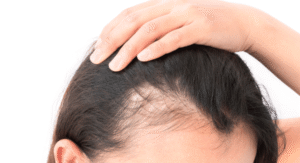
The pace question is the one I wish someone had answered for me in plain language before I started.Losing more than about one to one and a half pounds per week consistently signals the body that something is wrong. Below that threshold the body generally adapts without triggering its emergency protocols. Above it the triage response kicks in and hair follicles are among the first things deprioritized in the internal budget reallocation that follows. Slowing down — even when it feels like giving up, even when the slower pace feels impossibly incremental compared to the aggressive version — removes the emergency signal and keeps the hair follicle cycle running closer to its normal pattern.
I know this is not what people want to hear when they are motivated and seeing results and feeling the momentum of visible progress. I also know it is true and that I would have preferred someone tell me directly rather than discovering it in the most unpleasant available way.
Protein is the other practical lever and it is more actionable than pace because you can address it immediately without changing your rate of weight loss. Most people on calorie-restricted diets are eating far less protein than their hair follicles need to maintain normal function. Aiming for 1.2 to 1.6 grams of protein per kilogram of body weight during active weight loss periods — distributed across multiple meals rather than concentrated in one — keeps amino acid availability consistent throughout the day and gives the follicles the raw material they need even when overall energy intake is reduced.
Getting Properly Tested Instead of Guessing:
Most people experiencing weight loss and hair loss together never get properly tested. This is partly because they do not know what to ask for and partly because the standard panels doctors order do not always include the most relevant markers without specific request.
What to Ask For Regarding Iron:
Ask specifically for ferritin rather than accepting a standard iron panel as sufficient. Serum ferritin below 30 is the threshold most hair loss specialists use when assessing iron-related shedding — this is different from the lower boundary of the standard reference range and your result can sit comfortably within normal limits by conventional standards while still being low enough to meaningfully disrupt follicle function during a period of active weight loss and hair loss.
Full Thyroid Panel Not Just TSH:
TSH alone misses a significant percentage of thyroid dysfunction relevant to both weight regulation and hair loss. Free T3 and free T4 alongside TSH gives a more complete picture of actual thyroid activity and catches subclinical suppression that TSH in isolation will not flag. Thyroid issues are both a cause and a consequence of significant dietary restriction and they are directly implicated in weight loss and hair loss patterns that do not resolve on the expected timeline.
Hormonal Context Beyond Thyroid:
Cortisol, estrogen, testosterone, DHEA — these interact with both weight regulation and follicle cycling in ways that make comprehensive assessment genuinely valuable for anyone whose weight loss and hair loss pattern is not resolving on the expected nutritional timeline. Hormonal drivers require hormonal interventions. You cannot supplement your way out of a cortisol or estrogen problem and knowing which category your situation falls into matters enormously for choosing the right response.
Daily Habits That Actually Help Recovery
These are the things that made a measurable difference for me and that the research supports as genuinely useful rather than placebo-adjacent.
- Eat iron-containing foods alongside vitamin C at the same meal — the combination dramatically improves absorption and maintaining ferritin levels is the single most directly protective habit available against weight loss and hair loss occurring together during a caloric deficit period.
- Distribute protein across three or four meals instead of loading it into one sitting — follicle cells respond to consistent amino acid availability throughout the day and a single large protein meal does not provide the same sustained substrate that distributed intake does across the same total amount.
- Protect sleep aggressively during any active restriction period because sleep deprivation elevates cortisol, disrupts growth hormone, and creates hormonal conditions that compound the connection between weight loss and hair loss beyond what dietary restriction alone would typically produce without the additional stressor.
- Do not stack new exercise programs on top of new dietary restrictions — introduce one significant change at a time and give your body a genuine adjustment period before adding the second stressor that doubles the physiological pressure your follicles are already responding to.
- Test before supplementing rather than buying biotin because it is heavily marketed for hair concerns — knowing your actual deficiency profile and addressing the specific gaps your bloodwork reveals is considerably more effective than supplementing broadly based on what the fragrance and packaging of a supplement bottle suggests you need.
When to Stop Self-Managing and See Someone
There are specific points at which continuing to manage weight loss and hair loss independently stops being appropriate and professional assessment becomes genuinely necessary rather than optional.
- Shedding that continues beyond six months after you have stabilized your food intake and addressed the obvious nutritional gaps is not behaving like normal telogen effluvium and needs a dermatologist’s eyes on it rather than continued dietary adjustment and waiting.
- Weight loss and hair loss accompanied by significant fatigue, temperature dysregulation, mood changes, or menstrual changes is not a purely nutritional story and requires comprehensive hormonal and metabolic workup rather than more protein and better iron numbers.
- Scalp changes — redness, tenderness, visible scaling, changes in the follicle openings themselves — alongside diffuse shedding suggest a primary diagnosis different from diet-related hair loss and need dermatological evaluation sooner rather than later regardless of what else is happening with your weight.
- Extreme shedding rates — amounts coming out with gentle handling that alarm you, visible scalp through previously dense areas — warrant prompt medical assessment rather than watchful waiting regardless of where you are in your weight loss timeline.
- Repeated cycles of dietary restriction each followed by significant shedding episodes establish a pattern that needs professional guidance to break — repeating the same approach and experiencing the same paired weight loss and hair loss outcome is information telling you that something in the approach needs to change rather than simply be repeated more carefully.
Conclusion
Weight loss and hair loss happening together is not random bad luck. It is a specific physiological story with a specific physiological explanation and specific things that make it better or worse depending on what you know and what you do with that knowledge. The frustrating truth is that most of the information needed to prevent it or navigate it well is available — it just does not reach people at the moment they need it, before the February morning on the bath mat, which is the only moment the information would have actually been useful. This article is an attempt to move that moment earlier for as many people as possible.
FAQ’s
Q1. How do I know if my hair loss is caused by my diet?
The timeline is the clearest indicator — weight loss and hair loss connected by diet typically produces shedding two to four months after the restriction began. If your weight loss and hair loss follow this timeline, dietary cause is very likely and nutritional assessment is the appropriate first step before investigating other explanations.
Q2. Will my hair grow back after diet-related shedding?
In most cases yes — weight loss and hair loss of the telogen effluvium type is temporary and follicles recover once nutritional adequacy is restored. Weight loss and hair loss that persists beyond twelve months after stabilizing nutrition suggests a different or additional cause requiring professional assessment beyond dietary correction alone.
Q3. How much protein do I actually need to protect my hair?
During active weight loss and hair loss periods most people benefit from 1.2 to 1.6 grams per kilogram of body weight daily. Standard dietary guidelines underestimate protein needs during restriction and this gap between recommended intake and actual follicle requirements is a primary driver of weight loss and hair loss occurring together in people who believe they are eating adequately.
Q4. Is biotin supplementation helpful for weight loss and hair loss?
Biotin is heavily marketed for hair concerns but biotin deficiency is genuinely uncommon and supplementing it without confirmed deficiency produces limited benefit for weight loss and hair loss caused by iron or protein inadequacy. Testing before supplementing gives you information that biotin marketing does not — which specific nutrient your situation actually requires to address the weight loss and hair loss you are experiencing.
Q5. Can I keep losing weight without triggering hair loss?
Yes — the rate and approach matter more than the fact of weight loss itself. Slower deficit eating, adequate protein, maintained micronutrient intake, and managed overall stress load all reduce the likelihood of weight loss and hair loss occurring as a paired outcome. Weight loss and hair loss together is not inevitable — it is a signal that the specific approach being used is creating more physiological stress than the body can accommodate without visible consequence.
Summary
Weight loss and hair loss together is one of the most common and least discussed paired health experiences affecting people who diet — common enough to deserve honest mainstream attention and specific enough to require understanding beyond generic reassurance that it will probably resolve on its own. Getting properly tested, eating adequate protein and iron, pacing weight loss within the range the body can sustain without emergency response, and knowing when weight loss and hair loss requires professional assessment rather than continued self-management are the four things that change the outcome most meaningfully for most people navigating this specific and genuinely difficult experience.