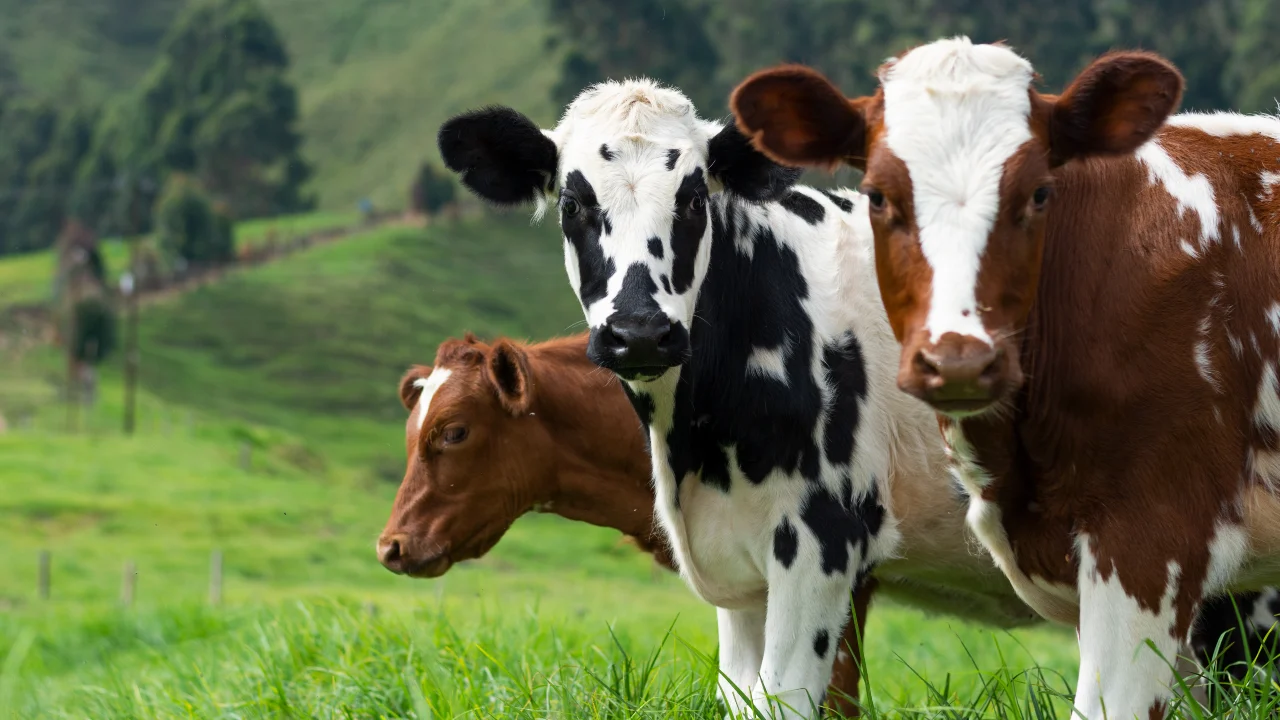
The ADM Animal Nutrition feed recall was announced in March 2025 after the company identified a manufacturing error affecting the mineral content of select pelleted cattle feed products. According to the FDA, some recalled products contained elevated copper levels and lower-than-declared zinc levels, which could pose health risks to cattle if consumed.
The voluntary recall affected selected pelleted cattle feed products manufactured for beef cattle after testing identified incorrect mineral levels in certain production lots.
Knowing how to respond to an ADM Animal Nutrition feed recall before it happens can make the difference between a manageable disruption and a genuine animal health crisis.
Which ADM Feed Products Were Recalled?
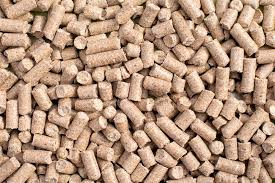
According to the FDA recall announcement, the recall affected specific pelleted cattle feed products manufactured by ADM Animal Nutrition. Before using any product, producers should compare:
| Recalled ADM Animal Nutrition Feed Products (March 2025) | Lot Number(s) | Package Size | Primary Issue |
|---|---|---|---|
| GROFAST 32 | 523291, 524079, 524152 | 50 lb bag / Bulk | Zinc below declared level |
| BOVAGAIN 40/20 | 523069, 523435, 523734 | 50 lb bag / Bulk | Elevated copper |
| BEEF-TRATE MON | 524449 | 50 lb bag | Elevated copper |
| MASTERPLEX 100P | 523680, 524456 | 50 lb bag / Bulk | Elevated copper |
| BOVAGAIN 40/20 LAS | 523671, 524451 | 50 lb bag | Elevated copper |
| BOVAGAIN LMTR MON 400 | 524497 | 50 lb bag | Elevated copper |
| BEEF-TRATE BT/MGA | 524447 | 50 lb bag | Elevated copper |
| BOVAGAIN 60/45 RU | 523342 | Bulk | Elevated copper |
Lot numbers shown are examples from the March 2025 FDA recall. Always verify against the official FDA recall notice.
What Happened During the ADM Animal Nutrition Feed Recall?

While the March 22, 2025 ADM Animal Nutrition feed recall involved incorrect copper and zinc levels, feed recalls can also occur because of bacterial contamination, labeling errors, or manufacturing problems.
A recall doesn’t always mean contamination was confirmed at dangerous levels. Sometimes the recall stems from a labeling discrepancy — wrong ingredient percentages listed, missing required warnings, or incorrect species designation. In other cases, the trigger is a confirmed pathogen like Salmonella or a mycotoxin level exceeding FDA action thresholds.
ADM operates one of the largest commercial animal feed networks in North America, supplying swine, poultry, cattle, equine, and aquaculture producers. That scale means a single production batch issue can affect feed distributed across multiple states before the problem surfaces.
Five Ways an ADM Animal Nutrition Feed Recall Gets Triggered:
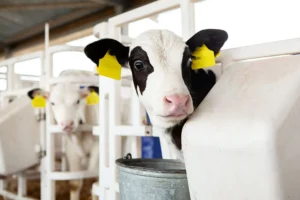
Understanding the trigger mechanisms behind an ADM Animal Nutrition feed recall helps producers anticipate risk before a formal notice arrives. These five scenarios account for the majority of commercial feed recall events:
- Mycotoxin contamination: Corn and grain-based ingredients are susceptible to mycotoxin-producing mold, particularly during drought years. FDA action levels for cattle, swine, and poultry range from 20 to 300 parts per billion depending on the species, according to the FDA— and ADM sources grain from multiple suppliers, creating variable contamination risk
- Salmonella detection: A positive Salmonella result during finished product testing can trigger an immediate voluntary recall, even before illness is confirmed in animals consuming the feed
- Cross-contamination of medicated feed ingredients into non-medicated batches — or wrong species medicated formulations — triggers regulatory action, often one of the most serious causes of an ADM Animal Nutrition feed recall
- Label non-compliance: Missing required statements, wrong guaranteed analysis figures, or unapproved ingredient listings all create recall-triggering violations under 21 CFR Part 501
- Foreign material contamination: Physical adulterants — metal fragments, plastic, or other processing debris — identified in finished feed or via customer complaints initiate product withdrawal and formal recall proceedings
How ADM Notifies Customers During a Feed Recall:
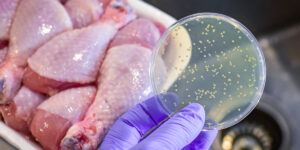
When the recall is initiated, the notification chain moves through several layers simultaneously. ADM’s direct customers — distributors, co-ops, and large commercial accounts — receive the first wave of communication. Understanding how that communication flows matters if you’re further down the supply chain.
1: Direct Customer Notification Protocols
For registered ADM accounts, recall notices arrive via email, customer portal alert, and in some cases a direct phone call from a regional sales representative. The notice includes the product name, lot number range, production dates, UPC codes if applicable, and the specific reason for recall. Customers are instructed to quarantine product immediately, cease feeding, and contact ADM’s recall hotline.
2: Distributor and Retailer Responsibilities
Feed distributors and retail farm stores that carry ADM products are contractually required to pull flagged inventory immediately upon notification. They’re also responsible for notifying their own customers — the farms and producers who actually bought and received the product. This downstream notification is where the process most commonly breaks down. Distributors may delay, notify only their largest accounts first, or send generic communication that doesn’t clearly identify whether a specific customer’s purchased lots are affected.
3: FDA Public Enforcement Database
The FDA’s public enforcement database at fda.gov lists every active and archived ADM Animal Nutrition Feed Recall with full product details, recall classification, and recall status. Class I recalls represent the most serious risk — reasonable probability of causing serious adverse health consequences. Class II involves a less immediate but still significant risk. Class III covers situations where exposure is unlikely to cause adverse health consequences but still violates FDA regulations. Producers should bookmark this database and check it proactively during any period of animal health concern.
Feed Recall Checklist for Producers:
If your feed is recalled:
- ✓ Stop using the affected product immediately.
- ✓ Separate recalled feed from unaffected inventory.
- ✓ Photograph the feed bags and lot numbers.
- ✓ Contact your veterinarian if livestock have consumed the feed.
- ✓ Report the affected product to your supplier.
- ✓ Keep receipts and veterinary records for possible reimbursement.
Five Documents Every Producer Needs Before a Feed Recall Hits:
Producers caught without basic documentation lose leverage in every direction — with ADM, with their distributor, and with their veterinarian. These five records are non-negotiable:
- Feed delivery receipts with lot numbers: Every delivery should produce a receipt listing lot number, product name, delivery date, and quantity — store these for a minimum of two years, which aligns with FDA record keeping expectations for medicated feeds
- Feeding logs by animal group: Record which pens, paddocks, or animal groups received which product lots on which dates — this is the document that lets you identify exposed versus non-exposed animals within hours of a recall notice
- Purchase invoices from your distributor: Invoices establish your chain of custody and are essential if you file a claim against ADM or your distributor for recall-related losses
- Veterinary health records preceding feed delivery: Baseline health documentation before the suspect feed was introduced gives you the comparative data to identify whether health changes correlate with feed exposure
- Photo documentation of feed tags and bags: A 10-second photo of each new feed delivery’s tag takes almost no time and provides irrefutable lot number confirmation if a label is later disputed
Animal Health Symptoms Linked to Contaminated Feed Events:
Not every feed recall produces visible animal health symptoms before producers receive formal notice. But certain contamination categories do generate observable clinical signs that may precede an official recall by days or weeks.
1: Mycotoxin Exposure Symptoms by Species
Mycotoxin exposure affects different animal species in different ways. In cattle, early signs include reduced feed intake, decreased milk production in dairy cows, and immunosuppression that makes animals more susceptible to secondary infections. Acute high-level exposure produces jaundice, hemorrhage, and death. Chronic low-level exposure is harder to detect but creates documented production losses and increased disease susceptibility.
2: Salmonella Infection and Drug Carryover Symptoms
Drug carryover is one of the most serious causes of commercial feed recalls because it can expose animals to unintended medications. The risk is to the food supply, not necessarily to the animal. Drug residues in meat or milk can create regulatory and market consequences that extend well beyond the farm.
3: When to Call Your Veterinarian
Call your veterinarian the same day you notice any unexplained cluster of clinical signs following a feed change. Don’t wait for a recall notice to validate your concern. Document the timeline, pull feed samples from current inventory, and request blood work on affected animals. This documentation serves both diagnostic and potential legal purposes.
How to File a Claim After an ADM Animal Nutrition Feed Recall:
Filing a claim after the ADM Animal Nutrition feed recall requires prompt action. ADM’s customer claims process typically requires producers to submit documentation within a specified time frame after the recall announcement.
The first step is contacting ADM’s customer service or your regional sales representative directly. Reference the specific recall notice number, your account number, the lot numbers of affected product in your possession, and the quantity involved. ADM will typically issue a return authorization and credit for unused product.
Economic losses beyond the product value — veterinary costs, animal losses, lost production, replacement feed premiums — are harder to recover and may require engagement with an agricultural attorney, particularly if the exposure resulted in confirmed animal illness or death.
ADM Animal Nutrition Feed Recall: Key Reference Data:
Recall Category FDA Classification Common Trigger Typical Scope Producer Action Timeline
| Mycotoxin contamination | Class I or II | Corn/grain contamination | Regional to national | Quarantine within 24 hours of notice |
|||||
| Salmonella detection | Class I | Finished product testing | Single production lot | Cease feeding immediately | |||||
| Drug carryover (medicated feed) | Class I | Cross-contamination in mill | Multi-state distribution | Stop using the feed immediately | |||||
| Label non-compliance | Class II or III | Guaranteed analysis error | Single product SKU | Quarantine; await ADM guidance | |||||
| Foreign material | Class II | Processing equipment failure | Limited batch | Document, return, await credit | |||||
| Species-incorrect formulation | Class I | Production scheduling error | Variable | Immediate withdrawal; vet assessment | |||||
| Unapproved additive | Class II | Ingredient sourcing error | Single lot | Return product per ADM authorization |
Regulatory Framework Governing ADM Animal Nutrition Feed Recalls:
The feed recall process operates within a specific regulatory framework that most producers never study until they need it. Understanding that framework changes how you interact with every party involved — ADM, your distributor, and FDA investigators.
1: FSMA’s Role in Feed Safety
FSMA shifted FDA’s regulatory posture from reactive to preventive. Feed manufacturers covered under Part 507 must conduct written hazard analysis identifying biological, chemical, and physical hazards, implement preventive controls where hazards are identified, establish monitoring procedures, and conduct supplier verification for incoming ingredients. ADM, as a large registered facility, is subject to the full scope of these requirements.
2: FDA’s Recall Authority and Mandatory Recall Powers
Prior to FSMA, FDA could only request voluntary recalls from manufacturers. FSMA gave the FDA mandatory recall authority for animal food under specific conditions. If ADM refuses a voluntary recall and FDA determines there is a reasonable probability that a product will cause serious adverse health consequences, FDA can order a mandatory recall. This authority has rarely been exercised because large commercial manufacturers — including ADM — typically cooperate with voluntary recall requests promptly.
3: State Feed Control Officials
Every state has a feed control official operating under the Association of American Feed Control Officials (AAFCO) framework. State officials can independently initiate product embargoes and recalls under state law when they identify violations, and they frequently act faster than federal authorities on localized contamination events. Producers in states with active feed control programs benefit from an additional layer of oversight that complements FDA’s federal role.
March 2025
ADM announces voluntary recall
↓
FDA publishes enforcement report
↓
Distributors notify customers
Five Mistakes Producers Make During a Feed Recall:
These are the errors that cost farms the most money and compromise animal health outcomes when a feed recall occurs:
- Continuing to feed suspect product: Waiting for “confirmation” from ADM or their distributor before stopping use of flagged lots is the single most damaging decision — when in doubt, quarantine immediately and feed from a different verified lot
- Discarding product before documentation: Throwing away suspect feed before photographing bags, recording lot numbers, and weighing remaining inventory destroys your ability to file a compensation claim and eliminates physical evidence
- Failing to notify their veterinarian proactively: Most producers call their vet only after animals show symptoms — by then, the exposure window is weeks old and the diagnostic window has narrowed considerably
- Not cross-referencing FDA’s recall database independently: Relying solely on ADM or your distributor to tell you whether your specific purchase is affected creates a gap — check the FDA database yourself using your product lot numbers
- Missing the claim submission deadline: ADM’s claim process has defined windows; producers who wait weeks to organize their documentation routinely miss eligibility requirements and forfeit recovery
Building a Feed Recall Preparedness Protocol for Your Operation:
The recall response doesn’t start when you receive the notice. It starts months earlier, with systematic documentation and supplier relationship management. Producers who treat feed procurement as a supply chain management function — not just a purchasing decision — recover faster and lose less.
1: Creating a Feed Inventory Tracking System
Every incoming feed delivery should be logged in a dedicated ledger — paper or digital — capturing the supplier name, product name, lot number, delivery date, quantity, and the animal groups to which the product was distributed. This doesn’t require software. A simple spreadsheet updated at each delivery takes under five minutes and creates a complete audit trail.
2: Supplier Verification and ADM Account Registration
Maintaining an active registered account with ADM — rather than purchasing exclusively through a distributor — gives you direct access to ADM’s recall notification system. Registered customers may receive recall notifications directly from ADM, while others may receive notices through distributors or retailers depending on how the products were purchased. If you purchase ADM products through a co-op or retail store, request that your contact information be added to their recall notification list explicitly.
3: Annual Review of Your Feed Documentation Process
Reviewing your documentation protocol once per year — ideally before the high-risk season for mycotoxin contamination (late summer through fall in the Corn Belt) — ensures that new employees understand the system and that your records are current. A feed recall that occurs during harvest season, when staff turnover is high and operations are stretched, is the one you’re least prepared for.
Resources for Tracking ADM Animal Nutrition Feed Recalls:
Staying current on ADM Animal Nutrition feed recalls requires using the right sources in the right order. Here are the platforms that provide the most actionable, current information:
- The FDA CVM Recalls, Withdrawals & Safety Alerts page (searchable at fda.gov/animal-veterinary) is updated continuously and is the authoritative primary source. Set up RSS alerts or check it weekly during high-risk periods. The AAFCO website provides state-level feed control contacts for every state — useful when you need to escalate a concern locally.
- ADM’s own customer portal provides account-specific notice history. And the American Feed Industry Association (AFIA) publishes industry-wide safety bulletins that often reference ongoing recall situations with producer guidance.
Conclusion
The ADM Animal Nutrition feed recall is manageable when you’re prepared and devastating when you’re not. Document every delivery. Register your account directly with ADM. Check the FDA database proactively. Know your veterinarian’s emergency line before you need it.
FAQ’s
Q1: How do I know if my specific feed lot is included in an ADM’s recall?
Cross-reference the lot number printed on your feed tag or bag against the specific lot numbers published in the FDA recall notice.
Q2: Does the recall mean my animals are definitely harmed?
Not necessarily — recall classification and duration of exposure determine actual risk, which your veterinarian can assess.
Q3: Who pays for veterinary costs caused by the recall?
ADM may cover product replacement; economic losses typically require documentation and may need legal negotiation to recover.
Q4: Can I continue using ADM products from a different lot during an active recall?
Yes — only the specific lots identified in the recall notice are affected; other verified lots are not subject to withdrawal.
Q5: Where is the fastest place to find ADM Animal Nutrition Feed Recall notice?
The FDA CVM’s publicly searchable recall database at fda.gov is updated faster than most third-party agricultural news sources.
Summary
The ADM Animal Nutrition feed recall involved select pelleted cattle feed products because of incorrect mineral levels, including elevated copper and lower-than-declared zinc. Producers should identify affected lot numbers, stop using affected feed products immediately, and follow FDA and ADM guidance to protect livestock health.
References
- FDA Center for Veterinary Medicine. Recall Announcement: ADM Animal Nutrition Voluntary Recall (March 2025).
- ADM Animal Nutrition. Official Recall Information.
- Food Safety Modernization Act (FSMA). 21 CFR Part 507 – Current Good Manufacturing Practice, Hazard Analysis, and Risk-Based Preventive Controls for Food for Animals.
- Association of American Feed Control Officials (AAFCO). Official Feed Regulatory Resources.
- American Feed Industry Association (AFIA). Animal Feed Safety Resources.
Read Also:https://en.wikipedia.org/wiki/Cargill