How this guide was prepared: The nutrition information in this guide is based primarily on Dave’s Hot Chicken’s published nutrition information. Where appropriate, I compared those values with reputable nutrition databases to explain differences in serving sizes, meal combinations, and common ordering choices.
Dave’s Hot Chicken offers a small menu, but the nutrition can vary widely depending on what you order. This guide reviews the company’s published nutrition information and compares common meal combinations to show where calories, protein, fat, carbohydrates, and sodium increase the most.
In most cases, the largest calorie differences come from the choice of side dishes and whether you order sliders or tenders.
What Makes Dave’s Hot Chicken Nutrition Unique Among Fast Casual Chains:

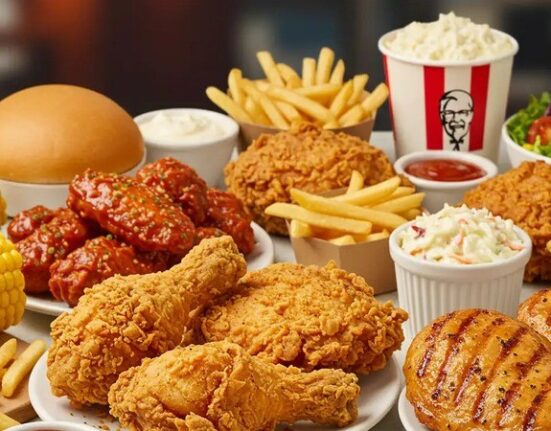
Dave’s Hot Chicken launched in 2017 out of a East Hollywood parking lot. By 2024, the chain had crossed 200 locations. That growth happened entirely on the back of spiced, crispy tenders and sliders — not salads, not wraps, not health-forward menu pivots. Dave’s has always focused on indulgent Nashville-style hot chicken rather than positioning itself as a health-focused restaurant.
The heat levels — No Spice, Lite Mild, Mild, Medium, Hot, Extra Hot, Reaper, and Reaper Plus — are built from a cayenne-heavy spice blend. The spice coating adds negligible calories. What varies is the protein cut, the slider bun versus tender presentation, and critically, whether you add any sides. Dave’s hot chicken nutrition changes mainly based on those variables, not the heat level.
Calorie Counts Across Every Menu Item You’ll Actually Order:

Dave’s hot chicken nutrition data for the core menu breaks down like this — and the calorie differences are significant:
- 2-tender combo (no sides): 540–610 calories depending on cook variation and oil absorption
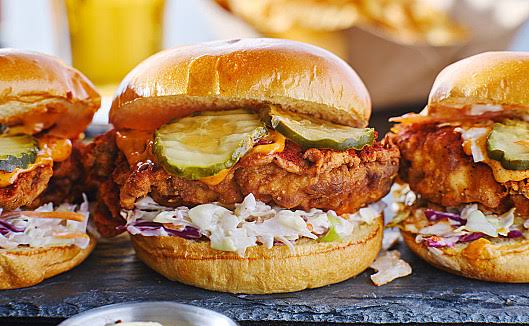
- Chicken slider: 480–530 calories, including the brioche bun and sauce
- 3-tender combo with fries and slaw: 1,100–1,280 calories total
- Kale salad (side): 120 calories — the single lowest-calorie option on the menu
- Mac and cheese (side): 360–390 calories, nearly as many as one tender itself
The spread between the leanest and heaviest orderable combination at Dave’s exceeds 900 calories. That’s not a minor variation — that’s the difference between a reasonable lunch and an entire day’s worth of fat intake for a moderately active adult. In many cases, the sides contribute more calories than people expect. Choosing lighter sides can make a much bigger difference than changing the heat level.
Protein Quality: Why Dave’s Tenders Are Actually a Decent Muscle Food:

Dave’s Hot Chicken is relatively high in protein when you evaluate the chicken on its own rather than as part of a combo meal. Understanding the protein content and preparation method helps explain why Dave’s Hot Chicken can be a reasonable higher-protein fast-food option for some people.
1: Amino Acid Profile of Dave’s Chicken Tenders
According to the company’s published ingredient and menu information, the chicken tenders are made from chicken breast, making them a relatively high-protein menu item. That distinction matters. Chicken breast is naturally rich in complete protein and provides all nine essential amino acids. A two-tender serving provides approximately 38–42 g of protein, depending on tender size.
2: Fat Content and Cooking Oil Impact
The frying process introduces fat that wouldn’t exist in grilled chicken, but the absorption rate in properly managed fry oil is lower than most people assume. Frying increases the fat content compared with grilled chicken because oil is absorbed during cooking. The breading adds another 8–12 g of carbohydrates per tender. Total fat per two-tender serving lands around 22–28g, with a saturated fat split of roughly 4–6g. That’s not low-fat food, but it’s also not categorically worse than a grass-fed burger patty once you account for portion size.
3: Comparing Dave’s Protein Per Dollar Against Competitors
Dave’s hot chicken nutrition stands out on protein-per-dollar metrics. At approximately $11–13 for a two-tender combo, you’re getting 38–42 g of protein. Chipotle’s chicken bowl at a similar price point delivers 32–36 g. Chick-fil-A’s equivalent order delivers 28–32 g. Based on published menu prices and nutrition information, Dave’s offers a relatively high amount of protein for its price compared with several major fast-food chains.
Why Sodium Matters:
Sodium is one of the most important nutrition factors for regular Dave’s Hot Chicken customers because many menu items contain a large amount of sodium.
- 2-tender combo sodium: 1,080–1,240 mg, roughly 47–54% of the recommended daily limit
- Chicken slider sodium: 920–1,050 mg per sandwich
- Fries (side) sodium: 380–430mg — adding this pushes a combo past 1,600 mg
- Full 3-tender combo with fries: Estimated 1,800–2,100 mg sodium in one sitting
- Kale salad sodium: 190 mg — the only side that doesn’t significantly compound the sodium load
A single Dave’s meal with fries puts most adults at or above their entire recommended daily sodium intake before dinner. This isn’t unique to Dave’s — it’s a structural reality of Nashville hot chicken preparation, where the spice paste is salt-heavy by design. Managing dave’s hot chicken nutrition around sodium means picking the kale salad or going tenderless on the side entirely.
Carbohydrate Load and the Glycemic Reality of Every Heat Level:
Dave’s hot chicken nutrition for carbohydrates is almost entirely determined by two things: the breading and the sides. The heat level contributes essentially zero carbohydrate variation.The glycemic story here splits along a clear fault line — tenders vs. sides — and understanding that split changes how you construct a meal.
1: Breading Carbohydrate Contribution
Each Dave’s tender carries approximately 10–14g of carbohydrates from the breading alone. Two tenders equals 20–28g of carbs before you’ve touched a side. For a diabetic or low-carb eater, dave’s hot chicken nutrition demands awareness that even a “small” order introduces a noticeable amount of carbohydrates purely from the coating, not from any accompanying starch.
2: Slider Bun vs. Tender: Which Carb Load Is Harder to Manage
The brioche bun on Dave’s slider adds 28–32 g of carbohydrates independently. A slider plus fries delivers 85–105 g of total carbohydrates — nearly the equivalent of two cups of white rice. Compared to ordering two tenders with no bun and substituting the kale salad, that’s roughly a 70 g carbohydrate difference in a single meal. People tracking dave’s hot chicken nutrition for blood sugar management should treat the slider bun as the primary carbohydrate concern, more impactful than the fries in absolute terms because it also elevates the calorie density.
3: Strategic Low-Carb Ordering at Dave’s
Dave’s hot chicken nutrition can be adapted for low-carb eating with a specific order: tenders only (no slider), kale salad as the side, Lite Sauce specification. This combination delivers approximately 42 g protein, 28g carbs, 25 g fat, and 1,100 mg sodium — a structurally reasonable macro breakdown for most dietary frameworks. The sodium is still significant, but the carbohydrate and calorie load becomes manageable.
Side-by-Side Comparison: Every Heat Level’s Practical Nutritional Impact:
Although spicy foods contain capsaicin, the amount of extra energy burned from eating spicy food is very small and does not meaningfully change the calorie content of the meal.
| Menu Item | Calories | Protein (g) | Fat (g) | Carbs (g) | Sodium (mg) |
| 1 Tender (any heat) | 270–310 | 19–21 | 11–14 | 10–14 | 540–620 |
| 2-Tender Combo (no sides) | 540–620 | 38–42 | 22–28 | 20–28 | 1,080–1,240 |
| Chicken Slider | 480–530 | 24–27 | 18–22 | 48–56 | 920–1,050 |
| Cheese Slider | 540–590 | 27–30 | 22–26 | 49–57 | 1,010–1,130 |
| Fries (side) | 380–420 | 5–6 | 16–19 | 52–58 | 380–430 |
| Mac & Cheese (side) | 360–390 | 9–11 | 18–22 | 38–44 | 560–620 |
| Kale Salad (side) | 110–130 | 3–4 | 7–9 | 9–12 | 185–210 |
| 3-Tender + Fries + Slaw | 1,100–1,280 | 58–65 | 46–58 | 95–115 | 1,800–2,100 |
| Full Meal (Slider + Fries) | 860–950 | 30–33 | 34–42 | 100–115 | 1,300–1,480 |
How Dave’s Hot Chicken Nutrition Stacks Up Against Nashville Hot Competitors:
Benchmarking dave’s hot chicken nutrition against direct competitors reveals where the brand sits in the broader fast casual hot chicken landscape.The Nashville hot chicken category has exploded since 2018, and not all chains are built the same from a nutritional standpoint.
1: Dave’s vs. Hattie B’s Nutritional Profile
Hattie B’s, the Nashville original that helped launch the category nationally, runs comparable macros on a per-tender basis. Their quarter chicken (dark meat) carries more fat — roughly 18–22g of fat versus Dave’s 11–14 g per tender — due to the dark meat cut versus Dave’s breast-dominant preparation. Hattie B’s sodium load per serving runs slightly lower at 900–1,050 mg for a standard plate. Based on published nutrition information, Dave’s appears to provide slightly more protein per serving than Hattie B’s when comparing similar breast meat portions.
2: Dave’s vs. Chick-fil-A Spicy Deluxe
Chick-fil-A’s Spicy Deluxe Sandwich clocks 450 calories, 29 g protein, 18g fat, and 1,340 mg sodium. Dave’s slider at comparable size delivers 480–530 calories, 24–27g protein, 18–22g fat, and 920–1,050 mg sodium. Dave’s slider contains less sodium than Chick-fil-A’s Spicy Deluxe based on published nutrition information. The difference is preparation — Dave’s spice rub carries less sodium than Chick-fil-A’s marinade-based process.
3: Dave’s vs. Prince’s Hot Chicken (The Original)
Prince’s Hot Chicken in Nashville uses dark meat almost exclusively. Dark meat carries higher fat by default — their quarter chicken plate runs approximately 520–580 calories with 28–34 g fat and 680–750 mg sodium. Vs. dave’s hot chicken nutrition on a per-piece basis, Prince’s runs lower in sodium and higher in fat. Both can be good choices depending on whether you’re more concerned about fat or sodium. The category as a whole skews high-sodium; Dave’s is neither the worst nor the best offender.
Competitor nutrition values are approximate and based on published nutrition information available at the time of writing.
General Nutrition Considerations:
Dave’s hot chicken nutrition discussions in clinical contexts focus on three variables: frequency, sodium accumulation, and portion anchoring.
- Frequency threshold: Because of its sodium content, many nutrition professionals recommend limiting high-sodium restaurant meals and balancing them with lower-sodium foods throughout the day.
- Portion anchor rule: Two tenders with kale salad keeps the meal under 700 calories and 1,300 mg sodium — the “defensible order”
- Hydration offset: Drinking water can help maintain hydration, although it does not offset the sodium content of the meal.
- The slider trap: The slider combines a bun, sauce, and fried chicken, making it one of the higher-calorie and higher-sodium menu choices.
Practical Ordering Guide for Four Specific Dietary Goals:
Dave’s hot chicken nutrition can be navigated intelligently once you know which goal you’re optimizing for.General advice to “eat less” isn’t very helpful here because your nutrition depends on the specific items you order. The four most common goals at Dave’s — weight loss, muscle building, low-sodium eating, and low-carb living — each require a different ordering strategy.
1: Weight Loss Order
Target: under 650 calories, over 35 g protein. Order two tenders, any heat, kale salad as the side, water to drink. Skip the slider bun entirely if the tender option is available. This combination hits approximately 620 calories, 40 g protein, and 1,100 mg sodium. It’s not a low-calorie meal, but it’s a high-satiety meal that fits a moderate deficit without leaving you hungry an hour later. Tracking dave’s hot chicken nutrition at this order level makes frequent visits sustainable.
2: Muscle Building Order
Target: 700–900 calories, 55 g+ protein. Order three tenders with the kale salad — skip the fries. You land at approximately 820 calories, 58–63 g protein, 34 g fat, and 1,620 mg sodium. Keep in mind that it is also high in sodium. A three-tender meal provides a relatively high amount of protein, making it an option some people may choose after exercise if it fits their overall nutrition goals.
3: Low-Carb Order
Target: under 30 g carbs total. Two tenders, lite sauce, kale salad — nothing else. Comes in at approximately 28g carbs (all from breading), 40 g protein, 25 g fat. This option is lower in carbohydrates than most other menu combinations. The challenge is sodium, which remains above 1,100 mg. Managing dave’s hot chicken nutrition for keto means accepting the sodium trade-off or reserving this meal for days when all other sodium intake is minimal.
Seasonal and Regional Menu Variations That Affect Nutrition Data:
Dave’s hot chicken nutrition data from the official website reflects the standard menu. Seasonal LTOs and regional variations don’t always appear in published figures, and that gap matters for careful trackers.
Promotional items — loaded fries, chicken and waffle sandwiches, and limited cheese sauce variations — have appeared at various Dave’s locations with calorie counts not reflected in the standard nutritional PDF. These items routinely run 150–300 calories above equivalent permanent menu items due to added sauces, toppings, and larger portion formats. The core dave’s hot chicken nutrition data is reliable for permanent items; promotional items require individual scrutiny.
1: Building a Long-Term Diet Strategy Around Dave’s Hot Chicken
Understanding dave’s hot chicken nutrition at depth doesn’t mean avoiding the restaurant. It means eating there on purpose. The two-tender meal with a kale salad is a practical lower-calorie option for regular visitors.
The three-tender no-sides order is the post-training option. The slider is the splurge item — enjoyable, worth it occasionally, but not a weekly default if sodium is a concern for you personally.Dave’s hot chicken nutrition data is publicly available and more complete than many comparable chains. Using it actively, rather than eating blind, is the single one of the simplest ways to make better menu choices.
Conclusion
Understanding the nutrition information before ordering can help you choose a meal that better fits your calorie and nutrition goals.If you’re looking for one of the lighter menu combinations, two tenders with a kale salad is a practical choice. Avoid the slider as a weekly habit. Skip ranch, use hot sauce. Those three decisions, applied consistently, let you enjoy Dave’s without letting dave’s hot chicken nutrition quietly derail your health goals.
FAQ’s
Q1: How many calories are in a Dave’s Hot Chicken tender?
A single tender contains approximately 270–310 calories depending on size and oil absorption during frying.
Q2: Is Dave’s Hot Chicken good for weight loss?
Two tenders with the kale salad is a manageable 620-calorie, 40 g-protein meal that fits most moderate deficit plans.
Q3: Does the heat level at Dave’s change the calorie count?
No — all heat levels carry essentially identical macros; the spice coating adds fewer than 15 calories across the entire range.
Q4: What is the lowest-calorie item at Dave’s Hot Chicken?
The kale salad side at 110–130 calories is the lowest single-item option on the current menu.
Q5: How much sodium is in a Dave’s Hot Chicken combo?
A standard two-tender combo without sides contains 1,080–1,240 mg of sodium, nearly half the recommended daily limit.
Summary
Dave’s Hot Chicken delivers robust flavor alongside high nutritional metrics. A single signature chicken tender provides about 25 g of protein but carries 270–310 calories and 11–14 g fat per tender, heavily driven by deep-frying and oil-based spice pastes. Sodium can also be high. A slider-and-fries meal contains approximately 1,300–1,480 mg of sodium, based on the published nutrition information.