Pizza is one of the most frequently eaten foods in the United States, but the nutritional value of a single slice varies much more than most people realize. Most Americans eat pizza about 40 times each year, yet few can accurately describe the nutritional value of a single slice.
Understanding pizza nutrition at a precise, evidence-based level gives you the tools to eat it strategically rather than guiltily.
How Different Factors Change Pizza Nutrition:
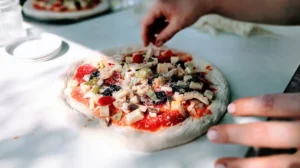
A single bite might surprise you, though it looks the same as the next. What goes into the base – thin, thick, whole grain, or deep dish – affects energy levels before toppings even arrive. Sauce changes things too; tomato, pesto, or none shifts flavor and fuel differently. Cheese isn’t just one thing – it spreads light or pools heavy, altering protein and fat sharply. Toppings step in with their own rules: mushrooms add little, pepperoni adds more. Even how big the piece is cut alters everything. One version may deliver far less than expected, another much more. That gap? Up to 300 calories between extremes.
One bite into a crisp, wood-fired Margherita pizza could land you around 210 calories. That piece brings about 9 grams of protein along with nearly half a day’s recommended salt. Picture thick layers baked slow in deep pans – like those from Lou Malnati’s – each serving packs between 410 and 450 calories. Protein jumps up near 20 grams there while sodium climbs to roughly 900 milligrams. Now take a slice hailing from Domino’s big, loaded Extravaganza pie: it rests at 380 calories. Same name on menus across towns, yet what ends up on your plate varies sharply. Baking method matters. Crust thickness shifts totals. Toppings add fast without notice. Decisions long before delivery shape every number.
That’s why one-size-fits-all tips like “steer clear of pizza” or “it’s okay sometimes” fall flat for most who hear them. Getting specific makes a difference. What counts is how closely advice matches real, actual habits.
Macronutrients in a Typical Cheese Pizza Slice:

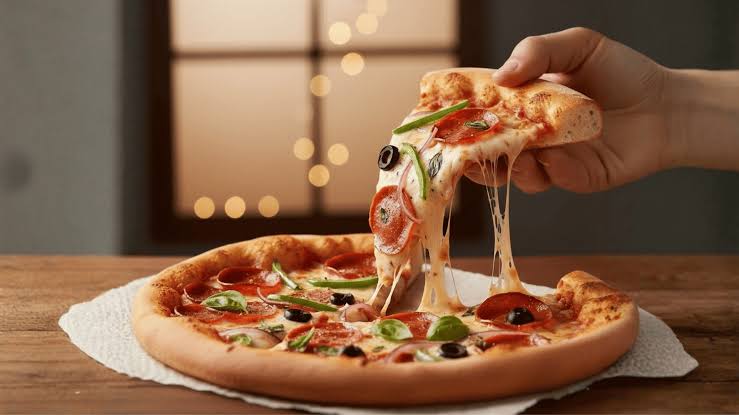
A single piece of cheese pizza sits at the center of it all – everything else branches away from this starting place when looking at nutrition. Numbers you see usually describe one slice, about an eighth of a medium pizza, weighing close to 107 grams. Without that detail, the data would float without meaning.
A typical hand-tossed cheese slice from chains such as Pizza Hut or Domino’s – hand-tossed type – holds near 285 to 300 calories. When split by protein, fat, and carbs, the numbers show details folks usually miss while guessing what they’re eating mid-bite.
1: Protein Amount Found in One Regular Piece of Cheese
One slice of cheese on a regular 14-inch hand-tossed pie packs about 12 to 14 grams of protein. Mostly, that number shows up because of mozzarella – around 7 grams per ounce – and each piece holds between one and one-and-a-half ounces of it. Then there’s the crust, made from flour, which adds just a bit more. To picture it differently, think of two big eggs or 2 ounces of sliced turkey. A slice of pizza doesn’t lack protein – it just gets judged too fast by those skipping full nutritional labels.
2: Carbohydrates and Their Effect on Blood Sugar
A typical piece of cheese pizza holds between 33 and 38 grams of carbs, most tied to the base. Since the crust often uses processed white flour, its glycemic index (GI) lands around 60 to 70 – similar to boiled rice yet below that of regular white bread – so your body sees a steady rise in blood sugar, not a spike. When made with whole grain dough instead, the impact on glucose dips by roughly 10 to 15 units while offering an extra 2 to 3 grams of fiber per serving, something the lighter version lacks.
3: Fat Distribution Across Cheese and Crust
A typical piece of cheese pizza holds about 10 to 12 grams of total fat, roughly 4 to 6 grams being saturated. Most of that saturated kind comes from the cheese itself. Meanwhile, the crust brings in mainly unsaturated types, thanks to olive oil found in classic dough recipes. Because of this mix, one slice ends up carrying far fewer saturated fats than many believe. Especially next to things like a regular deli sandwich loaded with fatty meats and mayonnaise.
Five Popular Pizza Chains Compared by Nutrition:
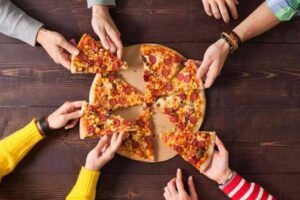
Real-world data from the most commonly consumed chain pizzas gives the comparison concrete grounding. These figures come directly from each chain’s published nutritional database:
- Domino’s Hand Tossed Cheese (large, 1/8 slice): 290 calories, 10g fat, 4g saturated fat, 640 mg sodium, 37 g carbs, 12 g protein — a reasonable caloric anchor when eaten without heavy additional toppings
- Pizza Hut Original Pan Cheese (large, 1/8 slice): 340 calories, 14g fat, 6g saturated fat, 780 mg sodium, 38 g carbs, 14g protein — the pan oil adds 50 calories compared to hand-tossed, a meaningful delta across multiple slices
- Little Caesars Hot-N-Ready Pepperoni (1/8 slice): 280 calories, 11 g fat, 5g saturated fat, 590 mg sodium, 30 g carbs, 12 g protein — the thinner, smaller format keeps the nutrition of a slice of pizza numbers compact despite the pepperoni addition
- Papa John’s Garden Fresh (large, 1/8 slice): 270 calories, 8g fat, 4g saturated fat, 580 mg sodium, 37 g carbs, 11 g protein — the vegetable toppings add fiber and micronutrient without meaningful caloric addition
- Costco Food Court Cheese (1/12 slice): 700 calories, 26 g fat, 10 g saturated fat, 1,430 mg sodium, 86 g carbs, 34 g protein — Costco’s famously oversize slices dwarf standard benchmarks and represent nearly a full meal’s worth of macronutrients in a single piece
How Toppings Change Pizza Nutrition:
Toppings are where a pizza slice’s nutritional profile changes most dramatically — and where most people operate with the least precision. “Loaded” versus “veggie” isn’t a meaningful nutritional category without specific data. The actual numbers tell a clearer story.
The nutritional profile changes quickly when multiple toppings are added. Understanding each topping’s individual caloric and macronutrient contribution allows for genuinely informed customization rather than rough guessing.
1: Meat Toppings: Caloric and Sodium Impact
Pepperoni is the most commonly ordered topping in the United States, and its nutritional contribution to a single slice is more significant than most people register. A standard pepperoni application of 8–10 slices per slice of pizza adds approximately 70–80 calories, 6–7g total fat, and 230–280 mg sodium. Sausage adds slightly more — 90–110 calories and similar sodium. Italian sausage is the heaviest meat topping calorie-contributor, increasing the calorie and sodium content by 100–120 calories when applied at standard portions. Bacon crumbles add 50–60 calories and comparatively high sodium per application.
2: Vegetable Toppings: The Micronutrient Dividend
Bell peppers, mushrooms, onions, spinach, black olives, and tomatoes are the most common vegetable toppings, and their contribution to the overall nutritional profile of a pizza slice is typically 15–35 calories total — nutritionally negligible from a calorie standpoint but genuinely meaningful as a micronutrient delivery mechanism. A slice with bell peppers, mushrooms, and spinach provides roughly 15% of the Daily Value (DV) for vitamin C and about 8% of the Daily Value for potassium, along with meaningful amounts of folate and vitamin K — nutrients that a plain cheese slice provides in trace amounts only.
3: Specialty Toppings and Premium Cheeses
Substituting burrata, goat cheese, or ricotta for standard low-moisture mozzarella adds 30–80 calories per slice depending on application weight. Truffle oil drizzled post-bake adds 40–50 calories per slice with minimal nutritional benefit beyond flavor. Specialty toppings alter the overall nutrient profile less dramatically than customers often assume — the structural elements (crust, cheese volume, sauce) remain the primary caloric drivers regardless of topping choice.
Pizza Nutrition Reference Table:
| Pizza Type | Slice Size | Calories | Total Fat (g) | Sat. Fat (g) | Sodium (mg) | Carbs (g) | Protein (g) | Fiber (g) |
| Cheese (thin crust, 14″) | 1/8 | 210 | 8 | 3.5 | 480 | 26 | 10 | 1 |
| Cheese (hand-tossed, 14″) | 1/8 | 290 | 10 | 4.5 | 640 | 37 | 12 | 1.5 |
| Cheese (deep dish, 12″) | 1/6 | 420 | 18 | 8 | 880 | 44 | 20 | 2 |
| Pepperoni (hand-tossed, 14″) | 1/8 | 360 | 16 | 7 | 920 | 37 | 15 | 1.5 |
| Veggie (hand-tossed, 14″) | 1/8 | 270 | 9 | 4 | 580 | 37 | 11 | 3 |
| BBQ Chicken (hand-tossed, 14″) | 1/8 | 310 | 10 | 4.5 | 720 | 40 | 16 | 2 |
| White sauce / Alfredo (14″) | 1/8 | 370 | 18 | 9 | 680 | 34 | 14 | 1 |
| Margherita pizza (Neapolitan, 12″) | 1/6 | 230 | 9 | 4 | 490 | 28 | 11 | 2 |
| Meat Lovers (14″) | 1/8 | 440 | 22 | 10 | 1,100 | 37 | 20 | 1.5 |
| Whole wheat veggie (14″) | 1/8 | 255 | 8 | 3.5 | 560 | 33 | 12 | 4 |
| Gluten-free crust cheese (12″) | 1/6 | 300 | 12 | 5 | 620 | 34 | 13 | 2 |
| Costco Food Court Cheese | 1/12 | 700 | 26 | 10 | 1,430 | 86 | 34 | 3 |
| Frozen (DiGiorno 4-cheese, 12″) | 1/6 | 330 | 12 | 6 | 710 | 41 | 15 | 2 |
| Cauliflower crust cheese (12″) | 1/6 | 250 | 11 | 5 | 600 | 25 | 12 | 2 |
How Serving Size Changes Nutrition Labels:
Nutrition labels can be confusing because the serving size listed on the package does not always match the amount people actually eat. A frozen pizza may list values for one-fifth or one-sixth of the pizza, while many people consume half or even the entire pizza in one meal. Restaurant chains also use different slice sizes depending on the diameter and style of the pizza. Before comparing products, always check the serving size printed on the nutrition information. Multiplying the listed values by the number of slices you plan to eat provides a much more accurate picture of your meal. Understanding serving sizes helps prevent accidental underestimation of daily nutrient intake and makes comparisons between brands much more meaningful.
Restaurant Pizza vs. Homemade Pizza:
Homemade pizza gives you much greater control over ingredients than restaurant pizza. You can choose whole-grain dough, reduce the amount of cheese, use lean proteins, and increase vegetables without sacrificing flavor. Home cooking also allows you to manage portion sizes and avoid unnecessary additives sometimes found in commercially prepared products. Restaurant pizzas are designed for consistent taste and large-scale preparation, while homemade versions can be adjusted to meet individual dietary preferences, food allergies, or fitness goals. Neither option is automatically healthier, but preparing pizza at home makes it easier to tailor the meal to your nutritional needs.
How Pizza Fits Into a Balanced Diet:
Looking at pizza as part of an entire day’s diet — rather than evaluating it as an isolated item — is where the conversation becomes genuinely useful. One slice of hand-tossed cheese pizza contributes 290 calories to a 2,000-calorie daily target. That’s 14.5% of total daily energy from one item, which is entirely proportionate for a lunch component or dinner addition alongside a salad.
The problem isn’t that pizza is incompatible with health goals. The problem is that portion creep — eating three or four slices in a single sitting, which research on pizza consumption patterns consistently documents as the norm rather than the exception — multiplies those proportionate numbers into disproportionate daily totals.
1: Pizza and Weight Management
Pizza can fit into a weight-management plan when total daily energy intake remains appropriate for an individual’s goals. Sustainable weight management depends on long-term eating patterns rather than eliminating specific foods altogether. Including pizza occasionally while balancing the rest of the day’s meals with vegetables, lean proteins, whole grains, and fruit can support dietary adherence better than highly restrictive approaches. Many registered dietitians encourage flexibility because people are more likely to maintain healthy habits when they can continue enjoying foods they genuinely like in reasonable portions.
2: Two-Slice vs. Four-Slice Consumption Patterns
Eating two slices provides about 580 calories, 24 g of fat, 74 g of carbohydrates, and 24 g of protein, making it a nutritionally complete meal for many adults. At four slices (1,160 calories, 48 g fat, 148 g carbs, 48 g protein), the same meal has consumed over half the recommended daily calorie intake for an average adult woman and approaches 60% for most sedentary men. The food didn’t change. The pattern did.
3: Strategic Timing of Pizza Within a Day
Athletes can use pizza strategically as a carbohydrate-loading tool. Two to three slices of hand-tossed cheese or vegetable pizza three to four hours before endurance exercise delivers 74–111 g of carbohydrates — a range consistent with per-exercise carbohydrate loading research — alongside meaningful protein and fat that moderates glucose absorption and prevents early glycogen depletion. This is precisely the protocol applied in the collegiate athletics context described at the opening of this piece.
4: Pizza as a Post-Workout Recovery Meal
After exercise, pizza provides both the protein needed to initiate muscle protein synthesis (12–14g per slice) and the carbohydrates required to replenish glycogen stores. Two slices of a protein-heavier variety — chicken and vegetable, or meat lovers — can deliver 28–40 g protein alongside 70–80 g carbs in a format that athletes will actually eat without repeatability resistance. Recovery nutrition that tastes good gets consumed consistently; nutrition that tastes clinical often doesn’t.
5: Pizza Portions for Children
Children have different nutritional requirements than adults, so portion sizes should reflect their age, activity level, and overall diet. Younger children are often satisfied with one small slice served alongside fruit, vegetables, or a glass of milk, while older children and teenagers may require larger portions depending on their energy needs. Parents can improve meal quality by pairing pizza with nutrient-rich side dishes instead of sugary beverages or highly processed snacks. Teaching children about balanced portions from an early age helps develop healthy eating habits without labeling favorite foods as either “good” or “bad.”
Five Ways to Make Pizza More Nutritious:
Customizing an order to shift the pizza’s nutritional profile doesn’t require sacrifice. These five modifications produce measurable improvements:
- Request light cheese: Asking for 25% less cheese typically cuts 40–60 calories per slice and reduces saturated fat by 2–3 g without visibly compromising the eating experience for most people
- Choose thin crust over hand-tossed: This single swap reduces the calorie count by 60–80 calories per slice — a 150–240 calorie reduction across a standard two-to-three slice meal
- Add a vegetable topping in place of a meat topping: Swapping pepperoni for bell peppers and mushrooms saves 55–70 calories per slice, eliminates 230 mg of sodium, and adds fiber and vitamin C that meat toppings don’t provide
- Opt for red sauce over white: Replacing Alfredo or cream-based sauce with tomato sauce cuts 50–70 calories per slice, reduces fat by 6–8g, and adds Lycopene — a carotene with documented cardiovascular and prostate health associations
- Pair each slice with a side salad: Adding a 100-calorie salad to a two-slice pizza meal increases meal volume, adds fiber that slows gastric emptying, and reduces the likelihood of eating additional slices — a behavioral nutrition intervention that changes the overall meal profile without altering the pizza itself
Frozen vs Fresh Pizza Nutrition:
Frozen pizza differs nutritionally from fresh pizza in ways that go beyond ingredient quality assumptions. Frozen pizza manufacturers formulate specifically for shelf stability, which affects sodium application, cheese type selection, and sauce consistency — all of which alter the nutritional profile in documented ways.
Sodium is the most striking difference. Frozen pizza varieties from DiGiorno, Tombstone, and Red Baron average 700–850 mg sodium per slice. Comparable fresh pizzas from independent pizzerias average 490–640 mg per slice. The extra sodium in frozen products comes from preservation requirements — salt as a functional ingredient, not just a flavor one — and represents a 20–40% sodium premium that consumers rarely factor into their evaluation of frozen pizza’s nutritional value.
1: Frozen Pizza Additives and Their Nutritional Significance
Frozen pizzas commonly include modified food starch, dextrose, sodium phosphate, and various preservatives that don’t appear in fresh-made pizza formulations. From a macronutrient standpoint, these additives don’t substantially alter its nutritional profile — the calorie, protein, fat, and carbohydrate figures remain comparable. From a whole-food versus ultra-processed food framework, however, the ingredient list of a frozen pizza slice differs materially from its fresh equivalent, a distinction that matters to consumers applying NOVA food classification criteria to their dietary choices.
2: Cauliflower Crust and Alternative Base Nutrition
Cauliflower crust pizza has expanded rapidly across both frozen and fresh restaurant channels. A cauliflower-crust pizza slice shows meaningful but not dramatic differences: calories drop by 40–60 per slice compared to standard thin crust, carbohydrates decrease from 26–37 g to 18–25 g, and fiber often increases slightly. The protein content of the crust decreases, however, because wheat gluten contributes to the protein density of standard dough — cauliflower replacements require egg or cheese binders that partially compensate but don’t fully close the gap.
Micronutrients Found in Pizza:
The calorie and macronutrient discussion dominates how people think about pizza nutrition — and it crowds out a genuinely useful conversation about micronutrients that pizza provides without much fanfare.
A standard cheese slice provides approximately 20–25% of the daily recommended calcium intake, primarily from mozzarella. Selenium — an antioxidant trace mineral critical for thyroid function and immune response — comes from both the crust and the beef tallow or cheese components at approximately 15–18% DV per slice. Vitamin B12, critical for neurological function, is present in meaningful amounts from the cheese and any meat toppings. Lycopene from tomato sauce is a well-documented antioxidant; cooked tomato products deliver Lycopene in a more bioavailable form than raw tomatoes, making pizza sauce a surprisingly effective Lycopene source.
How to Read Restaurant Nutrition Information:
Most major pizza chains publish detailed nutrition information online, making it easier to compare menu options before ordering. When reviewing these charts, start by checking the serving size, since slices may vary considerably between restaurants. Next, compare protein, fiber, and saturated fat alongside total calories instead of focusing on a single number. If you have specific health concerns, review allergens and ingredient lists as well. Learning how to interpret nutrition information allows you to make informed choices based on your own dietary goals rather than relying on assumptions or marketing claims.
Conclusion
The nutrition of a slice of pizza is not a fixed number — it’s a range shaped by crust, cheese, sauce, toppings, and slice size. Two slices of thin-crust veggie pizza is a nutritionally defensible meal. Four slices of deep-dish meat lovers is a different decision entirely. Know the variables. Control the portions. The nutrition of a slice of pizza rewards precision.
FAQ’s
Q1: How many calories are in an average slice of pizza?
A standard hand-tossed cheese slice contains approximately 285–300 calories based on major chain calories and nutrients.
Q2: Is one slice of pizza high in protein?
Yes — a cheese slice delivers 12–14g protein, comparable to two large eggs or a small chicken breast portion.
Q3: Which pizza style has the lowest nutrition of a slice of pizza calorie count?
Thin-crust Margherita pizza or Neapolitan-style pizza consistently delivers the fewest calories, averaging 210–240 per slice.
Q4: Does the nutrition change significantly with vegetable toppings?
Vegetable toppings add only 15–35 calories but meaningfully improve fiber, potassium, and vitamin content per slice.
Q5: Does frozen pizza contain more sodium than fresh pizza?
Frozen pizza averages 20–40% more sodium per slice than comparable fresh-made pizza due to preservation requirements.
Summary
The nutritional value of one pizza slice depends entirely on the crust thickness and your choice of toppings. A standard cheese slice generally delivers around 250 to 300 calories, offering a good amount of calcium and protein from the cheese. However, it also brings a heavy dose of sodium, refined carbohydrates, and saturated fat along with it.