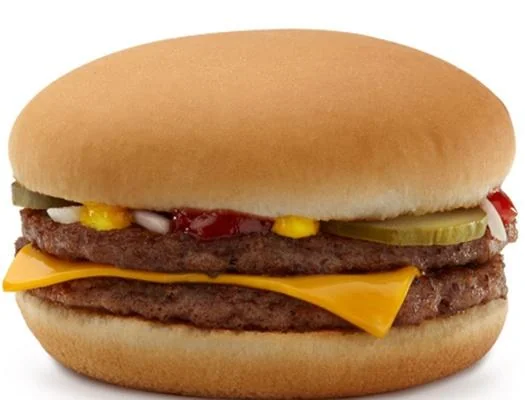
In 2012, I was hired to audit the meal planning habits of a warehouse logistics team in Columbus, I pulled and analyzed the nutrition in a McDouble for every team member who reported eating it regularly. The McDouble was actually the highest protein-per-dollar option within a quarter mile of their facility.
The McDouble is McDonald’s best value proposition and a surprisingly dense macro nutrient profile that most customers walk past without a second thought. Nutrition in a McDouble hits differently once you stop treating it as junk and start reading it as data.
Knowing the nutrition in a McDouble at a precise, usable level turns a $3 menu item into a legitimate dietary tool — if you know what you’re actually working with.
Nutrition in a mcdouble explained:
Picture the basics first. A McDouble, made just like it always is, holds 400 calories along with 20 grams of total fat. Saturated fat takes up 8 of those grams. Cholesterol sits at 75 milligrams per serving. Sodium climbs to 920 milligrams, quite a chunk of daily allowance. Carbohydrates show up next, totaling 33 grams across the board.
Fiber trails behind at only 2 grams. Sugar adds another 7 grams into the mix. Protein stands out with 22 grams on its own. All these details pull straight from McDonald’s official nutrition guide. They check and refresh that data often. It matches how burgers are cooked in regular American locations.
A double-patty cheeseburger packing four hundred calories catches many off guard. It falls short of the Chick-fil-A Deluxe Sandwich, which clocks in at five hundred. Smaller than a similarly sized Wendy’s Jr. Bacon Cheeseburger – adjusted to 380. Nowhere near the calorie load found in any two-patty option from Five Guys. The McDouble manages dense nourishment despite looking too modest for such numbers.
That 22g of protein shifts how people talk about fast food. Priced between $1.99 and $2.49 based on where you are, a McDouble gives close to 10 grams of protein for each dollar spent – beating out protein bars, single-serve Greek yogurt, even typical gas station snacks when cost and nutrition are weighed together. While those alternatives sit near the same price, they rarely match what this burger offers gram for gram.
Nutrition in a McDouble sees its macro nutrients:
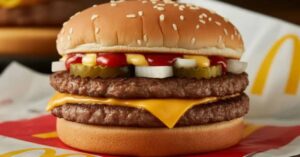
What’s inside a burger matters more than just its energy count. Take the McDouble. Looking at only that number misses four key parts of what it gives your body:
- Forty calories less than most midday dishes found in relaxed dining spots – meals there often hit 650 to 900. The McDouble lands right in the middle, offering something lighter without feeling light. For people moving through their day quickly, it fits. Energy counts matter when time does too. his one checks both
- A McDouble packs 22 grams of protein – on par with, sometimes even topping, what you’d get from a standard 3-ounce piece of chicken breast. Nutrition like that stands shoulder to shoulder with choices experts routinely suggest. Most diet pros would nod at these numbers without pausing. Protein levels here hold their ground against familiar go-to picks praised in balanced diets
- Fat fills 20 grams here, with 8 coming from saturated kinds. That chunk hits two fifths of what heart experts suggest you eat each day. For someone grabbing a McDouble now and then, that detail matters. Still, one meal won’t wreck any plan on its own
- Salt level hits 920 mg here – nearly two fifths of what experts suggest you eat all day, packed into just one burger. That number climbs fast when fries land on the tray, especially with soda alongside
- Starting at 33 grams, carbs here fall below typical fast food options – thanks to just one bun. Ditching the bread brings things down to about 5–7 grams altogether. That shift opens space within stricter eating patterns focused on fewer carbohydrates
Nutrition in a McDouble with sodium effects:

Most people trying to eat well run into trouble because of sodium. That number – 920 milligrams – in just one McDouble? It’s what diet experts bring up again and again when talking with patients who watch their heart health.
One figure alone tells only part of the story. With a medium fry at 400mg of sodium, things add up fast. Tack on another 50 mg from a medium soda, suddenly you’re near 1,370 mg – no extras included. See that burger by itself misses what happens once sides enter. A true picture of a McDouble’s impact needs the whole order in view.
1: Source of sodium in a mcdouble
Starting off, salt hits the beef patties while they cook inside every McDouble. One slice of American cheese brings around 200 milligrams of sodium – that’s way more than most parts of the sandwich by weight. Sitting beneath it all, the bun chips in with about 150 milligrams. A regular ketchup packet drizzled on top tosses in another 70. A handful of dill pickle slices adds yet another 100 milligrams. It’s the stack of separate high-sodium parts that pushes the total so high – 920 milligrams in all – even though the burger skips fancy sauces and sticks to just ketchup and mustard.
2: McDouble sodium levels next to other burger chains
A closer look at salt levels shows how things shift. Not far behind, the Burger King option carries 490 mg. At Wendy’s, it jumps – more than double that amount. Meanwhile, Shake Shack serves up 760 mg per burger. Sitting near the top, McDonald’s larger sandwich reaches 1,110mg. Halfway through the pack of two-patty burgers, sodium in a McDouble rests at 920 mg – not the lightest, yet far from the heaviest. What surrounds it shapes its place more than the figure alone ever could.
3: Lower Sodium Tips for Your McDouble
Start by leaving off the pickles, that drops about 100 mg of sodium. Skip the ketchup next – each little pack brings 70 mg more, so tossing it helps. Take away the cheese? That alone shaves off around 200 mg. All these steps combined shift the total down from 920 mg to just 550 mg. Suddenly, what was once ordinary now sits near the bottom for salt among two-patty fast meals found on any menu board.
How a McDouble Matches Different Eating Plans:
A McDouble won’t suit everyone, yet lines up neatly within particular eating plans. For some routines, its values click without compromise. Picture a tight budget met with steady protein intake. Think of limited prep time matched by consistent calories. Consider short shifts filled with predictable energy dips. Weight gain goals sometimes lean on dense sources like this. Even minimal cooking access finds workarounds here:
- A meal like the McDouble packs around 400 calories. That’s about a quarter of the total intake someone might allow themselves each day if they’re aiming to cut back – say, between 1,400 and 1,800. For an active person trimming portions, it could hold down midday eating without tipping totals too high. Especially if mornings start small and evenings stay modest, that burger fits within limits
- One way to hit big protein numbers every day means eating three McDonald’s McDoubles. That stack gives sixty six grams of protein inside twelve hundred calories. Some strong athletes actually do this when they are on the move or short on hours. It might sound basic, yet it packs a solid punch for muscle support without needing fancy meals
- A meal like a McDouble might fit what some experts suggest after exercise. Twenty two grams of protein along with thirty three grams of carbs can support recovery. This mix shows up in discussions about refueling muscles. It lines up with ideas on restoring energy stores. Scientists often point to these amounts when talking repair and fuel
- A McDouble costs about $2.25, offering one hundred calories for just fifty-six cents. That kind of value shows up almost nowhere else in eating out. When it comes to stretching each dollar, few meals match this efficiency. Few fast options deliver so much energy for so little cash. At under five bucks a day, choices like this keep hunger at bay without draining resources
- Peel off the bread, keep everything else. A McDouble without its top and bottom halves clocks in around 5 grams of carbs. Protein stays full strength at 22 grams. Taste? Still mostly there. Skip the roll, skip most carbs – that simple
The Protein Quality of Nutrition in a McDouble — Beyond the Gram Count:
Gram counts tell part of the story. The quality of those grams matters too — and this is where nutrition in a McDouble analysis often gets intellectually lazy. Most coverage stops at “22g protein.” That’s the wrong place to stop.
McDonald’s beef patties are 100% pure beef — no fillers, binders, or extenders in the standard U.S. formulation. The protein in beef is a complete protein, containing all nine essential amino acids at ratios that support muscle protein synthesis effectively. When you examine nutrition in a McDouble through the lens of protein quality, not just quantity, the picture improves considerably.
1: PODCASTS and DIALS Scores for Beef Protein
Protein quality is assessed using two primary scoring systems: Protein Digestibility Corrected Amino Acid Score (PODCASTS) and the newer Digestible Indispensable Amino Acid Score (DIALS). Beef scores at or near 1.0 on PODCASTS — the maximum possible score — and performs competitively on DIALS, generally scoring between 0.92 and 1.00 depending on the cut and preparation method. This means nutrition in a McDouble is delivering high-quality, bio available protein — not just raw gram volume.
2: Leucine Content and Muscle Protein Synthesis
Leucine is the key branched-chain amino acid that triggers muscle protein synthesis. Research suggests a threshold of approximately 2.5–3 g of leucine per meal is required to maximally stimulate the anabolism response. Beef provides approximately 8–9 g of leucine per 100g of protein. The 22g of protein in nutrition in a McDouble delivers roughly 1.8–2 g of leucine — below the optimal threshold for maximal MOS but sufficient to initiate a meaningful anabolism response, particularly when combined with leucine from other meals in the day.
3: How Two McDoubles Change the Protein Math
A common strategy among budget-conscious athletes and high-protein dieters is ordering two McDoubles instead of one. Two sandwiches deliver 800 calories, 44 g protein, and approximately 1,840 mg sodium. The protein total is now competitive with a full chicken breast meal at a sit-down restaurant. The nutrition in a McDouble equation doubles, but the cost ($4.50–$5.00) still undercuts virtually every other 44 g protein option at a restaurant. The sodium accumulation across two sandwiches is the primary limiting factor to consider.
Nutrition in a McDouble When Eaten With Common Add-Os:
Nobody eats a McDouble in a vacuum. The nutrition in a McDouble changes meaningfully depending on what’s ordered alongside it, and the cumulative math is where most customers lose track of their actual dietary intake.
A McDouble with medium fries and medium Coca-Cola — the default combo configuration most customers order — adds 320 calories and 57 g sugar from the drink, plus 320 calories and 400mg sodium from the fries. The full combo now delivers 1,040 calories and 1,770 mg sodium. Nutrition in a McDouble hasn’t changed — but the meal context has shifted dramatically from a moderate-calorie lunch anchor to a high-sodium, high-sugar meal that challenges a full day’s recommended thresholds in one sitting.
Nutrition in a McDouble: Complete Reference Data Table:
| Metric | McDouble (Standard) | McDouble (No Bun) | McDouble (No Cheese) | McDouble (No Cheese, No Bun) | Competitor Comparison |
| Calories | 400 | 260 | 340 | 200 | Wendy’s Double Stack: 410 |
| Total Fat (g) | 20 | 19 | 14 | 13 | BK Double Cheeseburger: 26 g |
| Saturated Fat (g) | 8 | 7.5 | 5 | 4.5 | Quarter Sounder w/ Cheese: 13 g |
| Sodium (mg) | 920 | 770 | 720 | 570 | Shake Shack Shack Burger: 760 mg |
| Total Carbs (g) | 33 | 5 | 33 | 5 | Wendy’s Jr. Bacon Cheeseburger: 27g |
| Dietary Fiber (g) | 2 | 0 | 2 | 0 | McDonald’s Quarter Sounder: 2 g |
| Total Sugar (g) | 7 | 2 | 7 | 2 | BK Hamburger: 6g |
| Protein (g) | 22 | 21 | 20 | 19 | Chick-fil-A Deluxe: 28g |
| Cholesterol (mg) | 75 | 73 | 55 | 53 | Five Guys Little Hamburger: 60 mg |
| Price (avg. US) | $2.25 | $2.25 | $2.25 | $2.25 | Wendy’s Double Stack: $2.99 |
| Protein per Dollar | 9.8 g/$ | 9.3 g/$ | 8.9 g/$ | 8.4 g/$ | Chick-fil-A Deluxe: 7.2 g/$ |
| Calories per Dollar | 178/$ | 116/$ | 151/$ | 89/$ | Shake Shack Shack Burger: 148/$ |
How Cooking Method Affects Nutrition in a McDouble:
McDonald’s beef patties for the McDouble are cooked on a flat-top griddle — a clam shell grill that applies heat from both sides simultaneously. This cooking method is relevant to the nutrition in a McDouble because it determines fat retention, crust formation, and moisture loss during cooking, all of which affect the final nutritional profile that hits your tray.
The clam shell grill reduces cooking time to under 45 seconds per patty at standard temperature settings. Speed matters nutritionally because shorter cook times with high direct heat preserve more of the beef’s natural moisture — meaning a higher percentage of the raw patty’s water content remains in the cooked product compared to longer, lower-heat cooking methods.
1: Fat Retention During McDouble Cooking
The McDouble patty is approximately 1.6 oz of 80/20 ground beef before cooking. At 80% lean, the raw patty contains roughly 9–10g of fat. After cooking on the clam shell griddle, some fat renders out. The finished nutrition in a McDouble reflects approximately 10g of fat per patty — suggesting moderate fat retention, consistent with high-heat, short-duration cooking of 80/20 beef across culinary literature.
2: Sodium Added During Cooking vs. Ingredient Sodium
McDonald’s does not add salt to patties during the cooking process — the griddle is dry-seasoned equipment. The 920 mg sodium in nutrition in a McDouble comes entirely from ingredient components: the bun, the cheese, the pickles, and the condiments. This means that unlike some competitors whose patties are per-salted or marinated, the McDouble’s sodium is more modifiable through ingredient removal without affecting the patty itself.
3: How Temperature and Holding Time Affect Nutritional Integrity
McDonald’s operating standards require McDouble patties to be held no longer than 15–20 minutes before service. Extended holding degrades texture but doesn’t meaningfully alter the macro nutrient profile in nutrition in a McDouble — fats don’t oxidize measurably in that window, protein structures remain stable, and carbohydrate content in the bun is unaffected by heat lamps. The nutrition in a McDouble you receive at peak service and off-peak service is essentially identical from a macro nutrient standpoint.
Five Modifications That Change the Nutrition in a McDouble Significantly:
Customizing a McDouble isn’t just a preference exercise — it’s a nutritional lever. These five modifications produce meaningful changes to the nutrition in a McDouble that go beyond cosmetic:
- Remove the bun: Drops calories by approximately 140, cuts carbohydrates from 33g to 5–7g, and reduces sodium by 150 mg — the single highest-impact modification for low-crab and calorie-conscious customers ordering nutrition in a McDouble
- Remove the cheese: Cuts 60 calories, reduces saturated fat by 3 g, and eliminates 200 mg of sodium — particularly relevant for lactose-sensitive customers or those managing saturated fat intake closely
- Add extra patty (order as Triplet or custom): Adds approximately 90 calories and 8g protein per additional patty, improving the protein-to-calorie ratio of nutrition in a McDouble while keeping carbohydrates constant
- Substitute mustard only (remove ketchup): Saves approximately 15 calories per packet and reduces sugar by 4g per standard application — a small modification but relevant for strict sugar-tracking protocols
- Add lettuce and tomato: Adds negligible calories (under 10 total) while improving micro nutrient contribution — vitamin C from tomato, fol ate from lettuce — without altering the core nutrition in a McDouble profile at the macro nutrient level
Nutrition in a McDouble Across a Full Day of Eating — Real-World Context:
Numbers per sandwich are one frame. The more useful frame is how nutrition in a McDouble fits into a complete day of eating — which is how actual dietary impact is determined.
For a 185-pound male with a 2,500-calorie maintenance target and a protein goal of 160 g daily, one McDouble at lunch contributes 400 calories (16% of daily target) and 22g protein (13.75% of daily protein goal). The remaining 138 g of protein needs to come from three other meals. That’s achievable — two eggs at breakfast, a chicken thigh at dinner, a protein shake post-workout, and a cottage cheese snack covers the gap.
1: Daily Sodium Budget After Eating a McDouble
The 920 mg of sodium in nutrition in a McDouble consumes 40% of the 2,300 mg FDA daily limit at one meal. The remaining 1,380 mg must cover breakfast, dinner, snacks, and any additional condiments or processed foods. For most Americans, who average 3,400mg of sodium daily before fast food is factored in, this constraint is real. For someone actively managing sodium — cooking whole foods at home, avoiding processed snacks — the remaining 1,380 mg is a workable budget.
2: Tracking Nutrition in a McDouble With Popular Apps
Maladroitness, Chronometer, and Lose It all carry McDonald’s McDouble in their verified food databases. The entries match McDonald’s published data with minimal variance. Logging nutrition in a McDouble takes under 30 seconds in any of these apps, making it one of the most seamlessly traceable fast food items for anyone using a macro-tracking approach to diet management.
Micro nutrients in Nutrition in a McDouble — What the Label Doesn’t Emphasize:
McDonald’s nutrition panels focus on macro nutrients and sodium. The micro nutrient picture inside nutrition in a McDouble is less discussed but worth understanding for a complete assessment.
The beef patties provide meaningful amounts of zinc (approximately 3 mg per sandwich, 27% DC), iron (approximately 2.5 mg, 14% DC), vitamin B12 (approximately 1.5 mg, 63% DC), and selenium (approximately 14 mg, 25% DC). These micro nutrients are often deficient in plant-forward diets and represent genuine nutritional value that calories-only analysis of nutrition in a McDouble completely ignores. Vitamin B12 in particular — critical for neurological function and red blood cell formation — is bio available at high rates from beef compared to fortified food sources.
Eating Nutrition in a McDouble Frequently — When It Works and When It Doesn’t:
Frequency changes the calculation. Eating nutrition in a McDouble once a week is nutritionally trivial — the sodium and saturated fat loads are easily absorbed into a balanced weekly diet. Eating it five times per week is a different conversation entirely.
Five McDoubles weekly adds 4,600 mg of sodium from the sandwiches alone — already two full days’ worth of sodium budget consumed before any other food is factored in. Saturated fat accumulates at 40 g weekly just from the McDouble, approaching the AHA’s weekly guidance limit. These are real thresholds. The nutrition in a McDouble is not the problem at this frequency — the pattern is.
For clients who eat at McDonald’s daily, the modification that changes outcomes most meaningfully: swap two weekly McDoubles for Hamburgers (no cheese), which cuts weekly sodium from the McDouble category by 840 mg and reduces saturated fat by 10g — without requiring any meal to be skipped, replaced, or radically restructured.
Conclusion
Nutrition in a McDouble is 400 calories, 22 g protein, and 920 mg sodium — a profile that works within a balanced diet when frequency and context are managed deliberately. Remove the bun for low-crab. Skip the cheese to cut sodium. Pair with water, not soda. The nutrition in a McDouble rewards informed ordering, not avoidance.
FAQ’s
Q1: How many calories are in standard nutrition in a McDouble?
A standard McDouble contains exactly 400 calories per McDonald’s official published nutritional data.
Q2: Is the nutrition in a McDouble a good protein source compared to other fast food?
Yes — at 22g protein per $2.25, it delivers the highest protein-per-dollar ratio of any major fast food double burger.
Q3: What is the biggest nutritional concern in nutrition in a McDouble?
Sodium at 920 mg per sandwich — 40% of the FDA daily limit — is the primary concern for frequent McDouble consumers.
Q4: Does removing the bun significantly change the nutrition in a McDouble?
Yes — no-bun drops carbs from 33g to approximately 5g and cuts calories by roughly 140 per sandwich.
Q5: How does nutrition in a McDouble compare to a Quarter Sounder with Cheese?
The McDouble has 270 fewer calories, 21 g less fat, and 190 mg less sodium than the Quarter Sounder with Cheese.
Summary
If you are looking for a quick, budget-friendly protein fix, the nutrition in a mcdouble offers a decent balance of macros. This classic burger provides 22 grams of filling protein and 400 calories. However, it also contains significant amounts of sodium and saturated fat, so it is best enjoyed as an occasional convenience meal rather than a daily staple.