
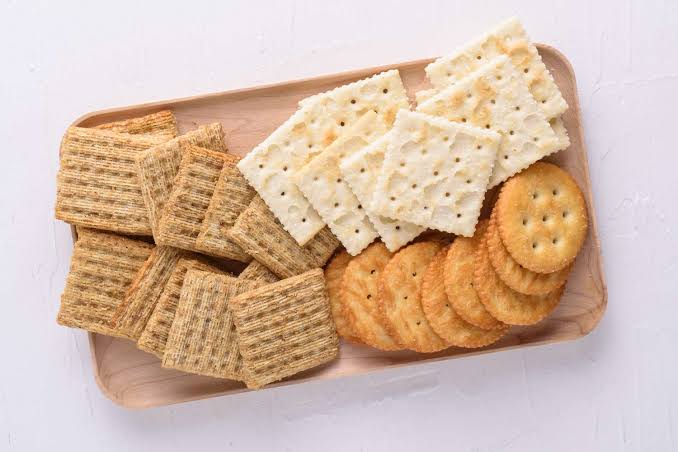
I’ve gone through packaged-snack nutrition data for meal-planning clients for a good chunk of the last few years, and saltines are one of the more deceptively simple items on that list. The calorie count barely moves between brands. Sodium, though — sodium can swing by well over 100 milligrams for the exact same five-cracker serving. What I flag for almost every client is simpler than a spreadsheet: “plain” doesn’t mean “low sodium.” Sometimes it does. Often it really doesn’t. The saltines nutritional value numbers below tell a messier story than that assumption suggests.
Grab a sleeve of saltines and most people assume they already know what they’re getting. Plain. Harmless. Barely worth logging. That assumption isn’t wrong, exactly. It’s just incomplete. Sodium swings hard between a regular saltine and a low-sodium one — sometimes by a factor of four, which honestly surprised me the first time I pulled the numbers side by side. A “healthy-sounding” whole wheat version doesn’t automatically beat the original on calories either. What follows is the real saltines nutritional value breakdown, pulled from brand labels, USDA data, and lab-tested figures instead of a rounded guess from some calorie app.
One plain-looking cracker, five ingredients total, and a sodium swing between varieties wide enough to actually change your grocery pick.
Table of Content:
- What Does the Saltines Nutritional Value Show Per Serving?
- Saltines Nutritional Value Across Sodium and Grain Varieties
- Saltines Nutritional Sodium and Fat Breakdown
- Saltines Nutritional Portion Sizes and Cracker Comparisons
- Saltines Value for Toppings and Snacking Smarter
1. What Does the Saltines Nutritional Value Actually Show Per Serving?
Five ingredients, mostly. Flour, oil, salt, baking soda, yeast. Every figure below comes from standard brand labels, USDA reference data, and the kind of saltines nutritional value testing that ends up printed on a box. Customize anything — extra topping, a bigger portion — and your real total drifts away from that printed serving size fast, since nobody actually eats saltines one at a time.
Saltines Nutritional Value for a Standard 5-Cracker Serving
Five regular saltines, about 15 to 16 grams, land around 60 to 70 calories with 11 to 12 grams of carbohydrate. Protein barely registers. Usually 1 to 2 grams. Sodium is the number actually worth watching here: typically 125 to 150 milligrams per serving, more if the topping leans toward coarse sea salt rather than a light dusting.
Saltines Nutritional for a Single Cracker
One saltine on its own carries about 13 calories, 2.2 grams of carbohydrate, 0.3 grams of protein, 0.2 grams of fat. Not much to track individually. The numbers only start to matter once a handful gets counted instead of a single cracker. Ten crackers eaten absentmindedly during a soup night can quietly add up to a real snack’s worth of calories and sodium, and most people never notice it happening.
2. Saltines Nutritional Value for Regular vs Low-Sodium Varieties
Two boxes can sit side by side on the same shelf and still land in genuinely different places once sodium gets factored in. Easy to assume “saltine” means one fixed sodium number no matter what the label says. It doesn’t. The gap between a regular saltine and a low-sodium one is real — wider than most shoppers probably realize standing in the aisle deciding between two nearly identical boxes.
Saltines Nutritional Value Regular vs Low-Sodium
A regular five-cracker serving runs about 135 to 150 milligrams of sodium. The low-sodium or “hint of salt” version can drop that down to somewhere around 30 milligrams for the exact same five crackers. That’s roughly an 80 percent cut, and the calorie count doesn’t move at all to get there.
Calories barely shift between the two, usually staying within 5 to 10 of each other. Fat and carbs stay nearly identical too. Sodium really is the only lever being pulled.
Saltines Nutritional Unsalted Tops vs Regular
Unsalted-top saltines split the difference. The dough itself still carries some sodium from baking soda and the base recipe, but skipping the surface salt cuts a meaningful chunk off the total — often landing closer to 95 to 110 milligrams per five-cracker serving. Not as dramatic a drop as the full low-sodium version. Still noticeable if you’re pairing crackers with an already-salty soup.
Texture shifts slightly too. Less bite on the surface, though most people barely notice once soup or a topping enters the picture. Some brands market unsalted-top saltines specifically toward people managing blood pressure, which tracks given how much of a regular cracker’s sodium sits right on the surface rather than baked into the dough.
3. Saltines Nutritional Value for Whole Wheat and Multigrain Versions
People treat “whole wheat” like an automatic upgrade — something that has to be better across the board just by virtue of the label. Whole wheat and original saltines turn out to be closer than expected once the actual saltines nutritional value numbers come out. Same calorie range, mostly. The real difference sits somewhere else entirely.
Nutritional Value Whole Wheat vs Original
Whole wheat saltines run close to the original in calories, still landing around 60 to 70 per five-cracker serving. Fiber is where the real gap shows up: whole wheat versions typically deliver close to 1 gram per serving, versus under half a gram for the original recipe. Sodium stays roughly the same across both, which tends to surprise people who assume the “healthier” option must also be lower in salt. It usually isn’t.
Protein edges up slightly too, by a fraction of a gram, though not enough to change much nutritionally on its own. The flavor difference is honestly more noticeable than the nutrition difference — a slightly nuttier taste some people prefer and others find a bit heavier than the plain original.
Saltines Nutritional Value for Multigrain Blends
Multigrain saltine-style crackers add seeds or extra grains to the base recipe, usually pushing calories up to 70 to 90 per serving alongside a modest fiber bump. Sodium can actually run higher here, not lower, since multigrain blends often carry more seasoning to balance out the heartier flavor.
It’s worth checking the label rather than assuming “multigrain” automatically means lighter. It frequently doesn’t, at least not on the sodium line. Seeds do bring a small amount of healthy fat and micronutrients that plain saltines just don’t have, so the trade-off isn’t necessarily a bad one — just a different one than the marketing implies.
4. Saltines Nutritional Value Sodium and Fat Breakdown
Sodium is where the biggest surprise on this snack lives, honestly. A cracker that looks almost nutrient-free on paper can still eat into a meaningful chunk of a daily sodium limit if you’re working through half a sleeve. Topping and salt style, not calories, are almost always what decides the nutritional value sodium number that ends up mattering most.
Saltines Value Sodium Across the Lineup
Here’s how the main varieties compare, per five-cracker serving:
| Saltine Variety | Calories | Protein (g) | Sodium (mg) | Fiber (g) |
| Original Saltines | 70 | 2 | 135 | 0.4 |
| Low-Sodium / Hint of Salt | 70 | 2 | 30 | 0.4 |
| Unsalted Tops | 65 | 1.5 | 105 | 0.4 |
| Whole Wheat | 65 | 2 | 130 | 1.0 |
| Multigrain Blend | 80 | 2.5 | 160 | 1.5 |
That sodium column moves a lot more than the calorie column across this whole table. Worth remembering next time “low-calorie” and “low-sodium” get treated like the same thing, because they clearly aren’t here.
Saltines Value Saturated Fat Across the Lineup
Saturated fat stays genuinely low across nearly every saltine variety — usually under 0.2 grams per five-cracker serving, regardless of brand. Multigrain and seeded versions edge slightly higher, closer to 0.5 grams, thanks to added oils in the recipe. None of these numbers are large enough to matter much on their own. They add up, though, if crackers are a daily habit rather than an occasional one.
Palm oil shows up in several major brands’ ingredient lists. Not a huge saturated fat contributor at this serving size, but worth knowing if you’re tracking it for other reasons. Some newer product lines have swapped it out for canola or sunflower oil instead, shifting the fat profile a little without changing the calorie count in any real way.
5. Saltines Nutritional Value for Portion Sizes and Serving Counts
Nobody thinks of portion size as the risky part of a saltine snack. The flavor’s so mild that overeating barely registers as overeating. That’s exactly the problem. Calories and sodium both scale up fast once the serving size drifts past the printed five crackers, and the saltines nutritional value numbers on the box rarely get read past that first line anyway.
Saltines Nutritional Value 5-Cracker vs 10-Cracker Serving
Ten crackers roughly double everything. About 120 to 125 calories, 22 grams of carbohydrate, 250 to 300 milligrams of sodium. Doesn’t sound dramatic in isolation, but a sleeve emptied absentmindedly in front of the TV can cross 500 milligrams of sodium before anyone’s really paying attention.
A half-serving — two or three crackers — works fine paired with soup, where the crackers aren’t really the point of the meal anyway. Twenty crackers, closer to a real snack-sized handful than most people picture, pushes past 250 calories and 500 milligrams of sodium before any topping even enters the picture.
Saltines Nutritional Value Per Full Sleeve and Box
One full sleeve typically holds somewhere around 30 to 40 crackers. That works out to roughly 400 to 500 calories and 900 to 1,100 milligrams of sodium if the whole thing gets finished in one sitting. A full box, usually three or four sleeves, obviously multiplies that further — not something anyone eats in a single session, but worth knowing before mindlessly working through a sleeve during a long movie. Resealing the sleeve after each use also keeps the crackers from going stale, which is more of a taste thing than a nutrition thing, but it still affects how much of the box actually ends up getting eaten.
6. Saltines Nutritional Value Compared to Other Crackers

Saltines get compared to other cracker brands constantly, usually without anyone actually checking the saltines nutritional value numbers side by side. Turns out the comparison isn’t quite as obvious as the reputation suggests.
Saltines Nutritional Value vs Ritz Crackers
Ritz crackers run heavier on both fat and calories — about 80 calories per five-cracker serving, with 4 to 4.5 grams of fat versus roughly 1.5 grams for saltines. Sodium is actually fairly close between the two in their regular versions, both landing in the 130 to 150 milligram range. Ritz’s “hint of salt” variety drops sodium dramatically while barely touching the fat content, though.
Saltines win clearly on fat. Ritz edges ahead on flavor and richness, for whatever that’s worth nutritionally, which honestly isn’t much. Neither cracker offers meaningful fiber or protein, so the real choice usually comes down to what you’re pairing them with rather than either cracker on its own merits.
Saltines Nutritional Value vs Graham and Oyster Crackers
Graham crackers run considerably heavier — often 130 to 140 calories per serving thanks to added sugar, which makes them a fairly poor stand-in for anyone comparing purely on calories. Oyster crackers, tiny and mild, land closer to saltines gram for gram, though the small size means people tend to eat more of them per handful without quite realizing it.
Water crackers come in the lightest of the bunch. Often 40 to 50 calories per serving. A reasonable swap if fat is the specific concern rather than sodium. None of these alternatives really beat saltines on protein or fiber in the saltines nutritional value comparison, so it mostly comes down to calories, fat, and how much salt lands on the tongue with each bite.
7. Saltines Nutritional Value for Common Toppings and Pairings
Nobody thinks of the topping as the risky part of a saltine snack. It usually adds more calories than the crackers underneath it, though. Toppings barely register in most saltines nutritional value conversations, even though a spoonful of peanut butter can double the calorie count of five crackers on its own.
Saltines Nutritional Value with Peanut Butter and Cheese
One tablespoon of peanut butter adds roughly 95 to 100 calories and 3.5 grams of protein to a five-cracker serving, turning a light snack into something closer to an actual one. A slice of cheddar does something similar — 70 to 110 calories, 6 to 7 grams of protein — though sodium climbs meaningfully too, sometimes by another 150 to 180 milligrams.
Either pairing turns saltines from an empty-calorie snack into something with real staying power, at the cost of a noticeably higher sodium total. Almond butter behaves about the same as peanut butter here, roughly the same calorie and protein range, so the choice between them mostly comes down to taste.
Saltines Nutritional Value with Soup and Tuna
Crumbled into a bowl of soup, saltines add their own sodium on top of whatever the broth already carries. Worth remembering, given how sodium-heavy most canned and restaurant soups already run before a single cracker gets involved. A scoop of tuna salad piled onto a few crackers adds protein fast — often 15 to 20 grams for a modest serving — though mayonnaise-based tuna salad brings extra fat and sodium along for the ride too.
Neither pairing is a problem occasionally. The math just adds up quickly if crackers-with-topping becomes a daily habit instead of a soup-night one. Canned soups in particular can already carry 700 to 900 milligrams of sodium per serving before a single cracker gets crumbled in.
8. Saltines Nutritional Value: Snacking Smarter
All these numbers only matter once they turn into habits you’ll actually use standing in front of the pantry. Nobody checks a nutrition label mid-snack. A couple of default choices, though — low-sodium over regular, a real portion instead of a handful straight from the sleeve — shift the totals more than people expect, without changing what the snack actually feels like.
Saltines Nutritional Value Lower-Sodium Choices
Low-sodium or unsalted-top saltines, portioned out to an actual five-cracker serving instead of eaten straight from the sleeve, form one of the lightest sodium choices on this whole list without giving up much else. Skip the extra salty topping while you’re at it. Small habit. Adds up over a month of regular snacking, though.
Across the saltines nutritional value lineup, sodium consistently moves more than calories or fat between varieties — even though nothing on the box actually flags that difference at a glance. Probably the single most useful pattern in this whole guide if sodium is what you’re watching most closely.
Nutritional Value Higher-Protein Pairings
Peanut butter, cheese, or a scoop of tuna salad each turn a handful of saltines into a genuinely more filling snack, without requiring a second trip to the pantry twenty minutes later. Portion the crackers first, then add the topping — not the other way around — and the whole thing stays a lot easier to track.
Five habits worth building if saltines are a regular pantry staple for you:
- Check the label for low-sodium or unsalted-top versions before defaulting to the regular box
- Measure out five or ten crackers instead of snacking straight from the open sleeve
- Pair crackers with a protein topping like peanut butter or cheese to make the snack more filling
- Watch total sodium when crumbling crackers into soup that’s already salty on its own
- Compare brands occasionally, since sodium varies more between them than the calorie count does
Conclusion
The saltines nutritional value picture rewards a little attention. Sodium swings far more than calories between varieties, whole wheat isn’t automatically lighter, and portion size matters more than the mild flavor suggests. Use these numbers to build a smarter snack around what you’re actually after.
FAQ’s
1. How many calories are in the saltines nutritional value for a standard serving?
About 60 to 70 calories for five regular crackers, with 11 to 12 grams of carbohydrate.
2. What’s the lowest-sodium saltine option?
Low-sodium or “hint of salt” varieties, often around 30 milligrams of sodium for five crackers.
3. How much protein is in a serving of saltine crackers?
Roughly 1 to 2 grams per five-cracker serving, rising with a protein-rich topping.
4. Are whole wheat saltines actually healthier than the original?
Only slightly. They add a bit more fiber, but calories and sodium stay close to the same.
5. What are the nutritional value facts for a full sleeve?
Roughly 400 to 500 calories and 900 to 1,100 milligrams of sodium if the whole sleeve is finished at once.
Summary
Saltines span original, low-sodium, unsalted-top, whole wheat, and multigrain varieties, and each one carries its own calorie, sodium, and fiber pattern. Sodium moves far more than calories between versions. Portion size and toppings shift the totals more than the plain flavor suggests. Checking the real saltines nutritional value numbers first makes snacking something that actually fits your goals a lot easier.